
I Am... Cereal Pancakes – Tiny Mini Pancakes!
I love all mini things, especially mini food like these cereal pancakes. I’ve had a thing for mini pancakes for a while (see these mini strawberry shortcake cuties), so when I started seeing a huge amount of pancake cereal TikToks, I knew I had to make some! Trust me when I say that pancakes taste better when they’re mini. 10/10 would recommend.
What are cereal pancakes?
Pancake cereal is just pancakes, but mini, so they’re cereal sized! Imagine tiny, tiny freshly cooked pancakes in a bowl and there you have it: pancake cereal!How to make pancake cereal
- Make your pancake batter. I like to use my favorite pancake recipe because it’s the perfect consistency for piping out into pancake cereal, not too thick and not too thin. My recipe makes enough for one big bowl of cereal or two smaller ones and is perfect because it doesn’t use up too much flour or butter. You can use my favorite recipe (see below), your go to pancake recipe, or boxed pancake mix. Whatever you end up doing, make sure the pancake batter is not too thick and not to thin or runny. If the batter is too thin all the pancakes will run into each other.If it’s too thick you won’t be able to pipe it out. Make sure it’s not too lumpy either or it won’t pipe out smoothly.
- Once your pancake batter is mixed up and the right consistency, put it into a squeeze bottle with a small opening OR put it in a ziplock bag. Don’t cut off the tip of the ziplock bag until you’re ready to cook. Also, it’s better to make the cut on the bag pretty tiny. If the hole is too big, your pancakes will also end up pretty big.
- When your batter is ready, heat up a non-stick pan over medium-low heat. Brush a thin layer of oil on your pan. Pipe out small pancakes or drop the batter by the 1/4 teaspoon and cook until small bubbles form on the surface and at the edges. Flip and continue cooking until golden brown, about 30 seconds more.
How do you eat pancake cereal?
To fork or not to fork...I’ve seen people use a fork to poke the pancakes essentially making mini stacks of pancakes and I’ve also seen people using a spoon. I think how you eat them is up to you. I’ve tried them both ways and I think it depends on how big you make your mini pancakes. Obviously if your pancake are really teeny you won’t be able to use a fork. Go with your gut and just do you.Milk or No Milk?
This one is up to you too! I like my pancake cereal with just butter and syrup, but if you’re a milk lover, by all means, pour some milk on there. Just don’t be all crazy and put the milk in the bowl first, mmmkay?What equipment do you need to make pancake cereal?
You just need a regular bowl, a non-stick frying pan (very important when making pancakes), a squeeze bottle or ziplock bag with the tip cut off, a spatula (or a pair of chopsticks) to flip, and a bowl to eat out of. Side note: I like using an electric crepe maker because it’s the absolute best at keeping the heat at the proper temperature – I use it whenever I make pancakes.Pancake cereal flavors to try?
Here’s where you can go crazy and have some fun. You can do chocolate pancakes for a cookies ‘n cream pancake cereal, add some strawberries or marshmallows, or cinnamon sugar, or nuts, add oreos for oreos pancake cereal, bananas, vanilla, sprinkles, the world is your pancake cereal canvas so go wild!Strawberry Shortcake Cereal Pancakes
These are the perfect summer cereal pancake: super mini vanilla cereal pancakes with juicy strawberries and soft whipped cream. Fork it or spoon it, either way these are the DREAM summer breakfast or brunch.How to make strawberry shortcake cereal pancakes
- Pick the smallest strawberries at the store or farmer’s market - the smaller the berry, the sweeter.
- Wash and hull the berries, then cut them in halves or quarters. Sprinkle them with a bit of sugar and a tiny pinch of salt so the berries macerate and get super juicy.
- Make some softly whipped cream by pouring 1/2 cup heavy whipping cream into a chilled bowl with 1 tablespoon sugar. Whisk until soft peaks form (use an electric whisk if you have it!) then keep cold in the fridge.
- While the berries are getting juicy, make the pancakes as per the recipe below.
- Place the pancakes on a plate or bowl and top with the whipped cream and strawberries spooned on top. Enjoy!
Pancake Cereal Tips and Tricks
- Use oil instead of butter for the pan. Butter has a low heat point so it’s better to use oil if you don’t want your pancakes to end up burnt-looking.
- Keep the pan on low heat to start and then turn up the heat once you’ve piped out all the pancakes. Or, if you’re really slow, you can heat the pan, then turn it off, pipe out the pancakes, then turn the stove on after you’re done to cook them.
- Pipe the pancakes out smaller than you think - they will spread a tiny bit. If you want extra mini pancakes, your pancake batter should just be smaller than the size of a dime.
- If you’re not particular, use a giant flipper to flip all your pancakes at once. Or, use a pair of chopsticks to flip over each pancake individually. You can even just shake and toss the pan.
- If you want your pancakes to be warm, keep them warm in the oven. Because they’re so tiny, they don’t stay warm for very long. If you want warm pancakes, keep them warm in a low oven.
Pancake Cereal Recipe
Pancakes, but make it MINI! Pop these super cute tiny cereal sized pancakes in a bowl for pancake cereal!
- 1/2 cup all purpose flour
- 1 tbsp sugar
- 1/2 tsp baking powder
- 1/2 tsp baking soda
- 1/2 cup buttermilk (sub milk or see notes)
- 1.5 tbsp whisked egg
- oil for the pan
In a bowl, whisk together the flour, baking powder, baking soda, and sugar. Add the whisked egg and buttermilk to the bowl, gently combine with a fork, being careful not to over mix, but mixing out all the large lumps
Pour the pancake batter into a squeeze bottle or ziplock bag with a tiny corner cut off. Or you can use a teaspoon to scoop it out.
Heat up a non-stick pan over over medium-low heat. Brush a thin layer of oil on your pan. Squeeze out mini pancake (or drop the batter by the teaspoon) and cook until the pancakes start to bubble. When you flip them, they should be golden brown. Continue cooking for another 30 seconds or 1 minute, or until golden brown. Scoop the pancakes out into a bowl.
Serve with a pat of butter and drizzle with syrup! Milk optional :)
If you don’t have buttermilk on hand, make an easy substitute by mixing together a scant 1/2 cup milk with 1.5 teaspoons vinegar or lemon juice. Do this at the beginning so it has time to thicken up.

I Am... This Homemade Green Bean Casserole Recipe is So Good
Green bean casserole is a classic but it's so much better when you make it from scratch. This recipe is fast, easy, and delicious, and best of all, needs no processed foods. This made-from-scratch version is more mushroom-y, more flavorful, and only 10 minutes. It's healthier while still scratching that nostalgic itch. It's so good you won't want to stop for turkey or mashed potatoes or anything else.
How to make green bean casserole
Green bean casserole is super easy to make. No matter what version or recipe, the process is the same:- Prepare your mushroom soup, add fried onions and soy sauce.
- Blanch your fresh green beans.
- Assemble and bake until bubbling and toasty.
- Top with fried onions and bake a little longer until onions are warmed and extra crispy.
- Eat!
Soy sauce
Soy sauce was integral to this recipe when it was invented back in the 1950s. If you are shopping for a fresh bottle, check out mushroom dark soy sauce for extra mushroom flavor. It goes great with anything you’d ever want to use soy sauce for. If you already have a bottle of (any) soy sauce, that will work too.Fried onions
Although everything else in this recipe is scratch made, unless you own tens of thousands of dollars of commercial dehydration and deep fry equipment, you likely can’t match the quality of commercially fried onions. In addition to regular grocery stores selling French's, almost all asian supermarkets sell fried onions or shallots. Believe it or not, IKEA sells the best fried onions in their grocery store after the checkouts. And of course, Amazon.How long to bake green bean casserole
Green bean casserole is completely cooked before it ever goes into the oven. The reason it's baked at all is to meld all the flavors together and caramelize the mushrooms and onions in the soup. This can be done in as little as 15 minutes.Make ahead green bean casserole
If you want zero stress and you’re making it within 24 hours, you can put the entire casserole together the night before, cover it, and store it in the fridge. When you are ready to cook, add 10-20 minutes cooking time. If you are pre-prepping the morning of, the best way is to trim the green beans and make the mushroom stock, but don’t blanch the beans until you are ready to assemble.An easy Christmas menu
- Easy Perfect Spatchcock Turkey
- This green bean casserole
- Tini’s Mac and Cheese
- The Best Parker House Rolls
- The Ultimate Guide to Gravy
- Instant Pot Mashed Potatoes and,
- Best Brown Butter Chocolate Chip Cookies for dessert
More delicious sides
- Easiest Homemade Velveeta Mac and Cheese
- Mushroom Shallot Stuffing
- Cheesy Potato Balls
- 75 of Our Best Thanksgiving Side Dishes
- 14 of Our Best Thanksgiving Noodle Side Dishes
Green Bean Casserole Recipe
A super mushroom-y, freshly made update on classic green bean casserole
- 4 tbsp butter (or olive oil, or mix of the two)
- 4 cloves garlic (crushed)
- 1/2 medium onion (sliced)
- 1 lb mushrooms (pre-sliced cremini preferred)
- 4-8 sprigs thyme (or other herbs)
- 2 tbsp all purpose flour
- 3/4 cup white wine (or beef/chicken/vegetable stock)
- 1 cup heavy cream
- 0.5-1 cup milk (optional, see notes)
- 1 tbsp dark mushroom soy sauce (or regular soy sauce)
- 1 tsp fish sauce (optional)
- 1/2 cup french fried onions
Assembly
- 1.5 lb green beans (ends trimmed)
- 1/2 cup Parmigiano Reggiano cheese (or Cheddar)
- 1 cup french fried onions (or more, to finish)
Melt the butter over medium heat, being careful not to burn it. Sauté onions for 2-3 minutes, then add garlic and cook for about 1 minute. Add mushrooms and thyme. Cook, stirring occasionally, until mushrooms are toasty brown, about 7 minutes. Add flour, salt, and pepper, and stir for another 2 minutes until the flour is thoroughly incorporated.
Add wine and reduce by half, about 3 minutes. Reduce heat to low, then add cream, soy sauce, fish sauce, milk (If using) and fried onions. Stir, season, and simmer for 10-15 minutes.
While you are waiting for your sauce to thicken, blanch your green beans in boiling salted water for 3 minutes, then drain and cool. If you like your green beans on the squeaky crunchy side, use an ice bath. Preheat your oven to 375ºF too.
To assemble: make a bed of green beans in a large oven proof dish. Ladle the mushroom sauce over top of that, and top with parmesan. Bake for 30 minutes at 375ºF.
Remove from oven, carefully toss the green beans a little, then top with more onions. Return to the oven for another 5 minutes or until onions are crispy.
Add milk if you prefer your casserole on the saucier side, leave out if you prefer your casserole thicker. Pictured with no milk added.

I Am... How to Make the Best Japanese Shokupan Milk Bread
I love all bread but Japanese shokupan is my absolute favorite. So much so that back when traveling was a thing, Mike and I regularly went on shokupan hunts while in Tokyo. Bread and toast is on another level over there. Every time we flew home I would bring a loaf, tucked into a carry on bag that I would keep in my lap just so I could have shokupan at home. Those were the days! If you know me, even a little bit, you would know that I love carbs. I have a sweatshirt that proudly proclaims me a carb lover because it’s so very, very true. If I had my way and lived in a world where calories didn’t count, I would happily live on carbs only, all day, everyday. Give me ALL the carby foods: potatoes, noodles, rice, and oh yes, especially BREAD.
The easiest shokupan recipe
I’ve been baking this simple squishable loaf. It doesn’t have a yudane (a boiling water and flour roux) or a tangzhong (a cooked water and flour roux) the two most common additions to shokupan. Even without, it is still a very soft and fluffy loaf with the added the bonus of not having to think about making bread the day before. A lot of bread recipes (sourdough especially but even soft sandwich loaves) are a two day affair. I like this loaf because you can think to yourself in the morning, I would like some soft and fluffy bread and then make it and have it the same day.How to make shokupan
Making shokupan is easier than you think. It comes together very simply: you proof your yeast, mix up your dry ingredients, add the egg to the yeast, then mix the dough. Once the dough comes together, you slowly knead in the butter. The key to a soft and fluffy shokupan is in the kneading so make sure you take the time (a mixer with a dough hook is the right choice here) to reach the window pane stage. One your dough is soft and extensible, you can expect a soft and shreddable loaf. I really liked this loaf, simply toasted with butter or spread with some cream cheese and jam. But, it’s still not the level of bread I love from Japan so I’m going to be doing some more experimenting. Please let me know in the comments if you have any favorite Japanese shokupan recipes, I’m always up for trying new ones!A note on size and shaping
This was made in a 4.5 inch pullman cube which holds about 1 lb of dough. You can also make it in a regular sized loaf pan in which it will be rounded on top like a regular loaf of bread. If you are making it in a regular loaf pan, you’ll want to divide the dough into two equally sized balls before shaping. I’ve included the bakers’ percentages below as well so you can size according to your pan.- 120 grams water 48%
- 2 grams active dry yeast .8%
- 250 grams bread flour 100%
- 30 grams sugar 12 %
- 1.5 grams salt .6%
- 28 grams egg 11.2 %
- 25 grams butter 10%
Japanese Shokupan Bread Recipe
- 120 grams water (warm, see note)
- 1 tsp active dry yeast
- 250 grams bread flour
- 30 grams sugar
- 1/4 tsp salt
- 1/2 large egg (lightly beaten, about 1.5 tbsp (28 grams))
- 25 grams butter (room temp)
Sprinkle the yeast onto the warm water/milk. Let proof while you complete the next steps.
In the bowl of your mixer, stir together the flour, sugar and salt.
Whisk the egg into the yeast mixture, then add to the dry ingredients. Use a wooden spoon to mix until it comes into a ball and then switch to a dough hook and knead until the dough pulls away cleanly from the sides.
Add the room temperature butter and continue to knead, about 10-12 minutes, until very supple and the dough reaches the windowpane stage – take a piece of dough about the size of a golf ball and stretch it out between your fingers and thumbs. If you can stretch it without the dough breaking, you’re good to go. Transfer to a clean bowl and cover with plastic wrap.
Place in a warm spot and let rise until doubled, about 1 hour.
Take the dough and tip it out onto a lightly floured surface. Punch down lightly then roll out into a large oval.
Bring the two sides of the oval towards the middle.
Then roll up.
Place in a pullman loaf pan (I used a non-stick pan, lightly oil or butter your pan if it isn’t non-stick), cover and let proof until 1 inch below the top, about 40 minutes to 1 hour. Heat the oven to 355°F after the dough has been proofing for 30 minutes.
Slide the lid on the pan and bake for 40 minutes to 1 hour or until the bread is golden and cooked through. Remove from the pan immediately and cool on a wire rack. Slice and enjoy!
I wanted this to be a milk shokupan so I used 80 grams water + 40 grams milk, you can go ahead and use all water or a mix of water and milk depending on what you prefer.

I Am... Crispiest Smashed Potatoes
If you’re a potato lover this is about to become your new favorite potato recipe: crispy, crunchy, smashed potatoes! Fluffy, creamy, and tender on the inside and shatteringly crunchy on the outside. Seriously SO GOOD. I love potatoes like I love no other root vegetable. Potatoes are and will always be my favourite food from the underground world. I could live on potatoes alone. These potatoes in particular are delicious, golden crusty nuggets of smashed creamy potato goodness. They’re great on their own as a snack and also make an incredible side dish.
What are smashed potatoes
Smashed potatoes taste like fries, but if fries were rustic, lofi, chill vibes potatoes that aren’t concerned about fitting in. They all come out different because they all smash wonderfully uniquely. Just like fries, they’re crispy on the outside and fluffy and potatoey on the inside. Because they’re smashed, there is so much more potential surface area for crispy crunch. Smashed potatoes are super easy and not at all complicated. They’re as simple as: boiling, tossing, smashing, and baking. That’s it. No peeling, no special equipment, just good, solid, tender flavorful potatoes.How to make crispy smashed potatoes
The key to crispy potatoes is cooking them before they go in the oven. Just like British style potato roasties the secret is double cooking. Boiling the potatoes makes sure the potatoes are tender and creamy before crisping up in the oven. Smashing them gives them extra surface area and craggily bits for crunch.- Boil baby potatoes in salted water.
- Drain and let potatoes dry in a colander for about 5 minutes.
- Toss the potatoes in oil and season with salt.
- Place the potatoes on a baking sheet and smash with the bottom of a glass.
- Bake for 20-25 minutes at 450°F.
- Enjoy!
Crispy smashed potato ingredients
All you need for the BEST crispy smashed potatoes are:- baby potatoes - baby potatoes aka new potatoes are best! They’re extra creamy, sweet and tender. They sell them in little bags near the regular potatoes. It doesn’t matter which color you get :)
- high heat neutral oil - since these guys roast in the oven at 450°F it’s best to use a high heat oil like canola, grapeseed, sunflower seed, or safflower.
- sea salt - a good sprinkle of flaky salt adds a little bit of crunch and brings out the sweetness of the potato flavor
- herbs of choice - fresh herbs absolutely elevate potatoes. Roughly chop them, then sprinkle over the potatoes after they come out of the oven. Try dill, cilantro, green onions, fennel tops, basil, rosemary, sage, parsley, oregano, chives, or thyme.
How to serve
Have them as a snack as is right out of the oven, as finger food or an appetizer, or serve them as a side with some of the following: Oh, if you want to make smashed potatoes in the air fryer or on the stove top, I’ve got you:Air fryer smashed potatoes
Put lightly oiled smashed potatoes in a preheated air fryer at 400°F for 15-20 minutes or until crisp and golden.Stove top smashed potatoes
Smash the potatoes and then fry in oil in a cast iron skillet until crispy, flipping once, over medium heat. Happy potato smashing! xoxo stephSmashed Potatoes
The best smashed potatoes: fluffy, creamy, and tender on the inside and shatteringly crunchy on the outside.
- 1.5 lb potatoes (baby/nugget potatoes preferred)
- 4 tbsp neutral oil (divided)
Heat the oven to 450°F. Bring a large pot of water to a boil over high heat and salt generously. Add the baby potatoes and cook for 20 minutes, until soft.
Drain in a colander and let dry completely, about 5 minutes. Drizzle the potatoes in oil and season with salt.
Arrange the potatoes on a baking sheet, lightly brushed with oil and use a potato masher or the bottom of a heavy glass to press down on the potatoes until smashed to your desired potato preference, 1/2 - 1/4 inch thick. Thicker potatoes mean fluffier insides, thinner potatoes mean crispier potatoes.
Bake until golden and crispy, about 20-25 minutes.
Transfer to a platter and top with scallion oil, chili oil, and cilantro, if using, and enjoy!

I Am... Bun Bo Hue: Maybe Better than Pho?
Bún Bò Huế is a spicy Vietnamese noodle soup that is absolutely one of the best noodle soups in the world. Unlike the ubiquitous, well-loved and well-known pho, bun bo hue is strangely not as popular. But those in the know, know: Bun bo hue is where it’s at. Any good cook will tell you that homemade soups are a labour of love. They take time and a little bit of effort, but like any thing that is worth waiting for, they are absolutely heartwarming. Soups, especially noodle soups, are my go to bowl of comfort. I love the flavors and combination of textures (solid and liquid, squishy and firm), the slurping, the messiness, the fun, the satisfaction. And if you had to ask me what my all time favorite noodle soup was, I would probably say: bun bo hue. When we started going out, Mike told me that bun bo hue was one of his favorite soups growing up. He took us out for a couple of bowls of BBH (as Mike and I lovingly call it) and I was addicted. I’ve been wanting to make BBH ever since. BBH isn’t quite as popular as pho and I’m not quite sure why. It might be because it’s from Central Vietnam or it might just be because it hasn’t yet made its way into the spotlight. But, if you look for it, you can find BBH specialists. There’s even a place down in San Diego that has a BYOP (bring your own pot) so you can bring home enough BBH for your whole family and then some. Note: this recipe was first posted in 2014 and has been updated since to our most recent version, if you're looking for the old version, leave us a note in the comments.
What is bun bo hue?
If you’ve never had bun bo hue, think of all the things you love about pho and then increase them by 10. Bun bo hue is pho’s hotter, younger, spicier cousin. They share the same general bones: piping hot flavorful stock, slippery noodles, slices of tender beef, and fresh herbs to punch it up. But, while pho is made with just beef, BBH is made with beef and pork, as well as herbaceous lemongrass and a crazy addictive saté that turns the whole soup a gorgeous golden red.Bun bo hue Soup
The soup is a fiery orange-red thanks to a spicy red hot chili oil made from two kinds of chilis, lemongrass, shallots, garlic, and fish sauce. The rice noodles, thicker and a different shape than the flat ones in pho, are cylindrical and round, slippery and firm. The brisket is tender and the garnishes add the freshness you expect when eating a bowl of Vietnamese food. It’s spicy, savory, sour and sweet all at once – both balanced and in your face.Is bun bo hue #worthit?
The first time I made this was for Mike’s birthday one year and even though it was a lot of work for my inexperienced self back then, the warm cozy comfort of that first sip blew me away. It was totally worth it, and we’ve been making it ever since. Noodle soup is a gift to yourself and to the ones you love. After all, love is like soup: warm and cozy, nourishing and filling. Love is the crook of your best friend’s arm as you fall asleep at dawn, bursting into laughter together over nothing at all, long lingering walks talking about everything and nothing. Love is noodle soup, the big things, the little things, and everything in between.Are you convinced? Make this because you love yourself or make it for someone you love. Let’s do this!
First things first, where is bun bo hue from?
Bun bo hue is a noodle soup from the city of Hue, Vietnam. The name literally means beef noodle soup from Hue. It’s beloved in Vietnam and since its conception has gone from a soup made with solely beef to a beef-based soup with other good things like pork hock and ham added in.Bun bo hue ingredients
Bun bo hue is made up of three main components: the soup, the satế, and the stuff.The soup
The stock or soup of bun bo hue is really easy to make, you just need time (or an Instant Pot).- Oxtail - Oxtails will give you the perfect combination of meat for beefiness, collagen from the bones for body, and fat for flavor.
- Brisket - Slow cooking the brisket in the soup will give the soup extra beef flavor and ensure your brisket is fall apart tender.
- Lemongrass - Lemongrass is one of the main flavors of BBH. Wash, trim, and slightly bruise the stalks by using your hands to break them, kind of like how you would snap a pencil in half. This will help release their aromatic oils into the soup.
- Shallots - Shallots add a caramel sweetness without adding sugar.
The satế
The satế, or the chili oil, is the highlight of BBH. It’s garlicky, spicy, and full of lemongrass flavor. If you like Chinese chili crisp, you’ll LOVE satế. It tastes amazing in soup, obviously, but it also tastes great on everything else: meats, eggs, vegetables, toast, you name it, this satế will make it better.- Shallot - Shallots are so much better than onions, in my opinion. They’re delicate and sweet with just a hint of sharpness.
- Lemongrass - Lemongrass makes up the bulk of the satế and adds a fresh herbaceous. Make sure you trim and remove the outer stalks and mince before placing in your food processor. Lemongrass is tough and has to potential to burn out the motor.
- Garlic - Lots of garlic for that flavor we all know and love.
- Fresh Thai chilis - This satế uses a mix of fresh chilis and dried so you get the best of both world. If you like spice, you can add extra Thai chilis.
- Chili flakes - The dried chili flakes add a hint of smokiness and also the ruby-red color. We like to use dried Sichuan chili flakes.
- Sugar - A bit of sugar balances out and highlights the spice.
- Fish sauce - A huge hit of umami added the at the end for saltiness and flavor.
- Shrimp paste - mắm ruốc huế, a bright pink shrimp paste that’s a specialty of Hue adds a HUGE hit of umami and depth of flavor. If you can find it, it will take your BBH to another level. Mike’s parents have fond memories of when the shrimp boats used to come in once a year. They would ferment their own shrimp paste; they still dream about the flavor.
Everything else
aka the fillings aka the toppings aka the good stuff- Vermicelli - The rice noodles in BBH are bun, a thick round vermicelli that’s hearty and hefty. The noodles resemble spaghetti but are made of rice flour, like pho noodles. You can find these at your local Asian grocery store.
- Brisket - After slow cooking the broth, the brisket is cut into tender, thick slices.
- Beef balls - Bò viên are the Vietnamese beef meatballs that you’ve probably had in pho. They’re firm and chewy and full of beef flavor. You can find them in the refrigerated section of a well stocked Asian grocery store. We like to cut them in half.
- Vietnamese meatloaf/ham - There are lots of different varieties of Vietnamese meatloaves out there – they’re kind of like mortadella – but the one we like is chả chiên, the deep fried one. It’s porky and smooth, flavored with black pepper and fish sauce.
- Banana blossoms - Banana blossoms add crunch and a tangy complexity to bun bo hue. This is one of those specialty toppings that is probably going to be hard to find. It’s absolutely authentic and most good Bun Bo Hue restaurants have banana blossoms. They’re not the easiest to prepare, but if you have a decent Vietnamese grocery store around, you can find them there, pre-prepped, in a vacuum sealed bag in the produce department. If you can’t find them, what a lot of restaurants do is serve up thinly sliced cabbage instead.
- Herbs - Is it even Vietnamese food if there aren’t any herbs?! We always include what’s fresh at the store, in this particular case, we went with mint, sawtooth coriander (ngò gai), cilantro, Thai basil, thinly sliced red onions, and lime wedges.
How to make bun bo hue
We like to divide the cooking/prep over two days for a more chill vibes pleasant cooking experience. Although some people nope out of a recipe as soon as they see "day 1", this one is worth it. You can either slave over a stove for hours or do it the easy pro chef way. Once you’ve made the stuff the day before, the next day you can go from hungry to a steaming hot bowl of noodles in no time flat. You’ll have basically created your own little BBH restaurant!Day 1
- Make the soup. Blanch the oxtails, then place in a pot with lemongrass and shallots. Let simmer for 3.5 hours then add the brisket and let simmer for another 2.
- Once the soup is done, use a slotted spoon to scoop out the aromatics. Remove the oxtails and brisket and store in an airtight container.
- Regarding the oxtail: you can have this as a chef’s treat or you can shred the meat off the bone and have it with your BBH the next day.
- Store the soup in a container and pop everything in the fridge.
- Make the satế. Use a food processor to blend up the lemongrass, shallots, garlic, and chilis, then heat up the oil and gently cook. Mix in chili flakes, sugar, fish sauce, and fish paste. Let cool then store in an air tight container in the fridge.
Day 2
Once you have the stock and the satế ready, you’re basically good to assemble!- Prep the herbs: wash and dry the herbs and slice the onion and lime.
- Remove the soup from the fridge. Take the brisket out and slice neatly. Slicing the brisket after it chills in the fridge gives you a cleaner cut. Slice the meatloaf/ham and cut the beef balls in half.
- Prep your bowls. You’ll need bowls that can generously fit 3 cups of liquid. Fill them up with extra hot tap water and set aside so the bowls can warm up, then drain just before the noodles are done cooking.
- Heat up the soup in a pot. When it’s hot, add the brisket, beef balls, and ham and leave it at a bare simmer over low heat. In another pot, bring a pot of water to a boil and cook the vermicelli. When it’s done, rinse, drain well, and divide evenly into the bowls.
- Top the noodles with the meats, a scoop of the satế (start with 1 tablespoon, then add extra to taste), then ladle on the hot broth. Garnish with ALL the herbs and enjoy immediately.
What if I want to make everything in one day?
You absolutely can! Just skip out on the storing the soup in the fridge step and plan your day accordingly: the soup takes 5.5 hours to make.Stovetop vs Crockpot vs Instant Pot
- Can you make this with a crockpot? Yes! Blanch the oxtail bones before placing everything in the crockpot (including the brisket) on low for 6 hours.
- What about the instant pot? Also yes! Again, blanch the oxtail bones, then just put everything in the Instant Pot (including the brisket) on high pressure for 45 minutes, then quick release.
Bun Bo Hue
Bun bo hue is a spicy Vietnamese noodle soup that is absolutely addictive and one of the best noodle soups in the world.
Bun Bo Hue Soup
- 1 lb brisket
- 1 lb oxtail
- 3 stalks lemongrass (bruised)
- 2 shallots (halved)
Satế
- 3 stalks lemongrass (minced)
- 1 shallot (roughly chopped)
- 4 cloves garlic
- 4 Thai chilies
- 1/2 cup neutral oil (such as grapeseed or canola)
- 1/4 cup Chinese chili flakes (or sub 2-4 Thai chilies)
- 1/4 cup sugar
- 1/4 cup fish sauce
- 1 tbsp shrimp paste (mắm ruốc, optional)
Assembly
- 8 beef meatballs (halved, bò viên)
- 8 slices Vietnamese ham (sliced, chả chiên)
- 14 oz thick vermicelli (look for the words Bun Bo Hue)
- 1/4 red onion (thinly sliced)
- 1 cup banana blossoms (cleaned, trimmed, and sliced)
- 4 stems sawtooth coriander (ngò gai)
- 4 sprigs cilantro
- 4 sprigs Thai basil
- 4 wedges lime
Bring a small pot of water to the boil and blanch the oxtails for 5 minutes. Bring a second, larger pot with 8 cups of water to a boil. If you are using an instant pot, just add 8 cups of water to the insert.
Instant Pot directions: add oxtails, lemongrass, shallots, and brisket to the instant pot and cook on high pressure for 45 min, then quick release.
Stovetop Directions: Rinse and transfer the oxtails to the second pot along with the lemongrass and shallots. Simmer on low for 3.5 hours. Add the brisket and continue to simmer for another 2 hours for 5.5 hours total. Use a slotted spoon to remove the lemongrass and shallots. Take the oxtail and brisket out and store in a container. Transfer the soup to another container and put everything in the fridge.
While the soup is simmering, mince the lemongrass for the satế and transfer it to a food processor along with the shallot, garlic, and Thai chilies. Pulse into a fine paste.
Heat the oil in a medium saucepan over medium-high heat until it shimmers. Add the satế paste and fry, stirring, just until fragrant, 1 to 2 minutes. Remove from the heat and stir in the chili flakes, sugar, fish sauce, and shrimp paste (if using). Let cool then place in a jar or airtight container. The satế will keep in the fridge for up to several weeks.
To Assemble
Bring a large pot of water to a boil and cook the noodles according to the package directions, usually 10-15 minutes for properly thick vermicelli. Meanwhile, heat up your bowls by filling with hot tap water. In a second saucepan, combine the soup with enough water to make 8 cups then bring to a low simmer. Slice the brisket and place into the soup to reheat, along with the halved meatballs, and sliced ham. When the noodles are done, drain in a colander, and rinse well with cold water and allow 2-3 minutes to dry.
Drain your bowls, then divide the noodles evenly between the bowls and top the noodles with the brisket, beef balls, and ham. Scoop on 1-2 tablespoons of the satế depending on your taste for saltiness and spiciness - you can always add more later.
Ladle on the piping hot broth. Enjoy immediately topped with banana blossoms, sliced onions, sawtooth coriander, cilantro, Thai basil, and lime.
Estimated times are for the instant pot, conventional time is closer to 6 hours.
Estimated Nutrition based on approx 1/4 lb of meat total per person

I Am... Air Fryer Salmon
One of my go-to ways of making salmon is in the air fryer. I love a slow oven baked salmon but when I need salmon and I need it fast, the air fryer is the way to go. It cooks salmon evenly and perfectly; it’s juicy and flaky every time. Sometimes I’ll even meal prep salmon fillets at the beginning of the week so I have salmon in the fridge just ready to go on salads or on top of grain bowls. The other day we bought a giant side of salmon and I was so happy. I LOVE salmon. It’s truly one of the best kinds of fish out there: heathy, full of flavor, easy to cook, and super versatile. It tastes great with just a little bit of salt and pepper and tastes even more fantastic dressed up with seasoning and flavors. The best part is probably that it cooks so quickly – if you’re hungry, you can go from hangry to sitting down to food in no time at all.
How to cook salmon in the air fryer
Cooking salmon in the air fryer is super simple.- Lightly pat your salmon dry so the the surface has more of a chance to lightly crisp up.
- Season it generously. I went with a classic combination of lemon pepper, but feel free to add your favorite seasoning mix.
- Place the salmon in the air fryer basket. I like to line the basket with foil so it’s easy clean up.
- Drizzle the salmon with olive oil.
- Air fry for 10 minutes at 300°F.
- Remove and enjoy!
Air fryer salmon ingredients
All you really need is salmon, but I drizzle on a bit of extra olive oil for flavor and add thinly sliced lemons that get lightly caramelized while the salmon’s cooking.Skin on vs skin off salmon
Both skin on and skin off salmon work great in the air fryer. Skin on salmon has an extra layer of protection against overcooking, so if you’re worried about dry salmon, go with skin on salmon; you can always easily remove the skin after the salmon is cooked.What temperature for air fryer salmon
I like cooking salmon at a lower temp so there’s less of a chance of overcooking. Most air fryer salmon recipes have you cook salmon at high heat for a shorter period of time, but in this case, low and (slightly) slow wins the race. Your salmon will be tender and juicy, flake perfectly and be opaque and just cooked through.What internal temperature should I cook salmon to?
For wild salmon, aim for 120°F internal temperature For farmed salmon, aim for 125°F internal temperature Note: the FDA recommends 145°F.How to tell if salmon is cooked
The best and easiest way to tell if salmon is cooked is to gently press it with the back of a spoon, when it’s cooked properly it will flake apart. Perfectly done salmon will be tender, barely opaque, and juicy. Over cooked salmon will flake too but it will be dry, lighter in color, completely opaque, and tough.Which air fryer do you have?
If you’re wondering which air-fryer we have, it’s this one. I don’t know if it’s the best on the market because it’s the only one we’ve used, but it works great. It’s quiet and easy to clean and really big (which is good because you can put a lot of food in it and bad because it takes up a lot of room in our place).What about oven baked salmon?
If you don’t have an air fryer you can simply bake your salmon in the oven at a low temp for flaky, juicy fillets. Bake at 275°F until flaky and cooked through, about 30-45 minutes. Check out this post for more information on oven baked salmon.Air fryer salmon ideas
If you’re looking for seasoning ideas, try these:- Honey Garlic: Mix together 1 tbsp honey with 1-2 cloves minced garlic. Lightly pat the salmon dry, season generously with salt and pepper and coat in the honey garlic mix. Air fry for 10 minutes at 300°F.
- Everything bagel: Lightly pat the salmon dry, season generously with everything bagel spice. Air fry for 10 minutes at 300°F.
- Maple Soy: Mix together 1 tbsp maple syrup with 1 tbsp soy sauce. Lightly pat the salmon dry, season generously with salt and pepper and coat in the maple soy mix. Air fry for 10 minutes at 300°F. Sprinkle with toasted sesame seeds to finish.
What to serve with air fryer salmon
- A side of creamy baked feta pasta would be delicious
- Thick cut potato wedges for a healthier take on fish and chips
- This broccoli salad is amazing with salmon
- A side of texas toast because: garlicky crisp thick cut toast!
Air Fryer Salmon
When you need salmon fast, the air fryer is the way to go.
- air fryer
- 2 boneless salmon fillets (about 4oz each)
- 1 tbsp olive oil
- salt and freshly ground pepper
- 6-8 lemon slices (optional)
Lightly pat the salmon dry with paper towels. Drizzle with olive oil and season generously with salt and freshly ground pepper. Place in the air fryer basket (I like to line the basket with foil for easy clean up).
Air fry the salmon for 10 minutes at 300°F. The salmon should be cooked through, opaque and flake easily. Remove from the air fryer immediately and enjoy.

I Am... Grown Up Buttered Noodles: Garlicky Brown Butter Parmesan Noodles
Grown up buttered noodles are here to save the day. Do you have a go-to nostalgic kid food? That food that you’d always eat even after a serious food strike? The one your parents would give into just so they were sure you didn’t die from lack of calories, forget about nutrition? For me it was plain white rice. No soy sauce, no seasoning, no anything but delicious plain white rice. For my childhood best friend, it was buttered noodles. Whenever we’d have a play date, that’s what her mom would make us because it was literally the only thing she would eat. After my very first bowl, I was hooked. What’s not to love about a bowl of buttery carbs, made with love?
How to make buttered noodles
- Cook your pasta in a large pot of salted boiling water a couple minutes less than the time state on the package. We’re going to finish cooking the pasta in the sauce so that the noodles soak up even more flavor.
- Make the sauce. While the pasta is cooking, brown the butter with the garlic until the butter foams and turns golden brown. The garlic will be toasty too. To make the sauce extra silky, add 1/2 cup of the boiling pasta water and bring to a boil to emulsify everything together.
- Add the pasta. When the pasta is done, use a pair of tongs to move the pasta from the pot to the pan with the brown butter sauce. You don’t need to drain the noodles or dirty a colander.
- Toss, toss, toss. Toss everything together and turn up the heat to reduce the sauce until it is thick and glossy.
- Make it rain. When the sauce is glossy, remove the pan from the heat and make it rain parmesan. Mix it all up so that cheese melts and enjoy.
Buttered noodles, slightly grown up
This is a little updated version of those buttered noodles, made just a touch more grown up with nutty toasty browned butter, garlic, and a generous amount of parm. They’re super comforting and so easy to make. Mike said it was the best bowl of noodles I’ve ever made and you better believe that it’s going in our weekly rotation now that fall weather is here to stay. I don’t know what’s cozier that cuddling up on the couch with warm bowls of buttered noodles.Best butter
It's not amazing right now to talk about expensive ingredients, but if it works for your budget, you need to try grass fed butter like Kerrygold, Maple Hill, or best of all, Smjor, if you can get it. I tried Smjor on our very first trip to Iceland almost 10 years ago and I've never forgotten the taste. There really is no comparison between generic blocks of butter and artisanal grass fed butter.Garlic butter noodles
If you love buttered noodles, you’re going to love garlic buttered noodles. Everyone knows that butter noodles are delicious but if you want to up your cooking game and make something that you crave again and again, garlic butter noodles is where it’s at. Cooking garlic in butter makes it mellow and irresistible – your house will fill up with ALL the delicious smells. These garlic butter noodles are doubly good because the butter is browned for an extra layer of nutty toasty flavor. Showering everything with a generous amount of parm is never a bad finish.How do you make butter noodles better?
- Brown the butter. You won’t believe how much flavor you’ll get from browning butter. Brown butter is deeper, richer, and somehow tastes even more buttery
- Parmigiano Reggiano. Forget the stuff that comes out of a green can and get parmigiano reggiano from Italy. It can be a bit more expensive but the taste difference is unbelievable. It’s the secret to making the best butter noodles.
- Toppings. Don’t forget the toppings - a little bit of chili flake and some coarse ground black pepper can add some warming heat. Adding freshly chopped Italian parsley is not only pretty but adds freshness and brightness too.
Grown Up Buttered Noodles: Garlicky Brown Butter Parmesan Noodles Recipe
When you’re craving a bowl of childhood comfort with just a hint of adulting, make yourself a bowl of these garlicky brown butter parm noodles
- 6 ounces pasta of choice (I used bucatini)
- 5 tbsp butter (divided)
- 4 cloves garlic (crushed or minced)
- 1/2 cup finely grated parmesan
- salt and freshly ground black pepper (to taste)
Bring a large pot of salted water to a boil and cook the pasta 2 minutes shy of al dente. Reserve 3/4 cups pasta water and drain.
While the pasta is cooking, melt the 4 tablespoons butter in a large pan over medium heat. Add the garlic and cook, swirling, until the butter foams, smells nutty and toasted, there are golden brown solids, and the garlic is lightly golden. Remove from the heat and stir in the last tablespoon of butter.
Carefully add 1/2 cup of the pasta water to the melted butter – and bring to a boil over high heat, whisking or swirling often to emulsify the pasta water and butter, about 1 minute.
Add the pasta to the pan and cook, turning the heat up, tossing occasionally, until pasta is al dente and the sauce reduces and becomes thick and glossy, adding pasta water as needed, about 2-3 minutes.
Stir in the cheese and toss well to melt and combine, thinning with extra pasta water if needed. Season with salt and pepper to taste and enjoy immediately.
I Am... Tiktok Tortilla Wrap Hack
Have you guys seen the tiktok tortilla (aka the tiktok wrap hack) floating around the internet? I think it’s the most genius way to fold a tortilla wrap ever. Mike showed me an Instagram reel of someone wrap hacking and afterwards I spent way too long doing a deep dive and watching mesmerizing videos of people wrap hacking all the things. Have you ever thought of putting chicken nuggets in a wrap? Or noodles?! I saw that!
What is the TikTok wrap hack?
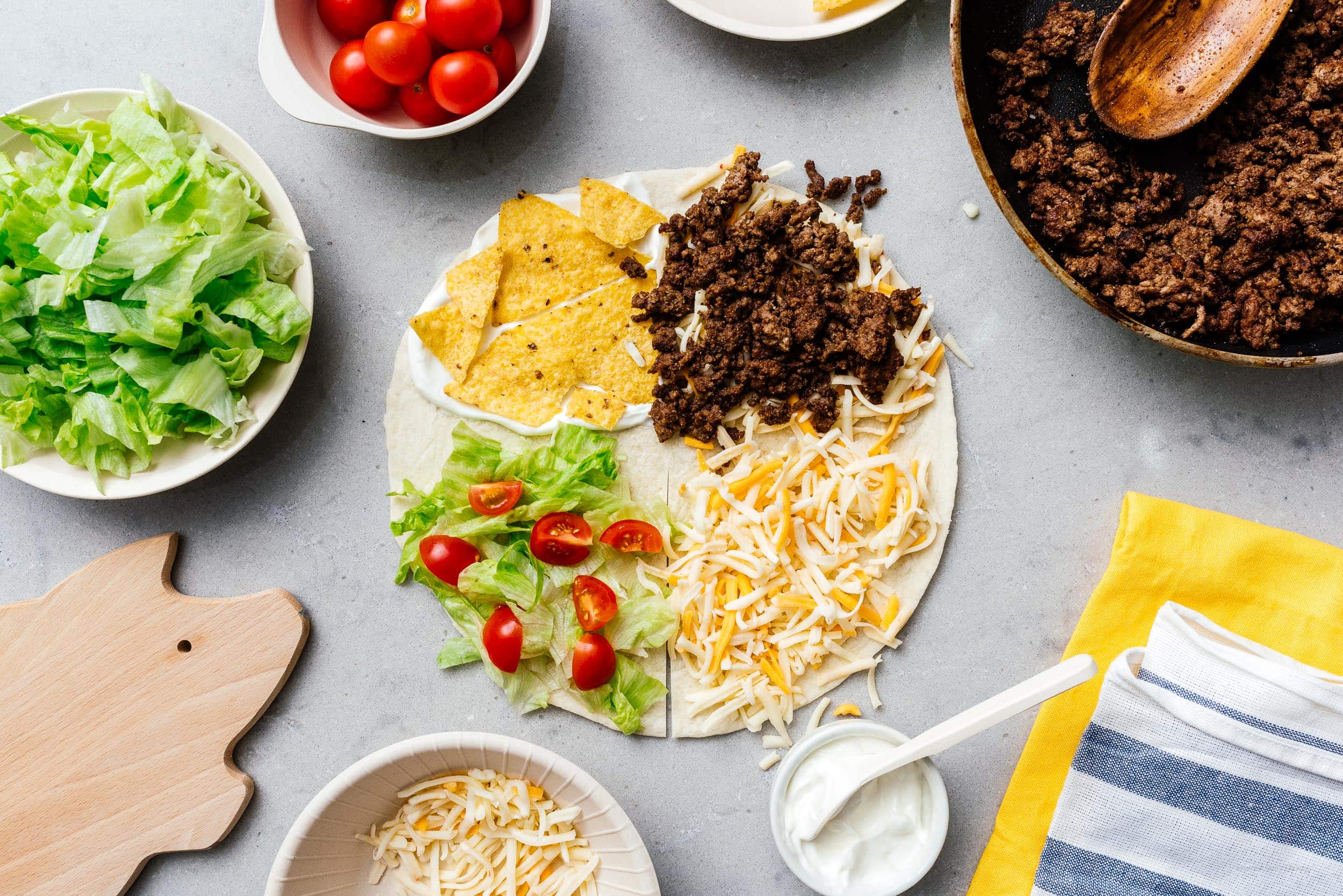
If you haven’t seen it, the wrap hack is basically the smartest way to make a wrap. You make a cut from the middle of the tortilla down to one edge, fill the different quadrants with fillings, then fold it all up into a neat triangle that can be eaten as is or grilled. I don’t know about you, but sometimes, when I make wraps they burst or split. Because this wrap isn’t rolled, there isn’t any chance of that. All your fillings stay inside the wrap and it’s super easy and neat to eat. The wrap hack is a super simple way to wrap up tortilla wraps. Instead of rolling all the fillings up, the tortilla is folded into quarters, making a compact, triangle shaped wrap.How to wrap hack
- Lay your tortilla out on a cutting board. Take a knife and make a cut from the middle of the tortilla down to the edge.
- Imagine the tortilla being divided up into four quadrants or quarters. Place a different ingredient into each quadrant.
- Fold the wrap up, starting from the bottom left quarter, folding it up over the top left, then folding it over to the top right, then folding it down to the bottom right.
- Enjoy as is or grill in a panini press or pan.
Tiktok tortilla: Crunchwrap supreme edition
I especially love that you can infinitely customize the wrap hack! Anything goes. Think: pizza, breakfast, healthy vegetables, sweet stuff. The sky is the limit. For my very first wrap hack I made a crunchwrap supreme: super savory juicy seasoned ground beef, melty cheese, crisp lettuce with fresh tomatoes, sour cream, and crunchy tortillas chips, all wrapped up and grilled up to perfection. SO GOOD. Here’s how to do it!How to make a wrap hack crunchwrap supreme
- Prep the ingredients: cook off the ground beef with some taco seasoning, shred the lettuce, and chop the tomatoes.
- Cut the tortilla: Lay your tortilla out on a cutting board. Take a knife and make a cut from the middle of the tortilla down to the edge.
- Make the wrap: Place the lettuce and tomatoes in one quarter, the sour cream and tortilla chips in another quarter, shredded cheese and beef in another quarter, and just cheese in the last quarter.
- Fold the wrap: Fold the wrap up, starting from the bottom left quarter, folding it up over the top left, then folding it over to the top right, then folding it down to the bottom right.
- Grill the wrap: Grill your wrap in a panini press or place it in a pan and cook over medium heat, flipping once.
- Enjoy eating your homemade wrap hack crunch wrap supreme!
TikTok tortilla: sushi edition
Finally, if you’re loving the TikTok tortilla hack but want to do DIY sushi, try it out with nori! It’s been floating around lately and it’s way easier than rolling sushi at home. Even though seaweed sheets/nori are squares and not round, it essentially works the same way. All you need is a large sheet of nori, some sushi rice, toppings, and a sauce of your choice.
We went with salmon, avocado, cucumber, sriracha and mayo for a spicy salmon roll feel. To make it, cut halfway through the nori sheet to the center, add your toppings to the different quadrants, fold and enjoy. Feel free to add on some furikake (rice seasoning) or toasted sesame seeds.
I can’t wait to wrap hack ALL the things. What’s on your wrap hack wish list?!Tiktok Wrap Hack
The smartest way to make a wrap: crunchwrap supreme edition
Taco Beef
- 1 lb ground beef
- 2 tsp chili powder
- 2 tsp ground cumin
- 2 tsp onion powder
- 2 tsp garlic powder
- 1 tsp smoked paprika
- 1/8 tsp ground cayenne pepper
For the wraps
- 6 large corn or flour tortillas (~10", flour preferred)
- 1.5 cups shredded lettuce
- 1 cup cherry tomatoes (quartered, or diced regular tomatoes)
- 1/2 cup sour cream
- 2 cups mexican cheese blend (shredded)
- 18 tortilla chips (or as desired)
Make the taco beef: Brown the beef in a frying pan over medium high heat until browned and cooked through. Drain off any excess fat, if needed. Add the spices and stir in. Taste and season with salt and pepper. Set aside.
Make the wrap: Lay the tortilla down on a cutting board. Take a knife and cut a line from the center of the tortilla to the bottom edge.
Starting at the bottom left quarter, add shredded lettuce and tomato. To the top left quarter, spread on some sour cream and top with tortilla chips. On the top right quarter, sprinkle on some cheese and add some ground beef. Finally, on the last quarter, sprinkle on some more cheese.
Starting with the bottom left corner and fold it up over the top left.
Then fold it over to the top right.
Finally, fold it down to the bottom right.
Grill in a pan over medium heat until the tortilla is crispy and the cheese melts, flipping once, about 3-4 minutes per side. Enjoy!

I Am... Easy Authentic Satay Chicken
Golden brown juicy chicken satay with charred smoky edges served up with a creamy nutty sauce for drizzling and dipping. Satay is life. Chicken satay has got to be one of my all time favorite grilled foods. I feel like I could eat 20 sticks, just by myself. Just give me a vat of no-peanut peanut sauce, all the satay, and maybe a roti or two and I’m the happiest you’ve ever seen. These golden little sticks are pure juicy chicken goodness with a huge burst of balanced flavors.
What is chicken satay?
If you haven’t had chicken satay I’m here to tell you they are probably the best chicken skewer you will ever eat! Smoky, juicy, savory, spiced (but not spicy) meat on a stick. Satay is a Southeast Asian skewer of grilled marinated meat served with sauce. They’re popular in Indonesia, Malaysian, Brunei, the Philippines, Singapore, and Thailand. Satay is most commonly chicken but you can get beef, pork, lamb, seafood, or tofu too. The protein is marinated in a variety of spices then grilled over a wood or charcoal fire for a smoky touch. The skewers are served with sauce, the most popular being peanut sauce. Satay is classic street food and you’ll often see satay vendors or hawkers over smoky charcoal grilling and selling skewers and skewers of satay. People make them at home too, for parties and gatherings.How to make chicken satay
- Make the marinade. In a bowl, combine minced lemongrass, shallots, and garlic along with oil, fish sauce, sugar, turmeric, coriander, and cumin. If you have a food processor, you can chop all the ingredients together. If you want to be super authentic, you can use a mortar and pestle to pound the lemongrass, shallot, and garlic before stirring in the oil, fish sauce, and spices.
- Cut the chicken and marinate. Cut the chicken into small even 1 inch pieces and combine throughly with the marinade. Make sure all the pieces are covered. Marinate for minimum 1 hour, overnight is best!
- Soak the skewers. Bamboo skewers are perfect for satay. I like to use the 6 inch sticks which fit about 4 to 6 pieces of chicken. Soak for about 30 minutes. Any longer, and they’ll start to warp and loose their structural integrity.
- Skewer. Skewer 4-6 pieces on to each skewer, nestling the pieces right next to each other so they are touching. Use gloves if you have them otherwise your hands will smell like cumin and be stained with turmeric!
- Grill. Grill the skewers over medium heat, flipping occasionally, until they are golden, juicy, charred, and cooked though. Enjoy!
Chicken satay marinade
The magic of satay is in the marinade so you want to marinate as long as you can. Here’s what’s in the marinade:- Lemongrass - herby, bright, lemongrass gives satay a fragrant, aromatic citrus hit, adding zing, tartness, and a hint of mint. The pale green and white parts are what we want, and it’s best if they’re finely chopped. If you have a food processor, give them a chop to start them off then process until fine.
- Shallots - shallots are like onions, but better! Sweeter, more mild and delicate, but with more flavor. They add a mild spiciness and sweetness to the marinate.
- Garlic - garlic makes everything better.
- Oil - this helps with even cooking and prevents the chicken from sticking to the grill. Use a neutral oil like canola, grapeseed, safflower, or sunflower.
- Fish sauce - fish sauce is what is going to be the main source of saltiness as well as adding umami. Learn more about fish sauce here.
- Sugar - Just a touch of sugar adds sweetness and helps the chicken caramelize on the grill.
- Turmeric - adds a hint of ginger and that lovely golden color that is associated with good chicken satay.
- Coriander - ground coriander adds pepper, mint, and citrus flavors with a bit of sweetness.
- Cumin - ground cumin adds a hint of what most people think of as curry flavor. It’s warming, and earthy, and smells amazing.
Chicken satay with peanut sauce
Sauce! Satay isn’t complete without sauce, so here are two sauces for you, a traditional peanut sauce and a no-peanut peanut sauce!Peanut sauce
Most peanut sauces are made with peanut butter, but I like it when it’s made from whole roasted peanuts that are blended so you get some nutty whole peanut bits. To make a quick and easy peanut sauce: blend or food process the following ingredients until blended, but not completely smooth: 1/2 cup coconut milk, 1/2 cup roasted skinless peanuts, 2 tbsp brown sugar, 2 tbsp Thai red curry paste, lime juice to taste.No peanut peanut sauce
This is a variation I came up with because Mike is allergic to peanuts. I love it so much that between the two, I wouldn’t go for peanut sauce even if it was there. The roasted cashews add a deep creamy nuttiness, the Thai red curry paste (this is the brand I use) adds just the right amount of kick, and the coconut milk brings everything together. I feel like I could just use a spoon and eat it, it’s that good. Blend or food process the following ingredients until blended, but not completely smooth: 1/2 cup coconut milk, 1/2 cup roasted cashews, 2 tbsp brown sugar, 2 tbsp Thai red curry paste, lime juice to taste.Other kinds of satay
Chicken satay is my favorite but I love all meats on sticks and there are so many possibilities! You can also skewer:- Beef - thinly sliced steak
- Pork - thinly sliced pork shoulder
- Lamb - thinly sliced lamb shoulder
- Chicken - I like using chicken thighs because they are incredibly juicy and full of flavor but chicken breast works too, you just need to cook it for a shorter period of time.
- Seafood - fish cut into 1 inch pieces, prawns, shrimp, scallops, squid
- Tofu - use pressed firm tofu cut into 1/2 inch by 4 inch strips
What other ways can I cook satay?
The beauty of satay is the smoky char you get from cooking it over charcoal or a grill, but of course you can cook or inside by pan frying, in the oven, or air fryer.- Pan-fried satay: Lightly drizzle some oil in a non-stick pan and cook the satay over medium heat, flipping as needed, until golden and cooked through.
- Oven baked satay: Lay the satay on a lightly oiled wire rack and bake in a 400°F oven for 15-20 minutes, flipping halfway, until golden and cooked through.
- Air fryer satay: Lightly oil the air fryer basket (if you have a rack, use the rack) and air fry for 8 minutes at 400°F. Flip and air fry for an additional 8 minutes, or until the chicken is golden and cooked through.
Where is satay from?
Meat on a stick is nothing new and satay, at its core, is meat on a stick. Like most popular foods that have a long history, many countries claim it as their own. Satay was originally inspired by kebabs from the Middle East. The spices and way the skewers were made changed with what was available and satay was born. Both Thailand and Malaysia claim satay as their own and it’s also considered the national dish of Indonesia.Tips and tricks
- Use chicken thighs. Chicken thighs are straight up more flavorful than chicken breast. Plus, they have the much needed fat content you want when grilling. The fat keeps the meat moist and also adds texture and smokiness to the satay.
- Cut the chicken into evenly sized pieces. Cutting the chicken into evenly sized small pieces has three benefits: the meat cooks evenly, the small pieces have more surface area to let the marinate penetrate the meat, and when you grill the satay will cook faster.
- Soak the skewers. This stops them from burning when on the grill. There’s nothing sadder than a satay with no stick!
- Skewer the chicken close together. Push the skewers right in the middle of the meat, there’s no reason to thread it through. Make sure the tip of the skewer isn’t exposed as it’ll have a tendency to burn. Keeping the chicken pieces close together/touching each other helps them stay juicy.
- Use medium heat. Satay pros use high heat to grill because they’re constantly moving around and fanning the flames, controlling the heat. For home cooks, it's easier to cook on medium. If you want to add a bit more char, have a section of your grill on high and flame kiss the satay for a second or two after they’re cooked through.
What to serve with satay
Satay is usually served on its own, sometimes with crunchy vegetables like cucumbers or carrots. Here are a couple of dishes that you can make if you’re looking for a South East Asian feast:- Roti Canai - a flaky, golden, tender, crispy flat bread that’s perfect with satay and curry.
- Thai sticky rice - I like to shape Thai sticky rice into little rice balls to eat alongside with satay.
- Larb Moo Pork - Fresh herbs, juicy pork, and savory fish sauce served up with lettuce cups.
- Mee Goreng - The BEST EVER fried noodles. I love these so much: sweet and savory fried noodles.
Chicken Satay Recipe
Gorgeously charred juicy authentic Malaysian chicken satay
- skewers
- 1 lb boneless skinless chicken thighs (cut into 1 inch pieces)
- 1 stalk lemongrass (finely minced, white parts only)
- 2 shallots (finely chopped)
- 2 cloves garlic (crushed)
- 2 tbsp neutral oil
- 1 tbsp fish sauce
- 1 tbsp sugar
- 1 tsp ground turmeric
- 1/2 tsp ground coriander
- 1/2 tsp ground cumin
Make the marinade: combine all ingredients and marinate for minimum 1 hour. If you can, marinate overnight.
Soak wooden skewers in water so they don’t burn when you’re grilling. After the chicken is finished marinating, skewer on to wooden skewers.
Grill over medium heat, turning as needed, until the chicken is cooked through and slightly charred. Enjoy hot!
No-Peanut Peanut Sauce Recipe
1/2 cup coconut milk
1/2 cup roasted cashews
2 tablespoons brown sugar
2 tablespoons Thai red curry paste
lime juice, to taste
Combine all ingredients until blended but not completely smooth. Taste and add lime juice to your preference.
Peanut Sauce Recipe
1/2 cup coconut milk
1/2 cup roasted skinless peanuts
2 tbsp brown sugar
2 tbsp Thai red curry paste
lime juice to taste
Combine all ingredients until blended but not completely smooth. Taste and add lime juice to your preference.

I Am... Chicken Karaage: Japanese Fried Chicken Recipe
The ultimate guide to juicy, crisp and crunchy Japanese fried chicken karaage. Have you ever watched Food Wars: Shokugeki no Soma? It’s an over the top and hilarious anime (based on a manga) that revolves around food and cooking battles. A couple of the episodes focus on chicken karaage, which both Mike and I love. We’ve long finished watching that show, but we still love making chicken karaage and snacking on it while we watch hockey. Karaage truly is the best snack food.
What is chicken karaage?
Chicken karaage is Japanese fried chicken: bite sized, super juicy, intensely flavorful, with a crispy, cracker-y crunch. Technically karaage refers to the deep-frying part - anything can be karaage, but the most popular version is tori no karaage, which translates to chicken karaage.How to make chicken karaage
- Cut down your chicken: Start off with cutting the chicken into bite size pieces. Make sure you cut all your pieces the same size. You don’t want thin pieces because they tend to be drier, so try to make sure they are kind of chunky and thick, about 1.5 inches to 2 inches in size.
- Marinate: From there you’ll want to marinate in soy sauce, sake, sugar, ginger, and garlic. It’s a pretty dry marinade so be sure to mix everything up evenly so that all the chicken pieces are coated. Marinate for at least 30 minutes. I like to leave the bowl in a cool spot in the kitchen so the chicken can come up to room temp. Tempering the chicken helps it cook more evenly and quickly than if you store and cook it straight from the fridge.
- Coat the chicken: After the chicken has marinated, you want to coat it in potato starch. You dont need to drain the marinade, since it’s pretty much a rub, so just go ahead and toss the chicken in the starch, being sure to coat evenly and shaking off the excess.
- Fry: From there you can either deep-fry, air-fry, or oven-bake. The choice is yours!
Chicken karaage ingredients
- Chicken – the main ingredient. skin on chicken thighs are best for juiciness and flavor. The skin adds an extra bit of crunchy deliciousness and fat and chicken thighs are tender and juicy
- Light Soy Sauce – We need just a bit of light soy sauce for umami and salt. We just want a hint of soy, not too much. Use a light Japanese soy sauce for the most authentic flavor. We like Yamasa.
- Sake – this helps to tenderize the chicken and balances the flavor of the soy sauce
- Sugar – We’re going to add just a hint of sugar to highlight the umami of the soy sauce
- Ginger – adds a warm, earthy undertone
- Garlic – because we love garlic!
- Starch – I like using potato starch for a coating that is light and crisp. The kind of starch you use for your coating is pretty important. More on coatings further down.
What is karaage?
Karaage is a technique of Japanese cooking where an ingredient is lightly coated and deep fried. Most common is chicken karaage but you can also have things like ika karaage (squid) or geso karaage (squid tentacles).How is chicken karaage served?
Just like fried chicken, karaage is a staple in Japanese cuisine. You’ll find it just about anywhere:- home: lots of people make karaage at home as a main to serve with rice or as an appetizer
- restaurants/izakaya: super popular at restaurants as part of set meals or at izakaya to have with beer
- combini, supermarkets and depachika: you’ll always find chicken karaage at convenience stores, supermarkets, and the food halls on the bottom floors of department stores for people to buy and take home for bento, snacks, or dinner.
Air-frying/Oven Baking
If you’re air-frying or oven baking, you’ll need to spray the chicken with some oil. We like to use a simple oil mister bottle that we got on amazon so we can just use whatever oil we have on hand. Make sure there’s a good coating of oil on the tops of the chicken so it browns evenly, otherwise you might end up with chicken that’s not as golden.Deep-frying
For deep-frying, we’re going to do a double deep fry: once at a low temperature to cook the chicken through and then again at a higher temperature to get the chicken extra crispy and golden brown. Some tips:- Make sure you use a heavy bottomed deep pot to deep-fry.
- You want a lot of headspace so the oil doesn’t boil and bubble over.
- A kitchen thermometer is best, but if you don’t have one, you can check the temperature by putting wooden chopsticks into the oil. There should be a bunch of little bubbles that come out the end. The ones that come with your take out orders are perfect.
- Gently add some pieces of chicken into the pot, being sure not to crowd, and fry until lightly golden. Drain on a wire rack and then turn up the heat and deep fry again until crisp and deeply golden.
How do you make crispy chicken karaage?
The key to crispy chicken karaage is the coating. The karaage at Japanese restaurants is crispy because it’s coated with potato starch. The reason why potato starch is crispier is because it has no gluten in it.What is the best type of coating for chicken karaage?
If you ever look closely at chicken karaage, you’ll notice that the coating looks different from fried chicken coated with flour. This is because karaage is made using potato starch or katakuriko 片栗粉. The crust of chicken karaage looks a bit powder-y with little balls of crunchiness. It’s not as golden as regular fried chicken because the starches used don’t brown up the same way. Starches tend to give a lighter, yet crisper coating because there’s no gluten in it. Look for coarse potato potato starch for extra crunchy chicken. Coarse starch has slightly bigger granules that make the chicken even crunchier.First off, what is starch?
Starch is a white, tasteless powder made up of two molecules: amylose and amylopectin. When heated, the molecules cross link with each other to form a rigid, brittle network that holds its shape. This translates to a crispy, crunchy feeling when we eat it. Bonus, starch is gluten-free!Potato starch
Potato starch, made from potatoes, has a fairly high amylose content (20-22%). The amylose content is what makes it crunchy/crispy. It’s really easy to find at the grocery store. Note: potato starch is not the same as potato flour!Cornstarch
Cornstarch, made from corn kernels, is probably the most common starch for thickening sauces, baking, and coating things for frying. Its fairly high amylose (25-28%) makes it a really good choice for a deep fry coating. I always include it as the default choice for coating Asian fried chicken because it’s probably in your pantry already.Coatings to avoid
Stay away from flour, rice flour, tapioca starch, and rice starch if you want a crispy crunchy crust that will stay crunchy.Chicken karaage dips
Usually karaage is served on it’s own with a lemon wedge or some Kewpie mayo, but you can definitely serve up some dips too!- Kewpie mayo: The classic, just squeeze it right out of that iconic bottle!
- Spicy mayo: mix 2 tbsp kewpie mayo with 2 tsp sriracha
- Garlic mayo: mix 2 tbsp kewpie mayo with 2 cloves minced garlic
- Ranch: mix 2 tbsp kewpie mayo with 1 tbsp buttermilk, 1 tbsp sour cream, 1 tsp rice vinegar, 1 tbsp finely chopped parsley, and pinch of garlic powder
- Jalapeño ranch: mix the above with 1 jalapeños, reseeded and diced
- Creamy parmesan: mix 2 tbsp kewpie mayo, 2 tbsp finely grated parmesan, 2 tsp milk
- Honey mustard: mix 1 tbsp honey and 1 tbsp mustard
- Honey lemon: mix 2 tbsp kewpie mayo, 2 tsp fresh lemon juice, and a drizzle of honey
What to eat with chicken karaage
- fluffy white rice
- shredded cabbage with Japanese dressing
- cucumber sunomono
- and beer, traditionally!
Chicken Karaage
Bite sized, super juicy, intensely flavorful, with a crispy, cracker-y crunch.
- 1 lb boneless skinless chicken thighs (cut into 1" cubes)
- 2 tbsp soy sauce
- 1 tbsp sake
- 1 tsp sugar
- 1 tbsp ginger (minced)
- 2 cloves garlic (minced)
- 1/2 cup potato starch
- 1/4 cup cornstarch
- High heat oil for deep frying
In a bowl, marinate the chicken in the soy sauce, sake, sugar, ginger, and garlic for 30 minutes at temperature, in a slightly cool spot. Letting the chicken rest at room temp means that the chicken won’t drop the temperature of the oil, which means that it’ll cook up crispier. Also, it’ll cook faster than if you cook it cold from the fridge. If you are air frying or baking, add a 1/2 tablespoon oil to the marinade.
Place the potato starch and cornstarch in a bowl and, working in batches, toss and coat several pieces of chicken, making sure they are well coated. Alternatively, put the potato and cornstarch in a bag or container, add the chicken, and shake to coat. The chicken should be well coated and look fairly dry.
Deep Fry Instructions (see notes for air fried and oven baking instructions)
Prepare a wire cooling rack over a paper towel lined rimmed baking sheet. Heat up 2 - 2.5 inches of oil in a deep heavy bottomed pot until it reaches 325°F. It doesn’t need to be too deep, it depends on the size of your chicken. Use a pair of tongs to gently add a couple of pieces of chicken to the hot oil, being careful not to overcrowd. Fry in batches until lightly golden, about 1 1/2 minutes.
Remove from the oil and let rest on your prepared wire rack. Repeat with the remaining chicken until all of it has been fried once.
Turn the heat up to 350°F and fry the chicken a second time around until deeply golden and crispy, another 1-2 minutes.
Enjoy as soon as possible!
Air Fryer Chicken Karaage
Lightly oil or use cooking spray on the air fryer basket. Place the coated pieces of chicken in the basket, with at least 1/4” of space in between pieces. Lightly spray the tops of the chicken with cooking spray. Cook at 400°F for 5 minutes, then flip and lightly spray with extra cooking spray. Cook for 5 more minutes at 400°F. If your pieces of chicken are large, you might need an extra minute or two. Let the chicken cool for 5 minutes, then air fry for an extra 5 minutes at 400°F to crisp it up.
Oven Baked Chicken Karaage
Heat the oven to 450°F. Oil or use cooking spray to fully coat a wire rack in a foil lined baking sheet. Place the coated pieces of chicken on the rack, with at least 1/4” of space in between pieces. Lightly spray the tops of the chicken with cooking spray.
Bake for 20 minutes, then flip, lightly coat with extra cooking spray and bake for an extra 5 minutes. The pieces of chicken should be golden brown, crispy, and cooked through.

I Am... Cheung Fun Rice Noodle Rolls
Cheung fun, aka rice noodle rolls are a classic dim sum favorite but did you know you can make them right at home?! When I was a kid we went to dim sum every single Sunday. My favorite thing, always and forever will be rice noodle rolls. We would get an entire order just for me and even when I was small, I could finish the entire dish. I mean, I can still finish the entire dish but it’s not as impressive as an adult is it? Dim sum Sundays is still a thing for Mike and I, and of course we always, always order rice noodle rolls. I love them plain, I love them stuffed with shrimp, I love them bursting with beef, I love them packed with pork, and I love them chock-full of chinese donuts. I freaking love rice noodle rolls.
What is cheung fun?
Rice noodle rolls, or Cheung Fun 腸粉, are a Chinese, Cantonese specifically, thin wide rice noodle that’s rolled up. They can be served filled with shrimp, beef, or other ingredients and also rolled up and served plain. Rice noodle rolls are served as a snack, small meal, or part of dim sum. They’re super popular in Hong Kong and all over the world. Rice noodle rolls are pure comfort food. If you’ve ever had dim sum, you’ve probably had rice noodle rolls. Rice noodle rolls are also the same as the rice noodles in chow fun, just cut up into noodles, instead of being rolled.How to make rice noodle rolls (or rice noodles!)
- Mix. In a large bowl, whisk together the rice flour, cornstarch and salt. Whisk in the water and oil until you have a smooth batter.
- Steam. Bring 1-2 inches of water up to a boil in wok or large sauté pan and place a steaming rack in the center of your wok. Lightly brush a non-stick square pan with oil. Give the batter a whisk then add 1/4 cup batter to the pan. Shake the pan to distribute the batter evenly then place on the rack, cover, and steam for 3-4 minutes, or until the rice noodle bubbles up.
- Roll. Carefully remove the pan from the steamer and let the pan cool slightly. Use a pastry scraper to roll up, starting from one edge. Remove the roll from the pan.
- Cut. Cut the rice noodle roll into 2-3 inch lengths. Brush lightly with oil and cover with plastic wrap while you make the rest of the rolls.
What does cheung fun taste like?
Rice noodle rolls taste like rice because that’s what they’re made out of. They’re mild and neutral and really take on the flavor of the sauce or seasoning you pair them with. Rice noodle rolls are all about the texture: soft and slippery, chewy with a little bit of bounce.The best flour for rice noodle rolls
Rice flour makes up the majority of the rice noodle batter, but a little bit of cornstarch or tapioca starch is added for structure and texture. For rice flour, I always use Erawan Elephant brand, the kind in a clear bag with red lettering on it. As for using cornstarch or tapioca starch, that can be up to you! I tested out three different combinations: Cornstarch + rice flour = soft and chewy with a bit of chewy bounce Tapioca starch + rice flour = tender and soft, but not as chewy Cornstarch + tapioca starch + rice flour = somewhere in the middle I liked the rice flour and cornstarch combo best but Mike liked the rice flour and tapioca best. Strangely enough, rice flour plus cornstarch and tapioca was the least favored of the three.Do I need a special rice roll maker?
No, absolutely not. You can use a tray or a plate and a wide rimmed sauté pan with a lid. I bought a special rice roll maker because (if you can’t tell) I’m a little obsessed with rice rolls. But you can totally make them with just a rack and a regular wide sauté pan. Even better if you have a wok! All you need is a steamer rack and a small non-stick square baking pan that fits inside. That said, in these photos is the single drawer version of this cheung fun maker and it does make life easier.How to store cheung fun
If you don’t finish your rice noodle rolls, wrap them up and place them in the fridge, they’ll keep for 2-3 days. They’ll harden up but you can warm them in the microwave or steam them.How to eat cheung fun
You can eat them fresh, as is, doused in your favorite sauce. I like drizzling on a mix of hoisin sauce, soy sauce, chili oil, and sesame paste. It’s a flavor explosion of sweet and savory, spicy and nutty.How to make fresh ho fun
Simply cut the rice noodle rolls into noodle width, then gently shake them out. Boom, fresh ho fun rice noodles for all your beef chow fun needs! I hope you give this recipe a try! It’s a time investment, but there’s something so special about making your own rice noodle rolls at home. Next time you’re craving dim sum and can’t make it out, this recipe will be there for you. Plus, I know once you try it, you’ll be addicted. There’s nothing better than fresh rice noodles made right at home. fresh noodles forever, xoxo stephCheung Fun Rice Noodle Rolls
A classic dim sum favorite you can make right at home.
- 1 cup rice flour (140g, see notes)
- 1.5 tbsp cornstarch (13g)
- 1/4 tsp salt
- 2 cups water
- 1 tsp neutral oil (eg, canola)
- soy sauce (optional)
- hoisin sauce (optional)
- green onions (sliced, optional)
- toasted sesame seeds (optional)
- sesame paste (optional)
- chili oil (optional)
In a bowl or large liquid measuring cup, whisk together the rice flour, cornstarch, salt, water, and oil.
Bring 1-2 inches of water up to a boil in wok or large sauté pan and place a steaming rack in the center of the wok. Lightly brush a non-stick square pan or ceramic plate (that comfortably fits inside the wok) with oil.
Give the batter a whisk then add 1/4 cup batter to the pan. Shake the pan to distribute the batter evenly then place on the rack, cover, and steam for 3-4 minutes, or until the rice noodle bubbles up.
Using oven mitts, carefully lift off the lid and remove the entire pan with the rice noodle from the wok. Brush with oil and let cool slightly, as the noodle sheet cools, it will firm up slightly.
Use an offset spatula or a scraper to release the edges of the rice noodle sheet. Use the scraper to roll it up into a log and set aside, covered. Continue to cook the rest of the batter, stirring the batter before you steam each noodle.
Cut the rolled up rice noodles into 2 inch lengths. Serve drizzled with soy sauce, hoisin sauce, scallions, toasted sesame seeds, sesame paste, and chili oil.
I tried 3 different combinations of rice flour, tapioca flour, and cornstarch. I liked the above recipe best of all, but here are the amounts of flours for the other two. Mike’s favorite was the one with flour and tapioca. The amount of salt, water, and oil are the same.
Very tender, soft rolls:
1 cup rice flour 140 g
1.5 tbsp tapioca starch 13.5 grams
Somewhere in the middle, not as chewy rolls:
1 cup rice flour 140 g
1 tbsp cornstarch 7.5 g
1 tbsp tapioca starch 9 grams
I Am... Japanese Style Tamagoyaki French Toast
A super soft and custard-y japanese tamagoyaki inspired french toast is 100 percent the best way to start the day. I am a true lover of french toast and all it’s varieties. I’m pretty sure I’ve talked about my dream french toast restaurant before – the one that would kind of be like IHOP but for french toast instead of pancakes. Needless to say, I’m a french toast fanatic. I like to try french toasts wherever we travel to. Usually they tend to be just like the classic french toast: bread dipped in eggs and milk and fried, but sometimes I encounter a new style of french toast. My most recent french toast obsession is Japanese french toast! It’s soft and custardy and very similar to classic french toast while being completely different.
What is Japanese Style French Toast
Japanese style french toast is almost just like regular - it uses bread and eggs and is fried, but somehow the sum of its parts ends up being different than the french toast you know and love. First off, Japanese french toast starts off with shokupan: super fluffy milk bread. The crusts are almost always cut off and the super soft and fluffy bread soaks up liquid like a sponge. They also tend to soak their bread in a more custard-y egg mix with eggs, milk or cream, and sugar. The bread is soaked for a long time so that the bread is completely saturated. There’s a famous french toast at a popular Tokyo hotel that soaks their bread overnight which results in the most tender, custard-y french toast ever. The bread is then cooked low and slow ensuring that the insides are creamy and cooked through while the outsides are just the slightest bit golden. The eggs get puffy and fluffy and it is just SO GOOD. Lots of the cafes in Tokyo do Japanese style french toast as well.How to Make Tamagoyaki French Toast
- Cut the bread into thick slices and trim the crusts off the bread.
- Create a savory egg custard mix by whisking together the eggs, cream, sugar, soy, and mirin. For an extra smooth french toast, strain the mixture.
- Soak the bread for minimum 1 hour on both sides, flipping carefully. If you can go longer, do it – you want the bread to be completely saturated.
- Heat up a bit of oil in a non-stick pan over very low heat. Let the piece of bread drain a little bit then place in the pan and cook, covered, on very low heat for about 8-10 minutes. Use an offset spatula and take a peek, the bottom should be golden and the top should be puffy. Flip, cover, and continue to cook until golden and puffed up. Serve on a plate with powdered sugar, syrup, and whipped cream, if desired.
What is Tamagoyaki
Tamagoyaki (literally grilled egg) is one of my favorite sushi pieces. It’s the one that is bright yellow and looks like egg (duh!) and is sweet and savory and really good. Essentially it’s a rolled omelette made with with eggs seasoned with soy sauce and mirin (a kind of sweet Japanese very low alcohol content rice wine). I love making tamagoyaki and I love french toast so I thought I’d combine the two into the ultimate Japanese french toast, mixing sweet and savory.You Should Make Japanese French Toast if you:
- love french toast
- love tamagoyaki
- have some mirin in the pantry and want to use it up
- have some fluffy bread hanging around
- love custard-y french toast and hate french toast that is dry in the middle
- or, if you want to try a new french toast technique!
Tips and Tricks
- If you can, use shokupan, milk bread, or bread you buy at the Asian grocery store. It has the fluffiness and ability to absorb the custard. Best is if you buy unsliced bread so you can cut it into thick slices for extra fluffy french toast.
- Strain the egg mixture before soaking the bread. It’s an extra step that might seem a bit extraneous but if you want french toast that’s a uniform golden yellow and doesn’t have bits of egg whites speckling the surface, this is what you want to do.
- Soak the bread as long as you can, evenly on both sides to ensure that the custard saturates and soaks all the way through. This is not a french toast recipe that has dry insides. You can even soak overnight. This of course depends on your bread though. If it’s too fresh, it might just fall apart on you, so make sure you keep an eye on it.
- Cook on extremely low heat and take your time. The key to cooking the custard all the way through is low heat, covered. The low heat, combined with the fact that the pan is covered will make your toast puff up gently and ensures softness and jiggles.
- If you love fluffy Japanese pancakes, you’ll love this fluffy Japanese french toast! I hope you give it a try and if you do, tag @iamafoodblog on instagram, I’d love to see!
Super Soft and Custard-y Japanese Style French Toast
This Japanese tamagoyaki-inspired french toast is soft and custardy on the inside and crisp on the outside. The perfect combination of sweet and savory!
- 2 slices thick cut bread (preferably shokupan)
- 2 large eggs
- 1/4 cup cream
- 1 tbsp sugar
- 1 tbsp soy (low sodium)
- 1 tbsp mirin
- oil for the pan
To Serve
- whipped cream
- maple syrup
- powdered sugar
Trim the crusts off the bread and set aside.
In a liquid measuring cup, whisk together the eggs, cream, sugar, soy, and mirin. If you want to go the extra mile, strain the egg mixture.
Divide the egg mixture equally between two shallow bowls and add one slice of bread to each. Let soak for 1-2 hours covered, in the fridge, then very gently flip and let soak, covered, for another hour to two.
When ready to cook, heat up a non-stick pan over very low heat. Add a touch of oil and add the custard soaked bread (let the excess drip back into the shallow bowl) and cook, over low heat, covered, for 8-10-15 minutes, until slightly golden on the bottom side. Gently flip and continue to cook, covered, until the other side is golden and the toast is puffy.
Serve and enjoy hot, either unadorned or with whipped cream, syrup, and powdered sugar, if desired.

Latest Comment
“Bananas and coffee seem like such a strange combination at first but it really is delicious! Agreed that when the banana...”Jerrica L on Banana CoffeePopular
 2015 Holiday Giveaway
  One-Pot Lemon Scallop Pea Spaghetti
 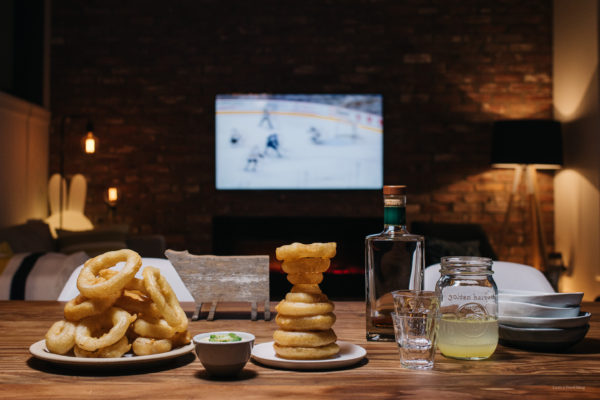 Beer Battered Onion Rings, Jalapeno Aioli
  2014 Holiday Gift Guide and a Giveaway
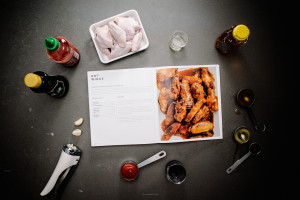 Easy Gourmet Hot Wings and a Giveaway!
 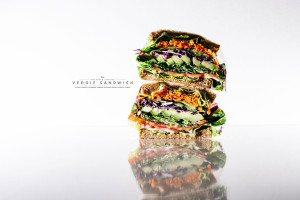 The Ultimate Veggie Sandwich
 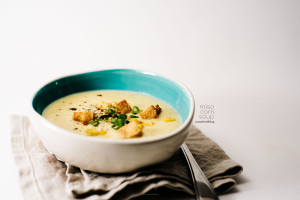 Vegan(!) Creamy Corn Soup Recipe
 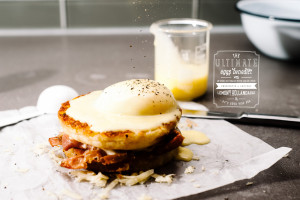 Sunday Brunch: Grilled Cheese Eggs Benny
