
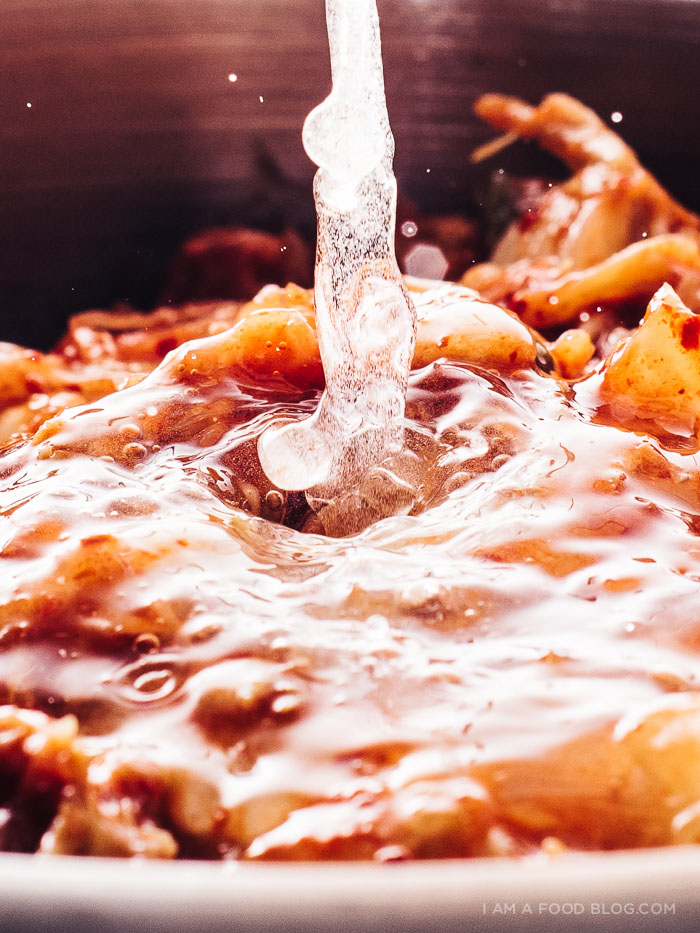
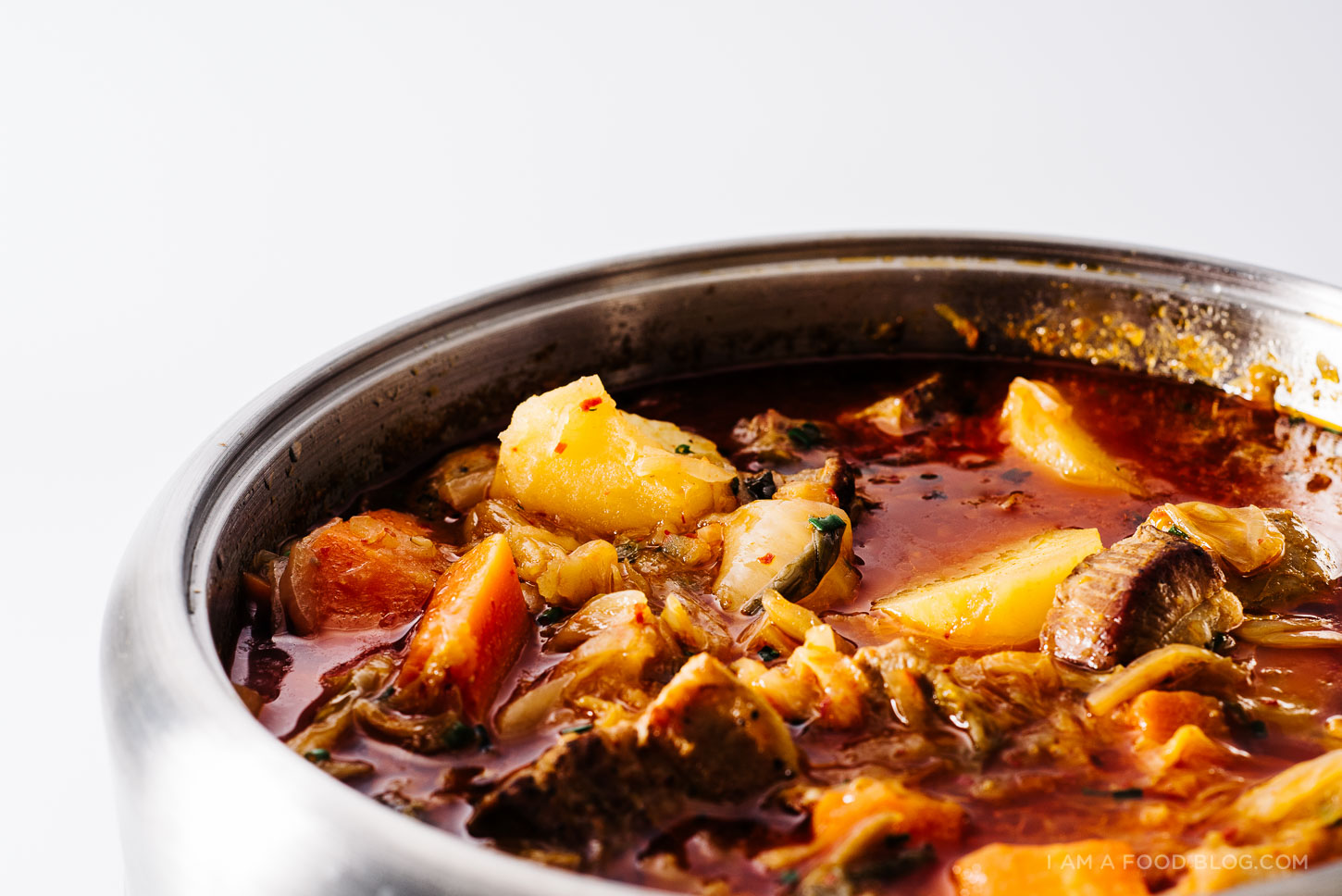

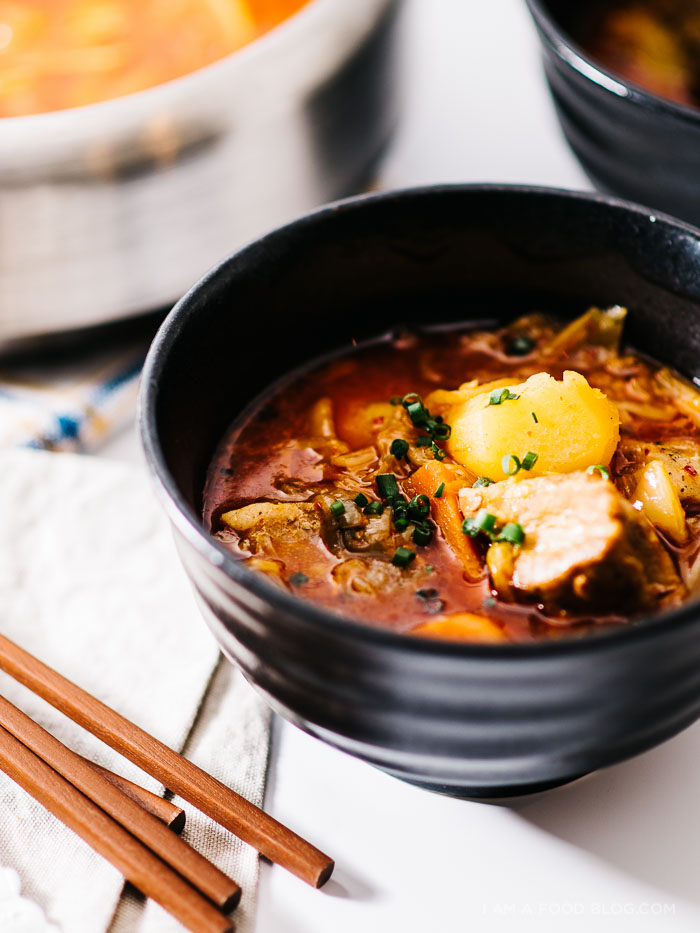
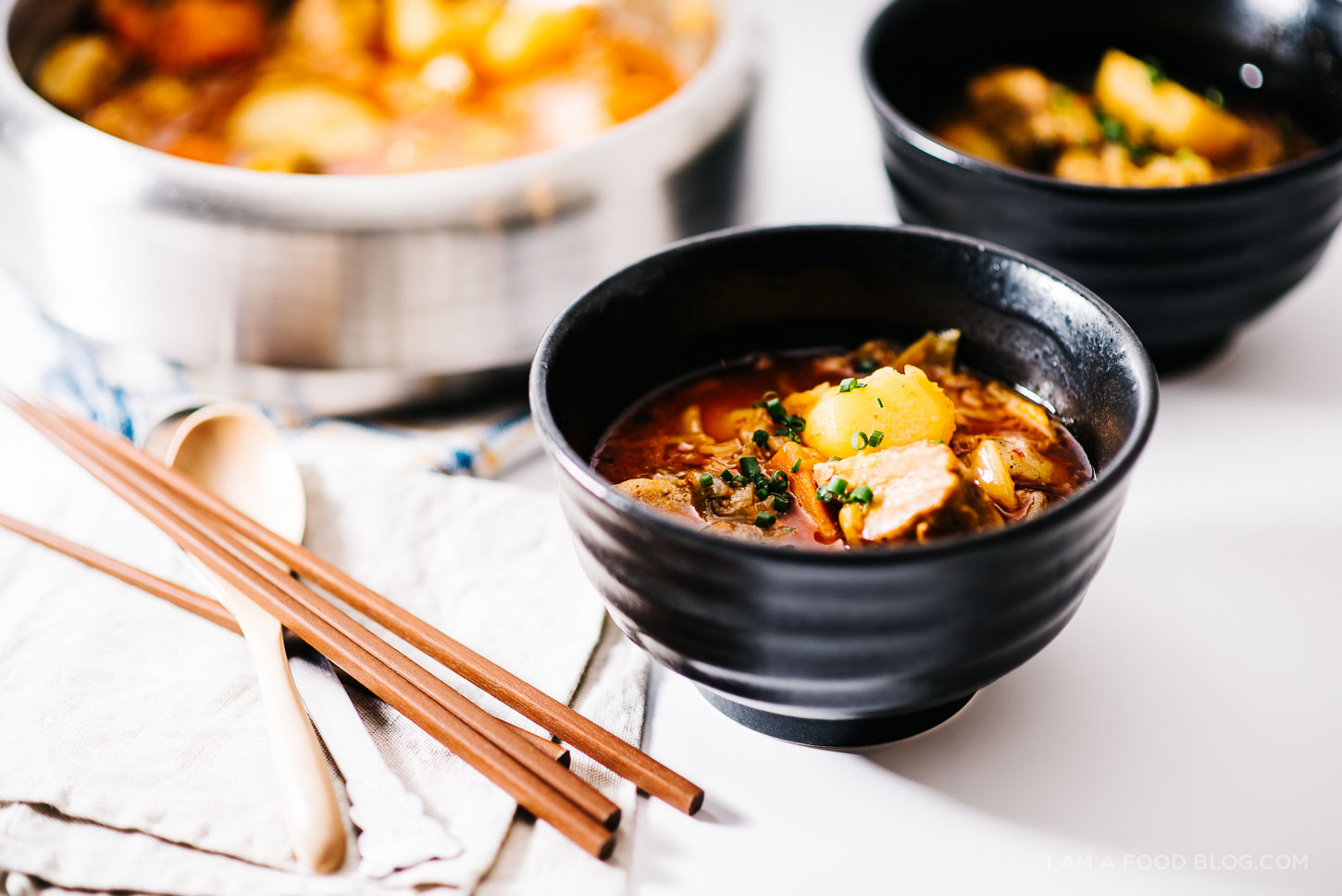
In the winter time, I’m a huge fan of stew. There’s just something so cozy about starting a stew and letting it braise. It puts me in a good mood every time. I think it has something to do with the fact that your whole house fills up with delicious smells, making the anticipation unbearable in the best way possible.
Braising and stewing is incredibly easy: all you need to do is sear some meat and aromatics, cover with a bit of water or stock, and then let the whole thing cook down low and slow. Braises and stews are excellent for those cuts of meat that have a lot of connective tissue – for beef, chuck, brisket, round are some good choices. For pork, shoulder is super popular, or belly works well too. Combine tender, succulent meat with spicy kimchi and you’ve got yourself a stew that’ll definitely warm you up.
I’ve got to admit, the first time I tried kimchi, I didn’t like it. It was sour, slimy and just too much for my unrefined palette. It probably didn’t help that when I tried it, it was literally just a piece of napa cabbage kimchi. I mean, that was it: I took a piece of kimchi and ate it. It wasn’t a garnish, or part of a dish. There was nothing to alter the unabashed kimchi-ness of it. I practically wanted to spit it out – I didn’t, but it wasn’t something that I wanted to eat again.
It was only after I cooked my way through the Momofuku cookbook that I learned to love kimchi. The one dish that convinced me was kimchi stew. See, something magical happens when you cook kimchi: it mellows out into a milder version, turning into an addictive, slightly spicy, slightly crunchy, yet soft creamy crunchy pile of addictiveness. If you’re still not a lover of kimchi, do yourself a favor and lightly pan fry some in butter and tuck it into a tortilla with cheese to make a kimchi quesadilla – it’s seriously one of my favorite things to eat.
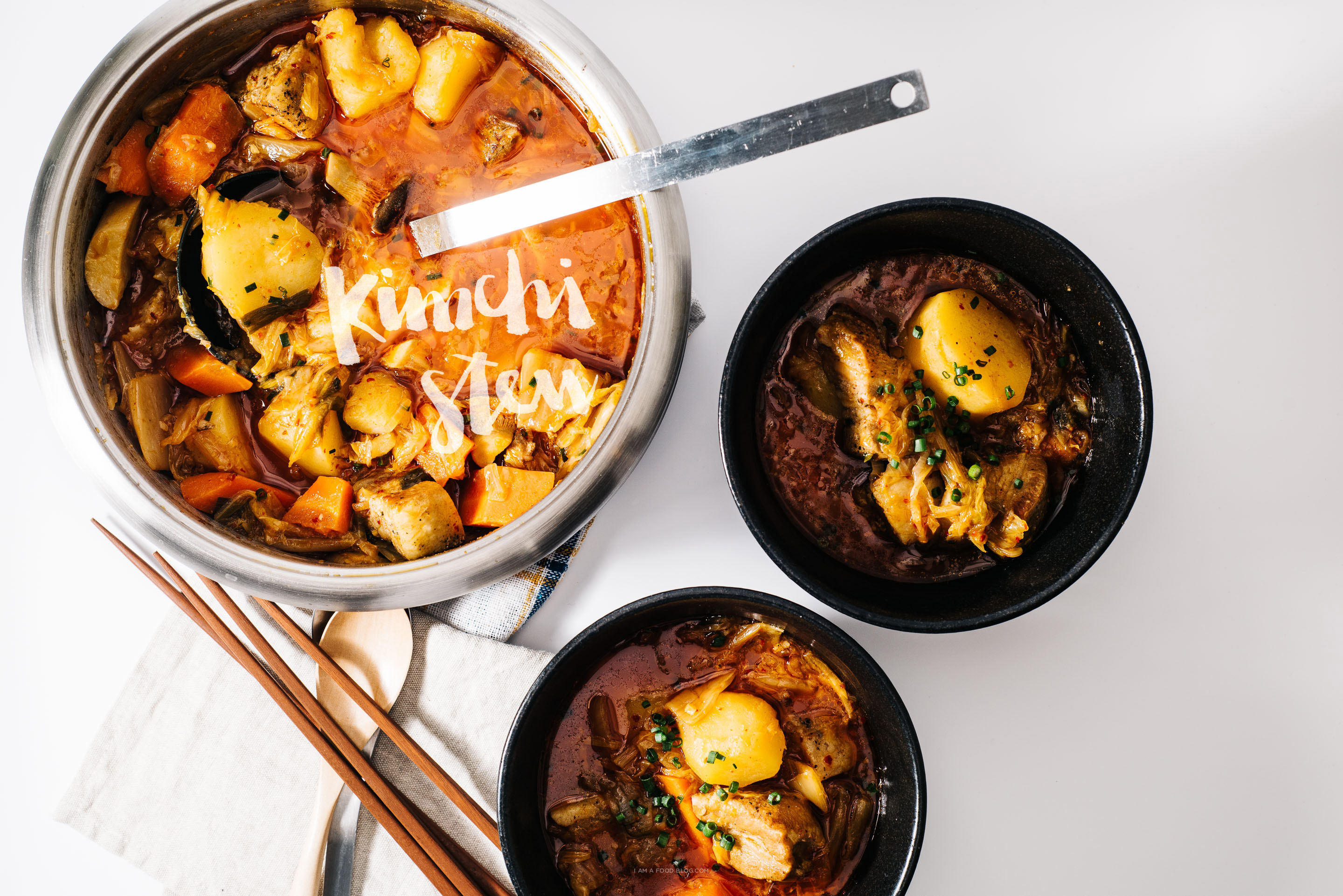
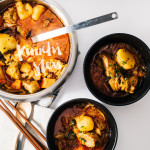
Kimchi stew is one of those beloved dishes. All Koreans have their own recipes for kimchi jigae – it’s as homestyle dish that has as many variations as types of pizza. I did this as a mix of a traditional kimchi jigae and a good ol’ regular stew. Kimchi jigae is usually made with thinly sliced pork belly, but I went with thick slab belly to take it over the top. Along with the belly and kimchi, I also added in the usual suspects in any regular homestyle stew: onions, carrots and potatoes.
This was one of those meals Mike and I couldn’t get enough of. We ate until we were stuffed and the next day, even though we were planning on going out for dinner, we voted to stay in to polish off the leftovers. It’s a winner! Hope you guys get a chance to give this pork belly kimchi stew recipe a go!
Braised Pork Belly and Kimchi Stew Recipe
serves 4
- 1 pound slab pork belly, skin off preferred*
- salt and freshly ground pepper
- 1 onion, thinly sliced
- 2 cups kimchi, with juice**
- 1-2 tablespoons mirin, or to taste
- 1 carrot, cut into 1 inch pieces
- 1-2 cups sliced mushrooms, optional
- 2-3 potatoes, cut into 1 inch pieces
- sliced green onions, to garnish
- grain of choice, pasta, noodles, or bread, if desired
Slice the belly into 1-inch thick cubes. Season all sides with a generous sprinkle of salt and freshly ground pepper. Heat up a heavy-bottomed, oven-proof dutch oven or pot over medium-high heat. Sear all sides of the belly until golden and brown. You shouldn’t need any additional oil as pork belly has a high fat content – if you experience sticking, or are nervous about your pork sticking to your pan, add a touch of oil, but you really should need much at all.
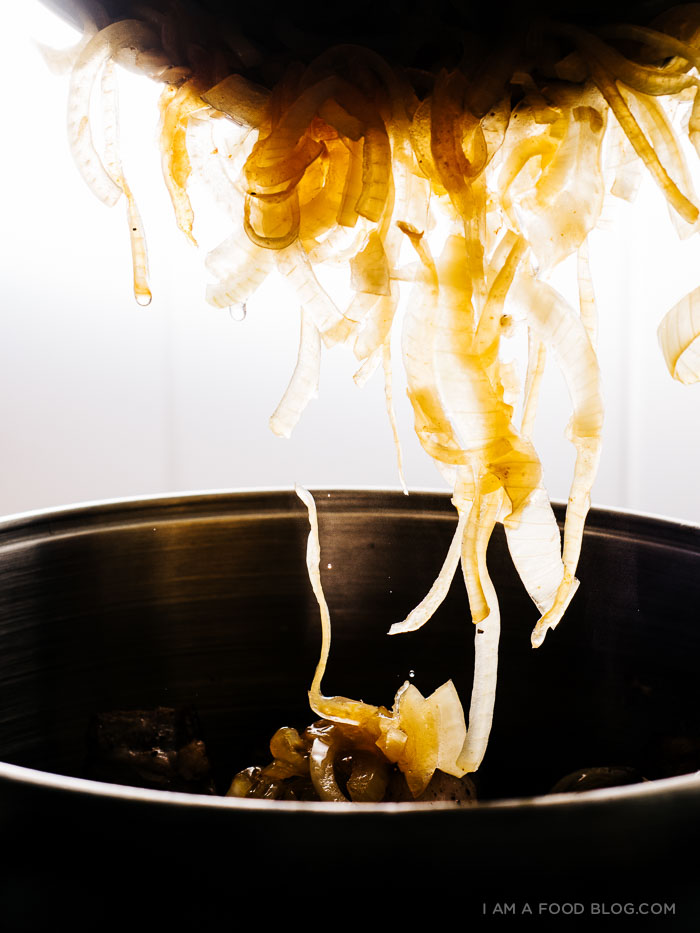
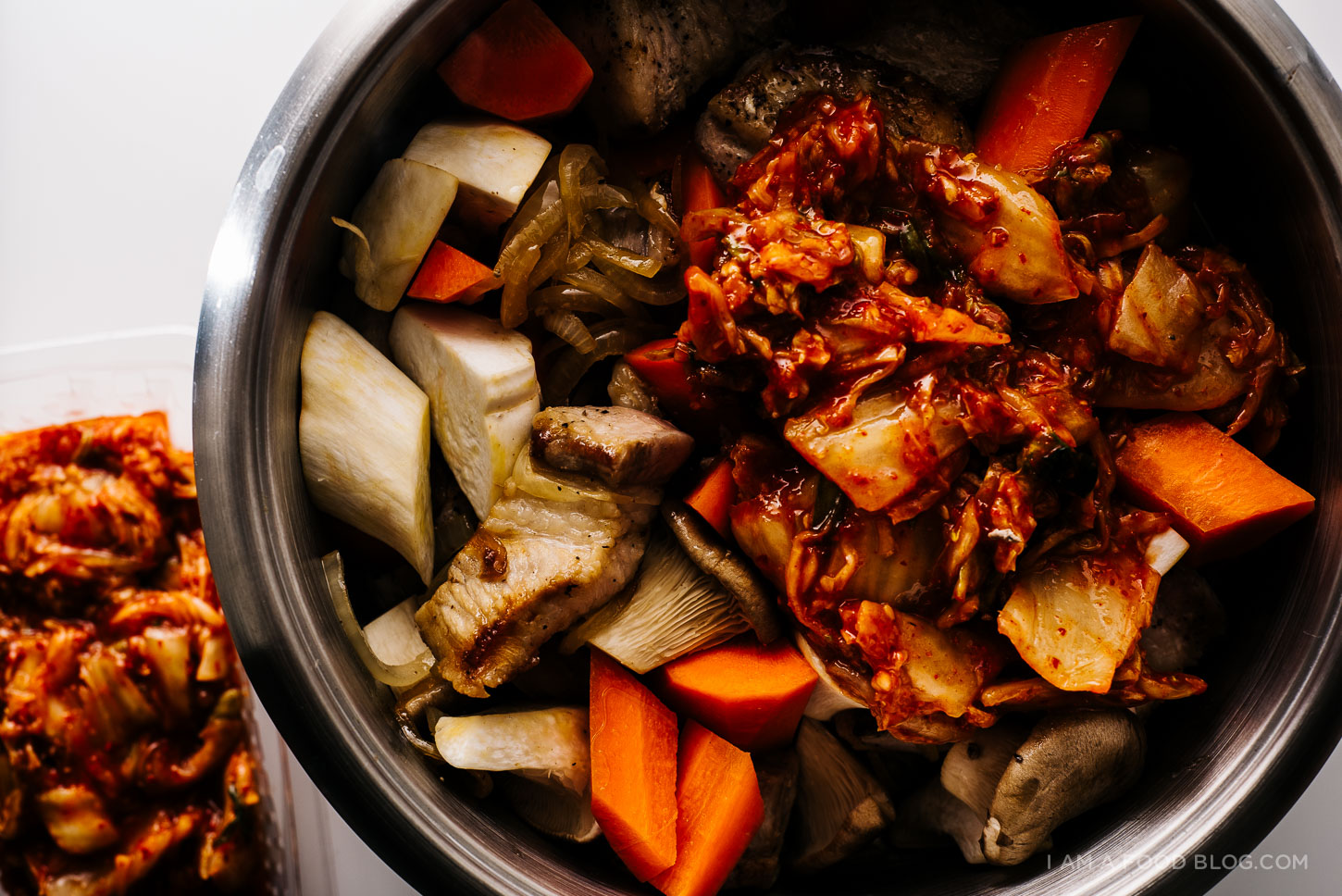
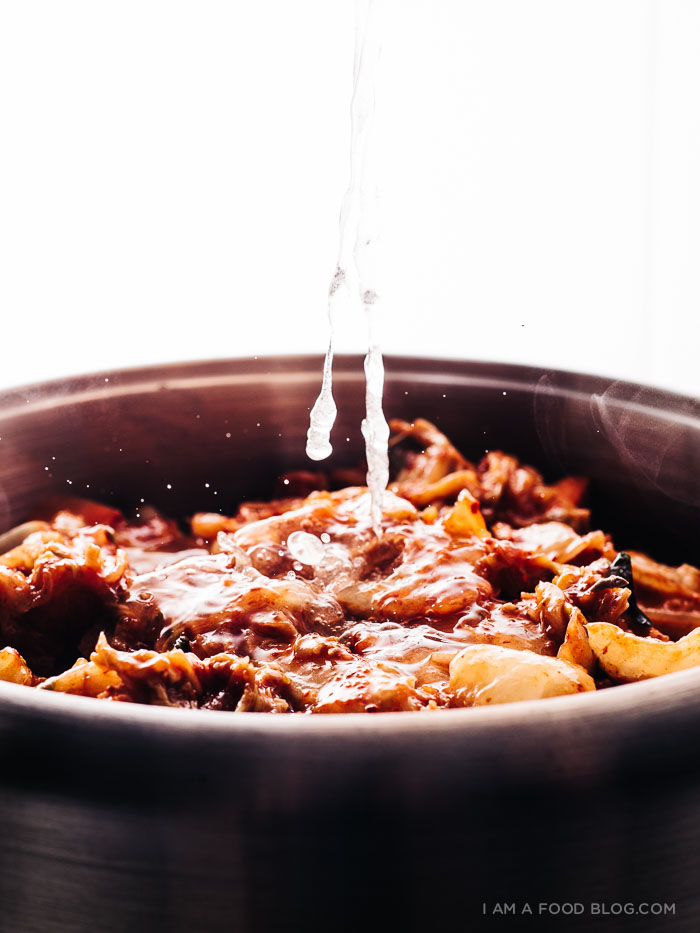
When the pork is golden, Remove from the pan and set aside. If a lot of fat has rendered out, remove all but 1 tablespoon. Add the sliced onions and cook over medium heat until brown and soft. Add the kimchi, carrots (and mushrooms, if using) and brown lightly. Add the pork back into the pot and mix well. Add just enough water to barely cover the pork and bring to a gentle simmer.
Keep the stew, covered, at a barely bubbling simmer for an hour. After an hour, stir in the potatoes. Cover and continue to cook for another hour. After 2 hours the pork should be incredibly tender. Taste and add the mirin, adjusting if necessary. Season with salt and pepper if needed and serve, sprinkled with a generous amount of green onions for a bit of freshness. Enjoy on it’s own, or with your favorite grain, pasta, noodles, or bread.
Notes:
When you’re buying your pork belly slab, look for a piece that has a decent fat to meat ratio. I like my belly on the leaner side – most bellies have a lot of fat, so be conscious while selecting your meat.
I find that store bought kimchi works just fine in stew. You can find kimchi in the refrigerated section of the grocery store, usually near the tofu.
If you’re more comfortable finishing your stew in the oven, please do! Just place the covered pot in a 325°F oven for an hour, remove and stir in the potatoes, and place in the oven for another hour.

This post is brought to you by Samsung. Try one of our top #chefsecrets tips next time you’re whipping something up. Terms and details of the contest available here.
Don’t forget to check out the Samsung Club des Chefs videos! You can win a new Samsung fridge if you upload a photo or video inspired by the tips – just post your creation on Instagram and be sure to tag @samsunghomeappliances and #chefsecrets to enter. Good luck!
If you find yourself in New York, you should try the kimchi bouillabaisse at Bistro Petit in Williamsburg!
This looks so delicious! I can almost taste it. Can never go wrong pairing pork belly and kimchi annnnd in a yummy stew!? Perfect for the winter time. So excited to try this out! PINNED! :)
This looks very yummy, definitely I’ll try this .
Pork stew sounds awesome……Anyways will make a try on the same and let you know the result of the same.
Keep do share more of this type of recipes in this post.:)
I love seeing another great kimchi recipe! I tend to buy small jars of kimchi from my local Korean store. Anything bigger saturates the other food with the smell of kimchi in my fridge.