

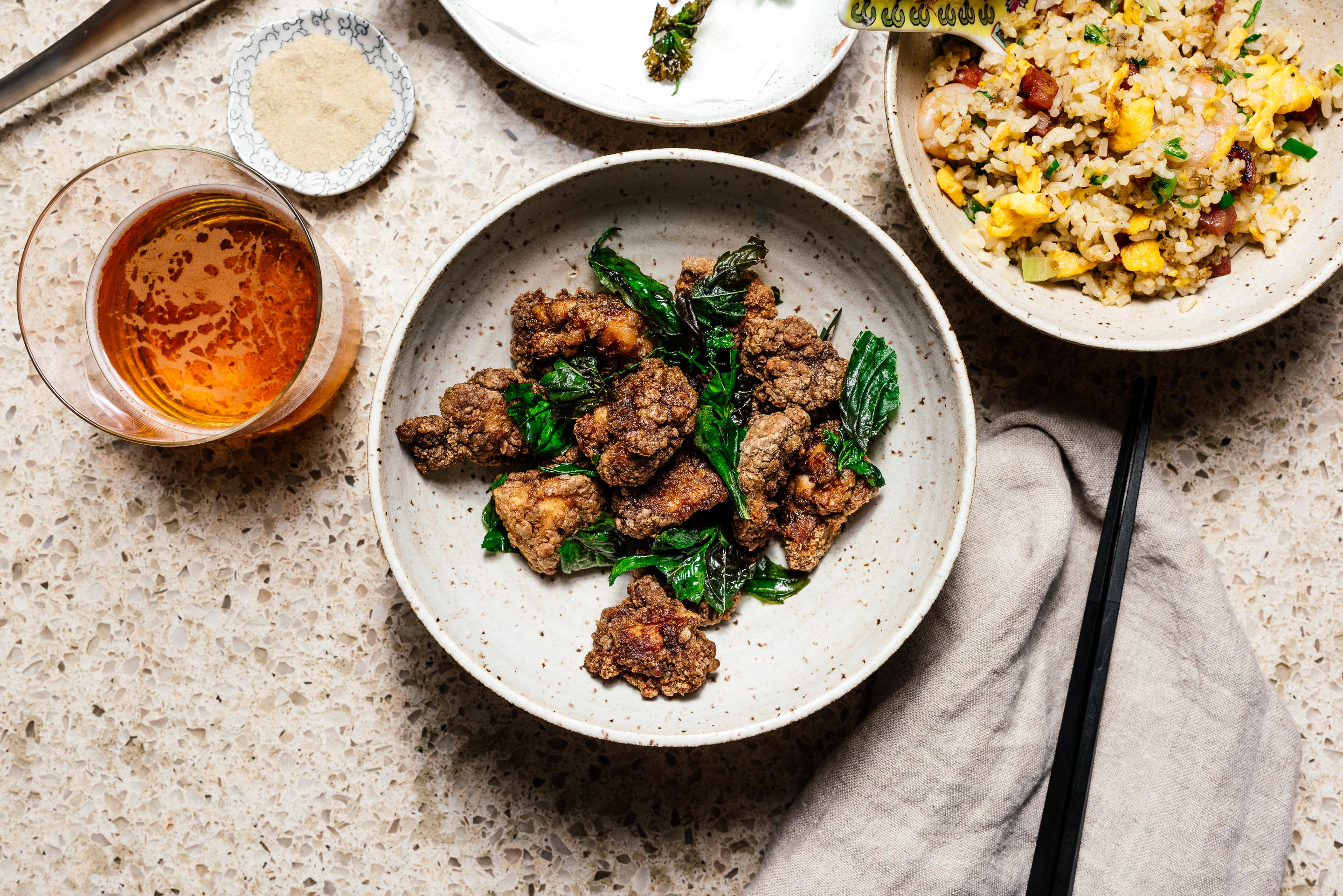
I Am... The easiest 8 ingredient oven baked Taiwanese popcorn chicken recipe
Taiwanese popcorn chicken is a classic snack you can find at almost any proper taiwanese restaurant, street side stand, or cafe. Anyone who’s ever had it can tell you it’s an addictive dish that will have you eating a pound of chicken before you know it. It’s easily one of the best fried chicken variations in the world; standing shoulder to shoulder with other fried chicken stalwarts such as southern fried chicken or Japanese chicken karaage. This is an easy 8 ingredient oven baked version that tastes surprisingly close to the real thing. Cooking Notes Instead of a small bowl, you can definitely marinate the chicken in a ziplock bag. But if you do so, you should still transfer to a second bag to keep it as dry as possible so the corn starch sticks mostly to the chicken, and not to your bag. We do two layers of cornstarch for this chicken because of the wet rub (which is essentially what this paste is), once to dry out the rub and again to get a crispy coating. After the second layer, your chicken should look nice and dry. Ingredient Notes Five spice is a chinese spice mix of star anise, cloves, cinnamon, sichuan peppercorns, and fennel. It’s easily available at most grocery stores in the spice aisle or available online. If you can’t find it, skip it or sub in any of the spices you have on hand. Toasted sesame oil is dark brown in color and found in the Asian aisle of any grocery store or online. If you can’t find this, skip it, but once you try it, you’ll want it in everything. What do you need? A baking sheet with a snug fitting rack. What do you serve it with? Enjoy with white rice, mixed into fried rice, or just on its own with some beer, Taiwanese style. Garnish Traditionally this dish is garnished with fried Thai basil (which is what I’ve done here), but being that this is oven baked and not fried, you can garnish with fresh Thai basil, cilantro, or any herbs you have on hand.
The easiest oven baked Taiwanese popcorn chicken recipe Serves 21. In a small bowl, make a paste with the garlic, sesame oil, soy sauce, five spice, white pepper, and sugar. Toss your chicken in the paste until well coated and marinate for 15-30 minutes. 2. Once you are ready to cook, preheat your oven to 450ºF. Place your chicken in a ziploc bag along with 1 tablespoon cornstarch, then shake. Once the chicken is well coated, add a second tablespoon of cornstarch and shake again to coat. The chicken should look dry at this point. 3. Arrange the chicken pieces on a well oiled rack fitted into a foil covered baking sheet and bake for 20 minutes. 4. After 20 minutes, flip the chicken and bake for another 5 minutes. 5. Remove and enjoy immediately with some fresh herbs, rice, and beer.
- 2 cloves garlic, crushed
- 1 tbsp toasted sesame oil
- 1 tbsp soy sauce
- 1 tbsp five spice
- 1 tsp white pepper
- 1 tsp sugar
- 1/2 lb boneless skinless chicken thighs, cubed
- 2 tbsp cornstarch
I Am... 10 Tips and tricks for making the best weeknight pasta of your life
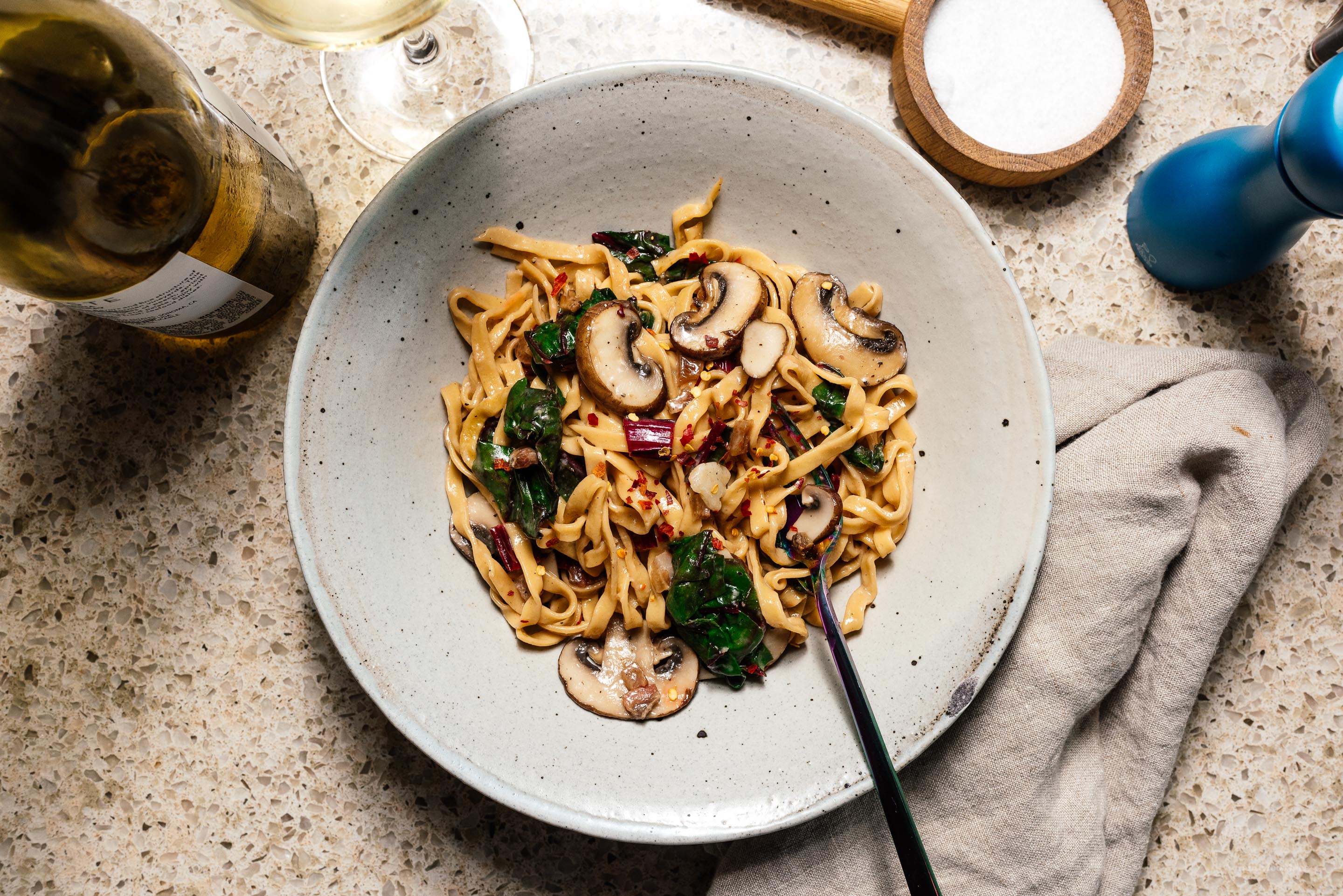
When you don’t have time or energy for a slow, carefully simmered ragu with layers upon layers of flavors but still want pasta, you basically have two options: go to your friendly neighborhood hopefully high end pasta joint, or make a quick and easy weeknight homemade fix. Even though we are lucky enough to live 1 block away from a great pasta place that makes fresh pasta each morning, I’ll choose the homemade option pretty much every time because it's just as fast, often tastier, and with the bonus of no pants needed. The truth of the matter is, you can make a fast restaurant quality pasta dish at home with no recipe at all if you follow the simple framework of fat + cured meat + aromatics + liquid + cheese + star. Within this framework, you can riff it into a million recipes. Is it payday or a big celebration? Splurge on uni. Feeling poor? Go all veg. In fact, it might be tempting to go for a big meat thing, but the best pastas are often veg forward. There’s nothing better than a nice brown butter stinging nettle wild fennel pasta thing. Breaking it down: 1. The Fat: use butter or high quality olive oil, and do at least 1 tablespoon per serving. The fat coats the pasta and carries the flavor, it’s important. 2. Cured Meat: this is a quick and fast way to build flavor without slow simmering a sofritto all day long. I prefer guanciale, it’s cheap, keeps forever, and it’s incredibly smoky and tasty. Pancetta is nice as well and proscuitto has its place, but guanciale is the go-to cured meat for me. 3. Aromatics: try to go beyond the usual garlic and onions if you can. Fennel, mushrooms, sage, etc are all good options here. 4. The Liquid: wine, sodium free broth, or milk. Not too much, and the choice is not as important as it may seem. 5. The Cheese: this is where you should go big. Parmigiano Reggiano, Pecorino, and more, the cheese is where the big flavor hit lies and is usually the difference between the stuff you have at home and the stuff they charge $25 a plate for in restaurants. I like to go 1/4 cup in the sauce and 1/4 cup to finish per serving here. That is indeed 1/2 cup of finely shredded cheese per serving. Splurge on the best cheese you can afford. 6. The Star: this is the differentiator and makes your pasta, you. Pick what’s in season, what’s cheap, and what you feel like. Uni, Tuna, Nettles, Peas, and so on. Nothing is off limits. Within the framework, just follow the steps below. 1. Heat the fat, and then crisp the cured meat. 2. Add the aromatics: add onions and its relatives until translucent, brown and crisp the garlic, soften anything else. 3. Add liquid and reduce by half. 4. Add cheese and stir until an emulsified sauce forms. 5. Lastly, add your star ingredients. In addition to the framework, here are 10 tips and tricks to getting the best pasta of your life: Tip #1: Choose fresh or high quality bronze extruded dried pasta. Or, if you get a chitarra, you can buy a ball of good fresh pasta, roll it out fairly thin, and cut it with the chitarra into tagliatelle, which is what I did here (although we made our pasta fresh instead of buying it). Tip #2: Make the right amount of sauce, which is about 1/4 to 1/3 cup of liquid per serving. In this recipe, I’ve combined 2 tablespoons of oil with about 2 tablespoons of rendered fat from the guanciale and 1/4 cup of wine (after reduction) to make just a little more than 1/2 cup of sauce for two servings. Tip #3: Always sauce in the pan. I like to cook my pasta 3 minutes from the package time, and then transfer to the pan along with some pasta water for its last 3 minutes. This guarantees glossy, super flavorful, properly sauced noodles every time. Tip #4: Never rinse your pasta. Pasta goes directly from pasta pan to sauce pan with no break in between, ideally without even hitting a colander. Tip #5: Transfer the pasta from the pot to the sauce with tongs or a spider. This lets you save the pasta water, which in turn helps you build a thick glossy sauce. Tip #6: Always think about the cheese. Cheese is one important leg of the pasta pyramid (the other two are the aromatics and the star). Tip #7: Make it spicy. If you can handle spice, a lot of good Italian food isn’t authentic without the spice hit. Tip #8: Don’t forget seafood. Italy is mostly coastline, and some of the best pastas I’ve ever had were seafood based. Uni, octopus, squid, tuna, and salmon are all great pasta stars. Of course, we can’t forget the most well known one: clams. Tip #9: Add really delicate flavors in at the end. Cooking can destroy flavors, so don’t be afraid to drop in some items near the end and let the heat of the pasta cook them. Tip #10: Highlight the season: fresh herbs and veg in summer, seafood in winter With all this in mind, this is a super easy, 6 ingredient weeknight pasta made with whatever was in our fridge. It was amazing: the umami from the cheese + mushrooms, the slightly bitter note of the red chard, and the smoky, pepperiness of the guanciale combined to create something far more than the sum of its parts. It serves 2. I ate half. Then I ate the other half, with no regrets. What do you need? A nonstick skillet, a pot big enough to boil pasta, and a pair of tongs (or chopsticks even).
15 minute weeknight pasta recipe #603: Tagliatelle with guanciale, mushrooms, and red chard Serves 2Read More →1. Bring a pot of well salted water to a boil. Add your pasta and set the timer for 3 minutes before the package time. 2. Preheat a nonstick skillet with 2 tablespoons of olive oil or butter. Crisp the guanciale and cook the mushrooms over medium heat for 3-4 minutes. 3. Add the wine and reduce by half. 4. Add half of the cheese and stir until a glossy sauce forms 5. Reserve 1 cup of pasta water, then drain and transfer the pasta without rinsing to your skillet (or just use tongs). Add the red chard and toss with the pasta and 1/2 cup of the reserved pasta water until it is cooked to your liking and a glossy sauce forms (about 3 minutes). Add extra pasta water, sparingly, if needed. 6. Top with the remaining cheese and taste. Season with salt and pepper if needed, then plate. Enjoy immediately.
- 1/2 cup guanciale, finely chopped
- 2 leaves red chard, roughly sliced
- 2 large crimini mushrooms, sliced
- 1/2 cup white wine
- 1 cup parmigiano reggiano, finely grated
- 6oz pasta of choice

I Am... Strawberry Shortcake Strawberry Pancakes Recipe
Come summer I’m all about the strawberries. There’s nothing quite like the taste of a perfectly ripe, still warm from the sun strawberry. When I see all the local berries popping up at the farmer’s markets, I know it’s time for some berry goodness. I love them in muffins, I love them in sweet Japanese fruit sandwiches, and I love them with pancakes!
Read More →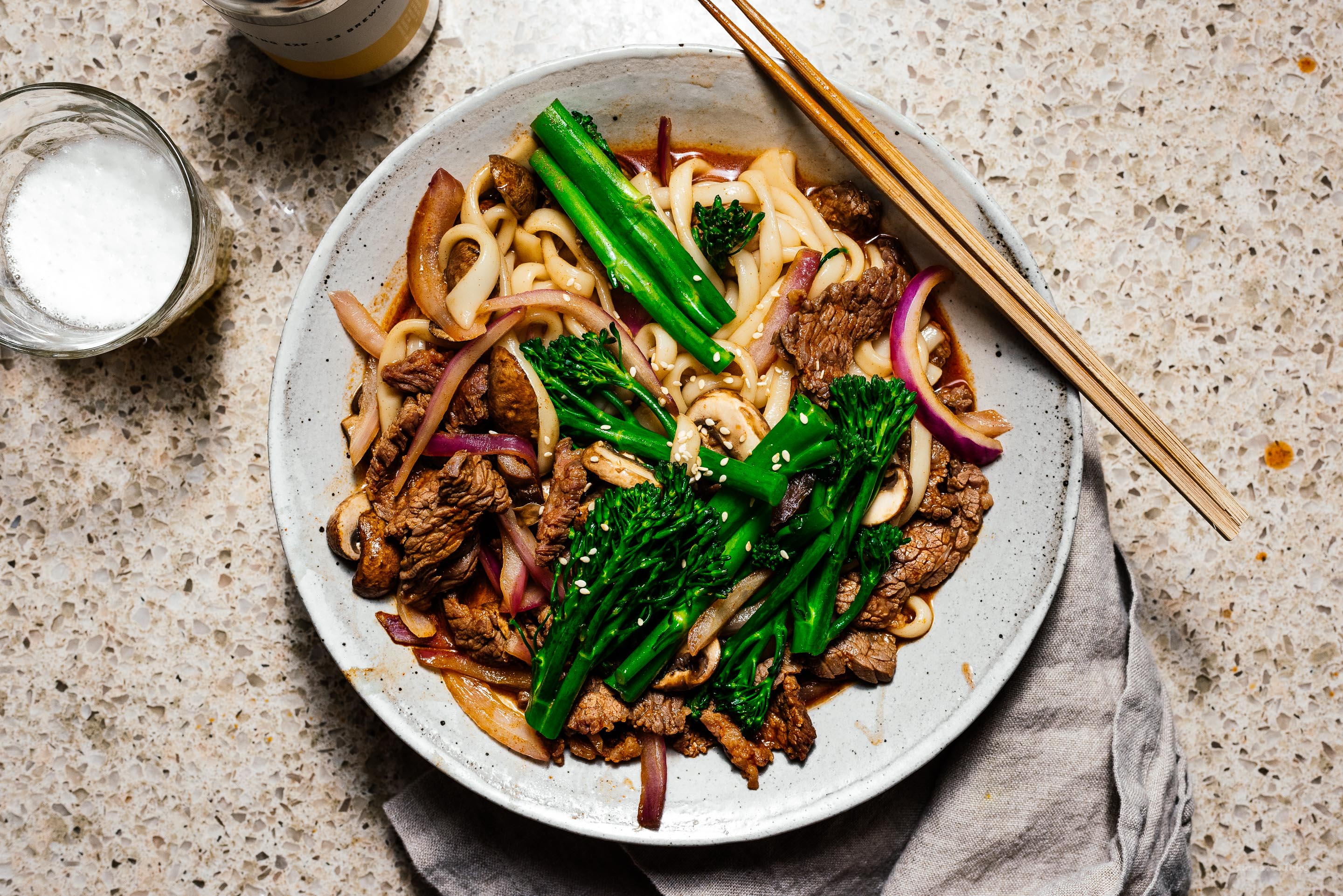
I Am... The ultimate 10 minute spicy beef weeknight stir fry udon
This is an incredibly tasty weeknight stir fried udon based on classic Japanese spicy beef that comes together easily and quickly with only 8 ingredients. It’s spicy and savory with a great mix of textures - the suppleness of the udon, the chew of the beef, and the crunch of properly cooked vegetables - that just explode in your mouth. I originally made this dish only to shoot for this blog post; we planned on saving it and having something else for dinner, but we couldn’t stop ourselves from finishing it. Our real dinner sat languishing aside, wishing it was this udon. It was so good we both decided it's going into our weekly rotation. Cooking Notes This is not one of those fake 10 minute dishes, but there are caveats. Namely, if you have time to cut your own cut of beef and marinate for 20-30 minutes, it would be a lot better. To do it in 10 minutes requires you to buy presliced beef and vegetables, which is still very tasty and way less work. If you were to go the 10 minute route, it would look like this: 1. T-10 minutes: whisk together the marinade ingredients in a bowl and add your beef 2. T-9 minutes: fill a bowl with hot water and soak udon 3. T-8 minutes: roughly halve an onion, then slice one half into 6 slices, open package of presliced mushrooms and prewashed broccolini, and slice the broccolini in half 4. T-7 minutes: preheat your pan 5. T-6 minutes: add beef 6. T-5 minutes: add vegetables 7. T-3 minutes: add udon and marinade 8. T-1 minute: plate, garnish, open a beer 9. T-0: blast off! Ingredient Notes The marinade ingredients are all available in the Asian aisle of any medium sized grocery store today. Buy cooking sake, not drinking sake. Also, buy Japanese soy sauce (kikkoman, yamasa, etc) if you can. If you can't find mirin, skip it and add 2 tablespoons of sake and 1 teaspoon more sugar, but it’s better to have mirin. These three ingredients form the base of a lot of Japanese cooking, so they won’t be collecting dust on your shelf once you have them (not that Dinner & Chill would ever ask you to buy single use ingredients). Gochujang typically comes in a red tub with Korean writing; the green and brown tubs are other pastes. These days, it also comes in a squeeze bottle, but I've never tried the squeeze bottle. You can buy presliced beef, typically labeled “stir fry beef”, or buy a cheap cut of whatever you like and slice it yourself, it’s not that much extra work if you have a good knife (it sucks if you have a bad knife though). I like brisket: it’s cheap and if you slice it thin, it has a good chew without being tough when you stir fry. You can also replace the beef with for pork, chicken, or tofu with no issues. Whatever you buy, if you can marinate for 30 minutes or more, it’ll taste 30x better (or more). The vegetables are your choice, but in this recipe I use 4 ounces each of crimini mushrooms and broccolini and 1/2 a red onion. Finally, unless you live in Japan and have access to freshly made udon, the best udon you can buy comes frozen, ideally with no english at all on it. If you can’t find that, try the shelf stable plastic bags labeled nama udon. Finally, as a last resort, use dried udon from amazon. What do you need? A large nonstick skillet and 2 medium-large bowls.
The best 10 minute spicy beef weeknight stir fry udon recipe Serves 21. Make a marinade by combining sake, mirin, soy sauce, sugar, and gochujang in a large bowl. 2. Slice your beef if you are not using a presliced cut and add to the marinade. 3. Fill a large bowl with hot tap water and soak the udon. 4. Prepare your vegetables of choice. 5. In a nonstick pan or wok, preheat a small amount of oil over medium-high heat. Using a pair of tongs or chopsticks, remove the beef from the marinade and add to the pan. Set aside the marinade and stir fry your beef for 1-2 minutes, then add vegetables and fry until the vegetables are very lightly cooked. 6. Drain and add the udon and reserved marinade. Toss well and bring the marinade to a boil, then fry for 1-2 more minutes, or until udon is warmed through. 7. Enjoy!
- 2 tablespoons soy sauce
- 2 tablespoons mirin
- 2 tablespoons sake
- 1 tablespoon sugar
- 1-2 tablespoons gochujang (dependent on spice preference)
- 8oz beef, thinly sliced
- vegetables of choice (see note above)
- 2 bricks udon
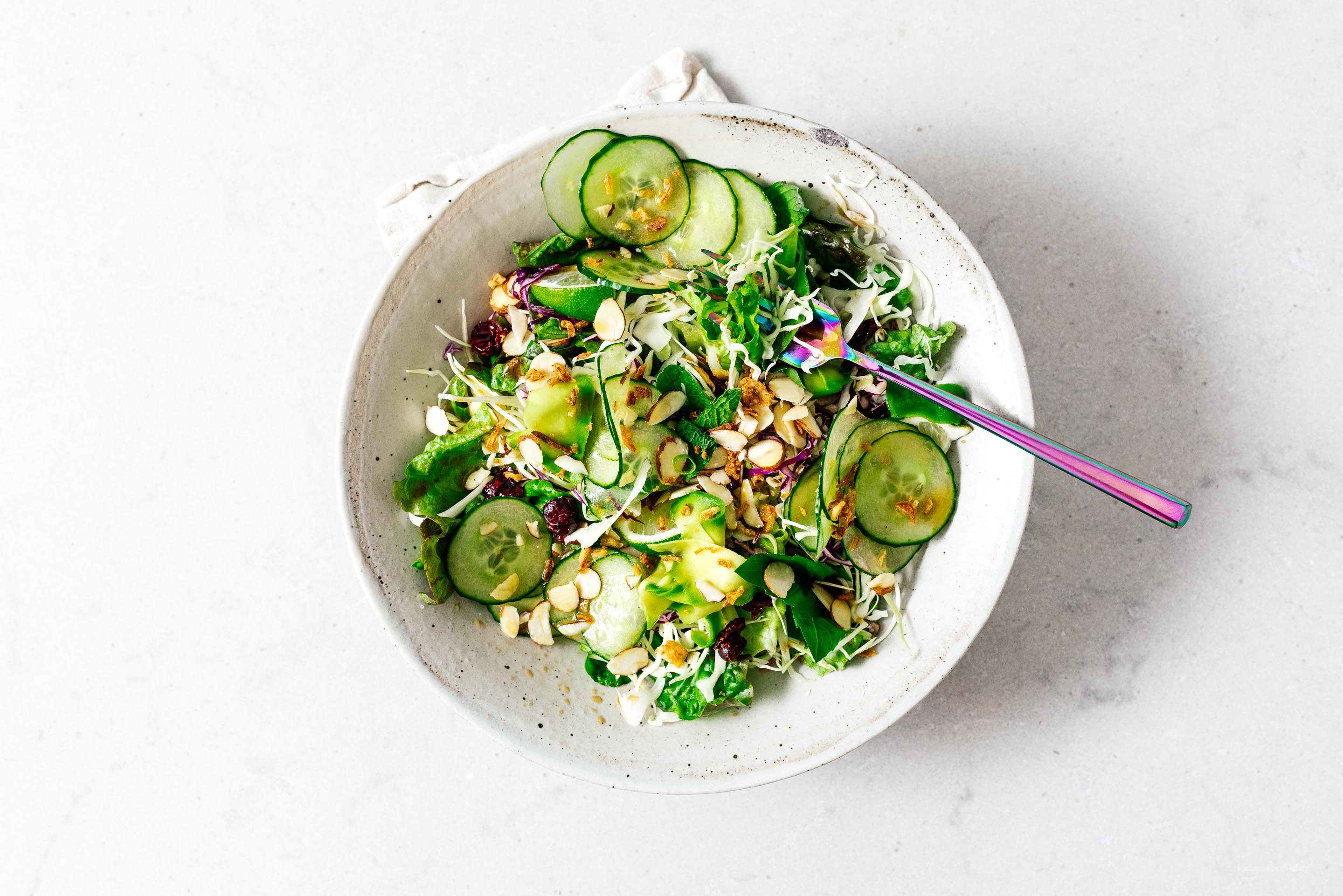
I Am... How to Make That Awesome Salad Dressing You Have at Every Japanese Restaurant: Wafu Japanese Salad Dressing
If you’ve ever had a salad in a Japanese restaurant or had a Japanese bento, you’ve probably wondered, “how the heck do they make salad taste so good?” The answer is wafu. Wafu means Japanese style, so wafu dressing is Japanese style salad dressing made from rice vinegar, soy, and oil.
Read More →
I Am... Easy Healthier Weeknight Baked Pork Meatballs Recipe
If you’re looking for a weeknight meatball, this is it: no chopping, one bowl, baked meatballs! They’re perfect because you can mix them up, pop them in the oven and skip out on standing next to the stove to sauté.
Read More →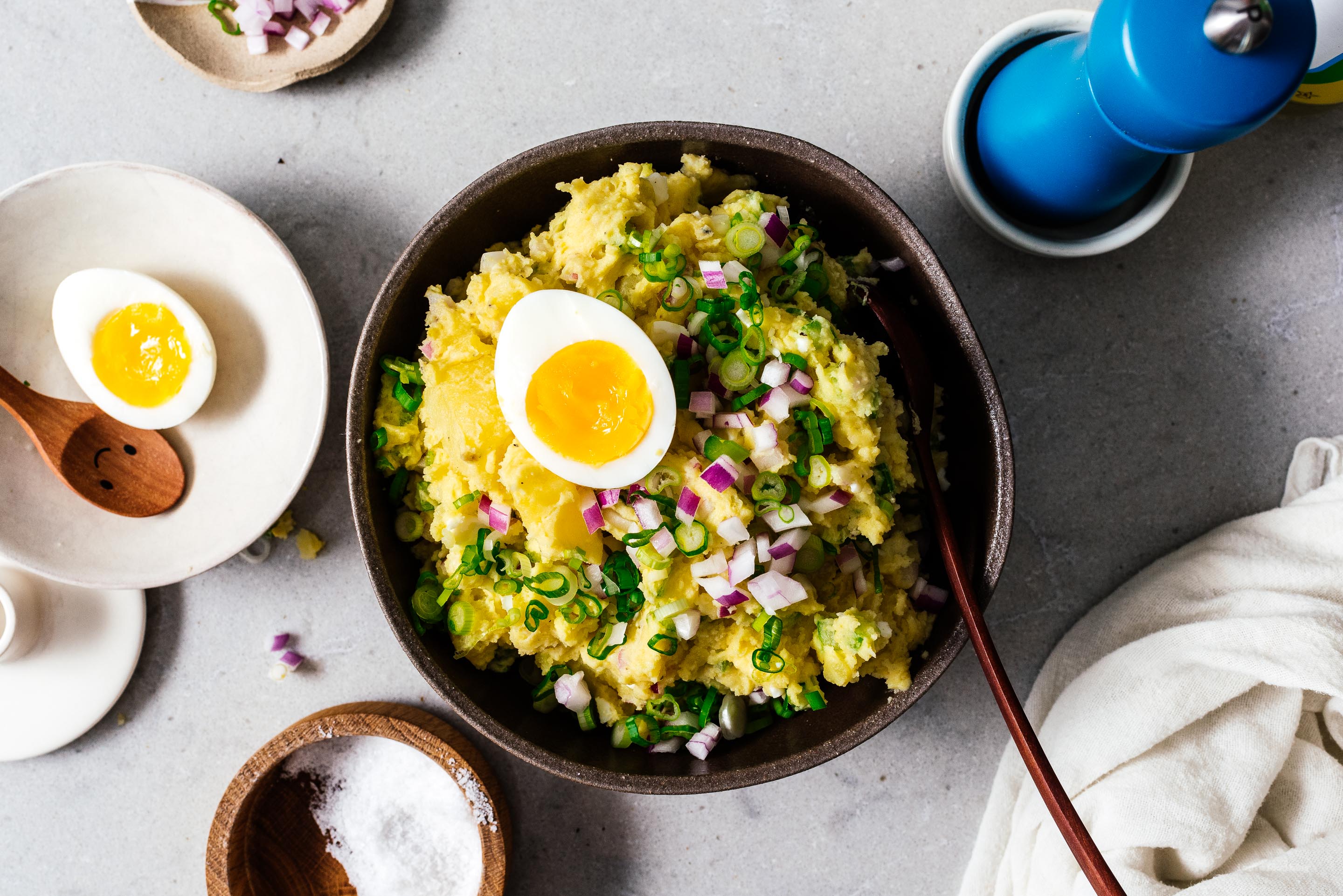
I Am... Perfect Picnic Potato Salad Recipe
The other day I got a text: can you send me your potato salad recipe? I mean, it was totally plausible that it was from a friend, but I didn’t recognize the number so I asked, “who dis?” Turns out it was a wrong number text but I offered them a potato salad recipe anyway because, why not? I thought it was hilarious and cute and so so perfect because I love potato salad so much and it reminded me that there isn’t a classic picnic potato salad recipe on the blog. So, the next day I bought some potatoes and here we are, perfect picnic potato salad. I’m a creamy mayo potato salad kinda girl. Don’t get me wrong, I like potato salads with yogurt and sour cream too, but something about barbecues and picnics means classic creamy potato salad with lots of crunchy things. The key to a good potato salad is the potatoes, of course. I like to use yellow flesh potatoes (Yukon golds are my potato of choice) and I always boil them skin on so they don’t get too soggy. Plus it’s really easy to peel potato skins off after they’ve been cooked. I learned that one from my mom – I remember her peeling potatoes after cooking them and now I do it too. Cooking them skin on also helps keep the potatoes more potato-y flavored, probably because the potatoes don’t get water logged. Anyway, after peeling the potatoes and roughly chunking them up, sprinkle on a bit of rice vinegar while the potatoes are still hot so they can absorb that awesome tartness and have a secret hidden punch. Rice vinegar is my favorite of all the vinegars, just the right amount of tart. You definitely need crunchy celery and a bit of onions as well. I go between red onions and green onions. If you like a milder onion flavor, do the green onions and if you like more crunch and sharpness, do the red onions. Sometimes I even do both. I also like using kewpie mayo because it is just so much more delicious than regular. It really adds that extra something! Happy potato salad making :)
Perfect Picnic Potato Salad serves 6Read More →Note: I love using kewpie mayo – it makes a huge flavor difference! Add the potatoes to a large pot of water and cover with water. Season generously with salt and bring to a boil. Reduce to a simmer and cook until potatoes are soft and easily pierced with a fork, 25-30 minutes, depending on size. When the potatoes are done, drain and let cool slightly. When cool enough to handle, peel the potato by pulling the skin away. Roughly chop the potatoes into bite sized chunks and place in a large bowl. Sprinkle the rice vinegar over the potatoes and toss. Mix in the onion, celery, chopped eggs, and mustard. Season with salt and pepper and mix in the mayo, a bit at a time until the salad is creamy and dressed to your liking. Taste and adjust the seasoning. Chill, covered for at least an hour before enjoying!
- 2 pounds small yellow potatoes, skin on, scrubbed
- 1-2 tablespoons rice vinegar
- 1/4 - 1/2 medium red onion, finely chopped, about 1/3 cup
- 3 stalks celery, finely chopped
- 3 hard boiled eggs, peeled and chopped
- 1 tablespoon mustard of choice
- 1/2 - 3/4 cup mayo, or to taste
- salt and freshly ground black pepper
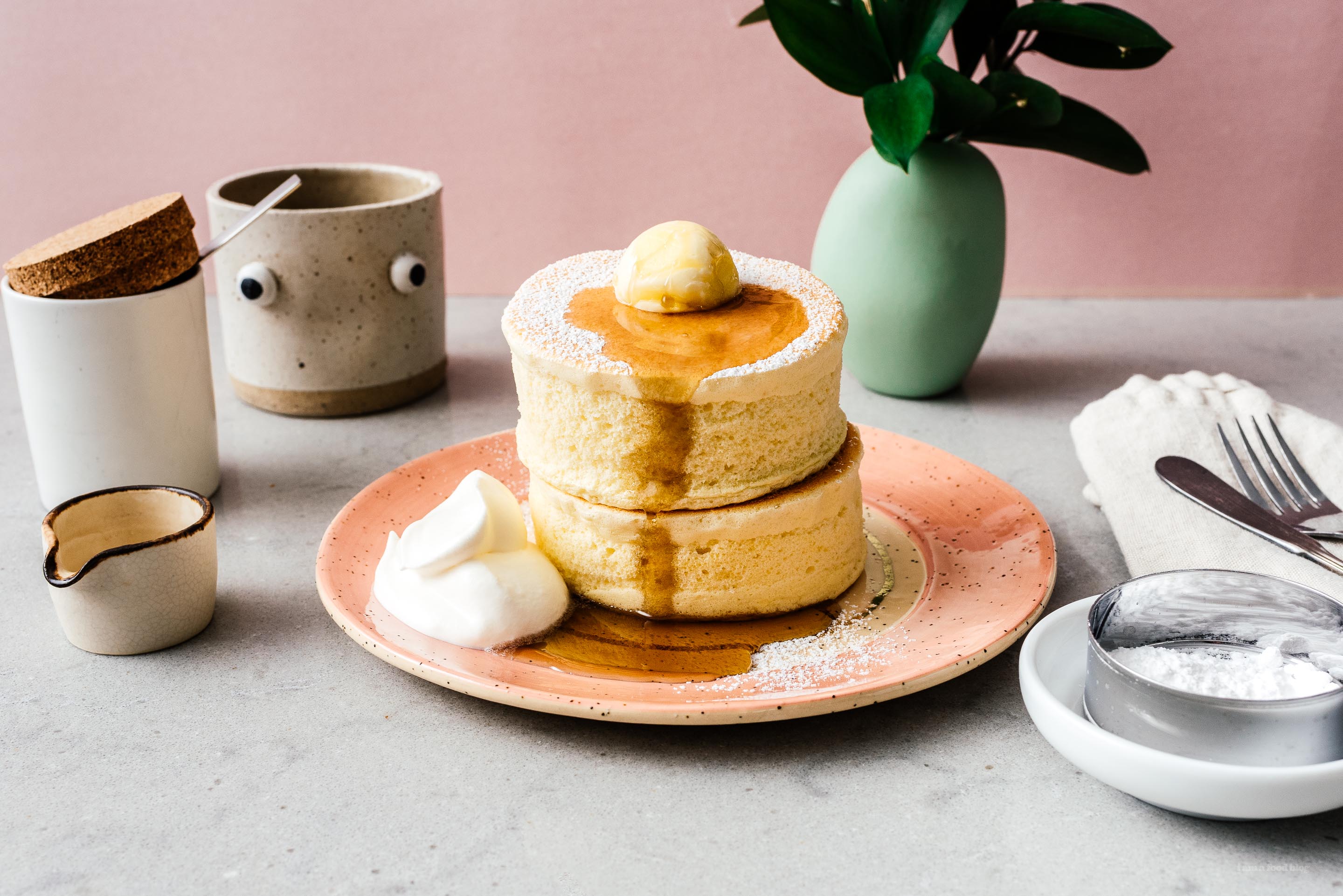
I Am... How to Make Extra Tall Extra Fluffy Japanese Soufflé Pancakes like Gram Cafe and Pancakes
Mike and I watch this youtube channel where this dude v-logs his days with his corgi. It’s infinitely cute because I love corgis and even more cute because sometimes he makes his corgi dog-friendly food. This post has nothing to do with dog friendly food. But, the youtube dude did inspire me to try my hand at Gram-style Fluffy Japanese pancakes.
Read More →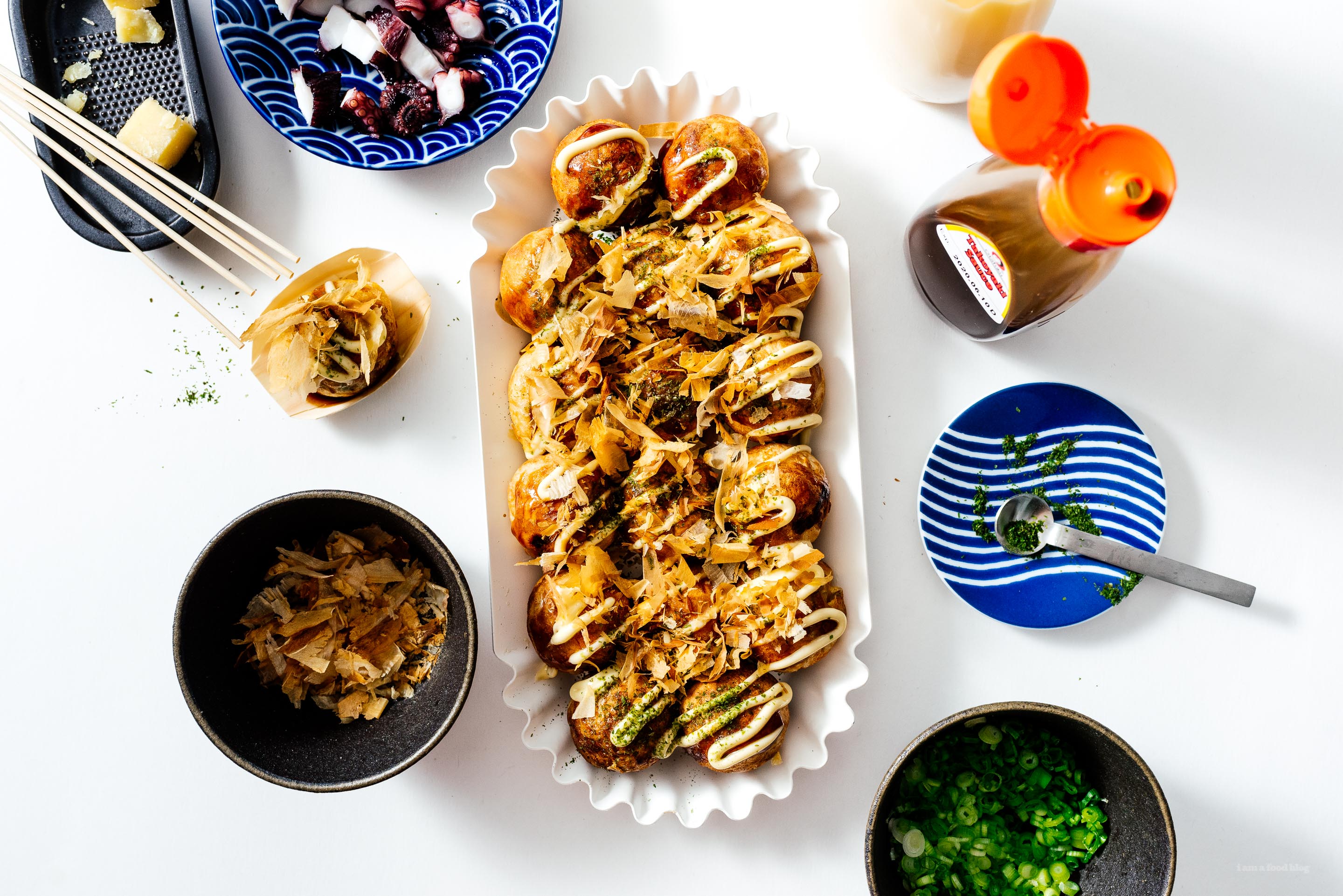
I Am... This is the Best Dinner Party Food Ever: an Easy Authentic Takoyaki Recipe to Make with Friends and Family
Takoyaki is THE PERFECT SNACK. I don’t know how many times Mike and I have stumbled home from a night out in Tokyo only to see the warm welcoming yellow lights and bright red awning of Gindado, Japan’s premier street side takoyaki stand. They’re the only ones open at 3 in the morning (okay, there are other places open, but for the purpose of this story, just pretend) and they are the ultimate drunk food. Crispy pan fried balls of savory seasoned batter filled with tender chunks of octopus, crispy tempura bits, and topped off with takoyaki sauce and seaweed. This is street food at its best: a la minute, fast, friendly, so bad for you, but oh-so-good.
Read More →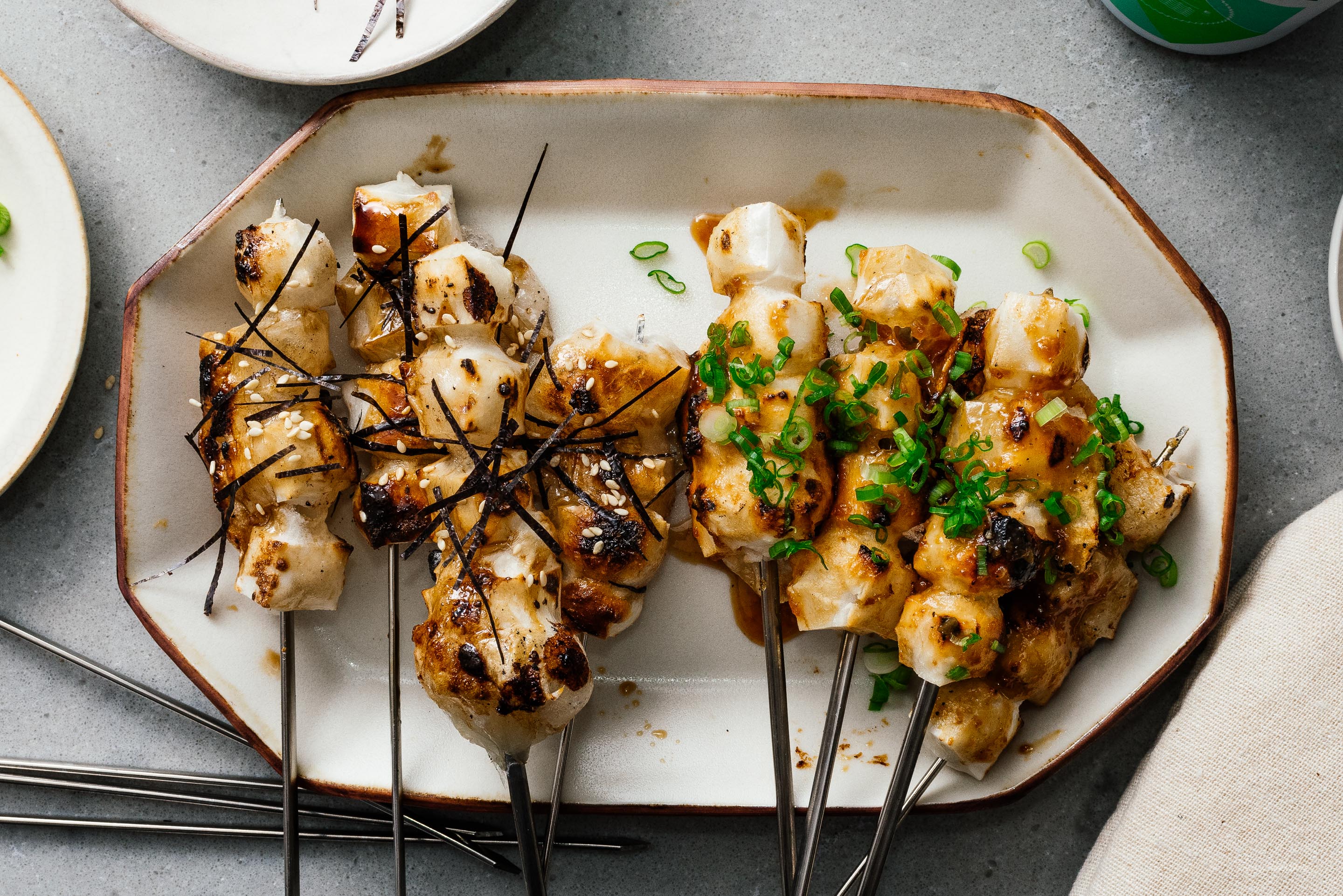
I Am... Grilled Yakimochi Recipe: Mochi is the Secret Ingredient Your BBQ Needs to be Next Level
Have you ever seen mochi and asked yourself, “why is mochi so popular?” What even is mochi? I’m hear to answer ALL your mochi questions.
Read More →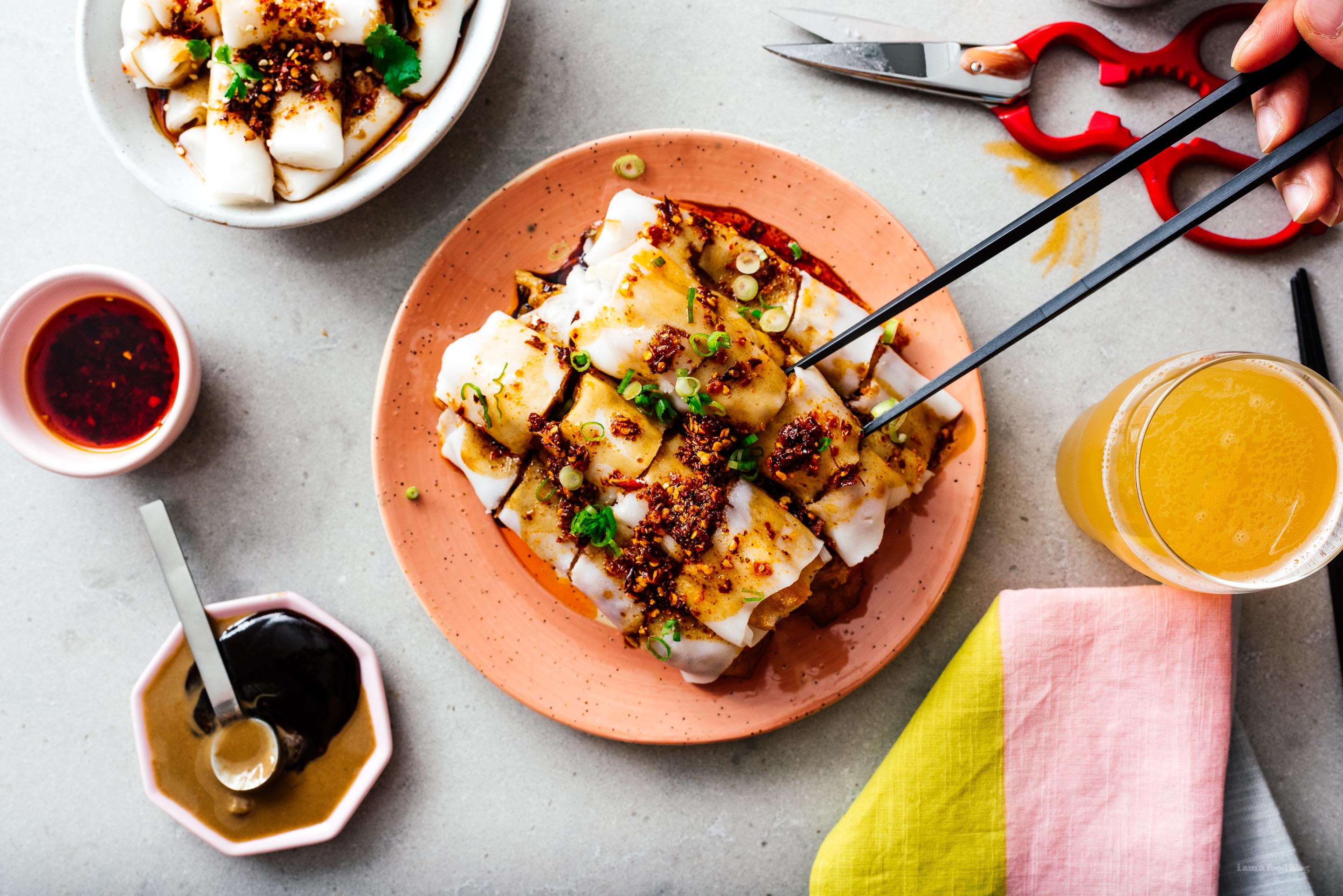
I Am... Zhaliang: Easy Homemade Rice Noodle Rolls Wrapped Around Chinese Doughnuts
Do you love carbs? Do you love carbs wrapped in carbs? Then you’ll love zhaliang: a crispy doughy Chinese donut tucked inside a slippery, chewy rice noodle, doused with sweet soy and served with hoisin and creamy sesame sauce. They serve it up at dim sum and it’s consistently a must order for me and Mike.
Read More →
I Am... What to Make this Father’s Day Weekend Plus Friday Finds 6.14.19
Can you believe it’s the middle of June already!? Hope everyone is eating all the fruit and barbecuing all of the things. This weekend’s Father’s day but we’re not doing any grilling – instead we’re going for dim sum with my family and pizza with Mike’s. My dad loves Chinese food and Mike’s dad loves freshly baked bread so they both made sense. Other than that, no big plans, just going to enjoy the summery weather. But, if you’re are planning on grilling for dad – and you should! – here are a couple of recipes that’ll be sure to show him some love.
Read More →
