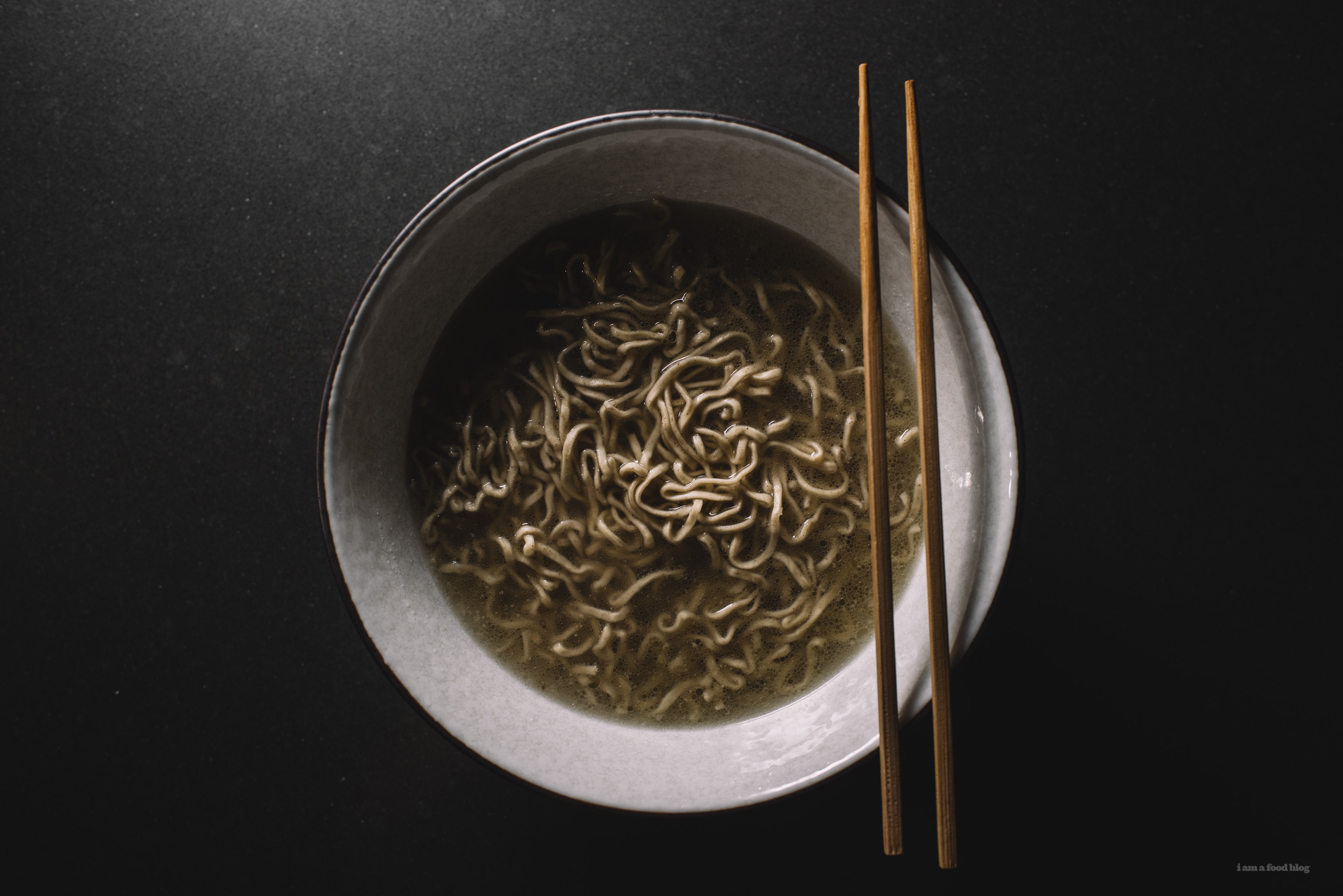
Have you guys ever watched Kung Fu Panda? It happens to be one of my favorite animated movies. It has everything: the laughs, the feels, and the hero’s journey featuring a fat and friendly panda. The movie starts off with Po, the only panda in a tiny bunny/pig village, a literal outsider in an ordinary world. He dreams of kung fu at night, but by day he works in his father’s noodle shop.
One of my favorite scenes in the movie is when Po, upon waking from a fantastic dream where he’s a kung fu master, tries to tell his dad what he wants in his heart of hearts. His dad (who is actually his adopted dad, and a duck to boot) starts to get excited because he mistakenly thinks that Po has had the noodle dream. After a round about exchange of words about destiny, Mr. Ping comes up with this gem: “We are noodle folk. Broth runs through our veins.”
Never have I felt so deeply about a scene in an animated movie – well, except from that time I cried for the entirety of the montage scene in Up, and that scene in Ratatouille where the critic eats Remy’s food. Honestly though, I really, really love noodles. I am totally noodle folk.
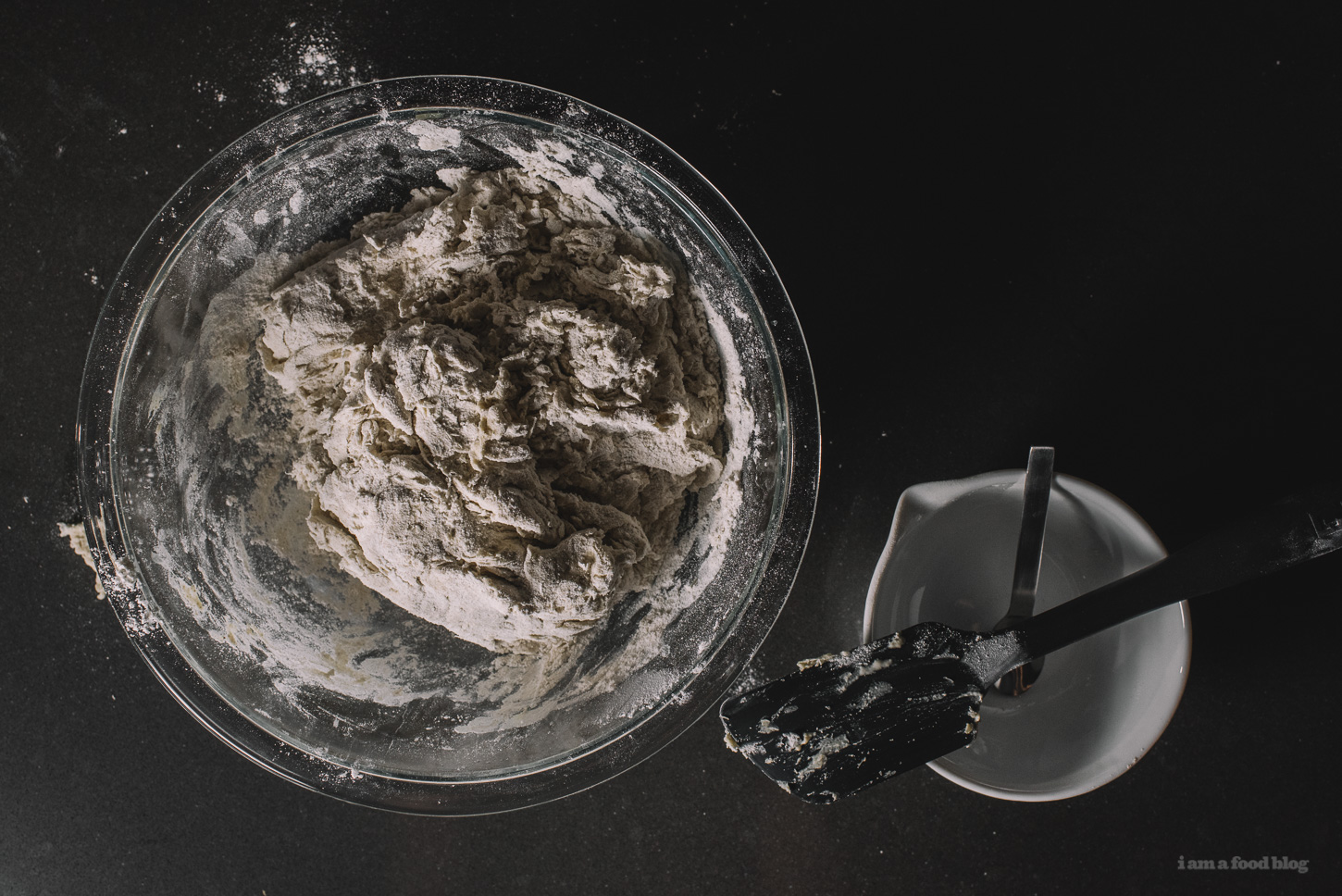
That’s why it’s kind of sort of embarrassing to me that it took me so long to master the art of noodle making. But, I want to be clear: I’m no master, just a student – a very enthusiastic one at that. Noodle making, it seems, is both a precise art form and a throw it together kind of thing. If you ask any experienced noodle maker for their recipe, they’ll give you a guideline and offer vague suggestions, like, feel the dough and it depends on if it’s raining or not.
The truth is, I should have been able to make noodles long ago. Some of my most cherished childhood memories are of my dad (never my mom) making noodles at our kitchen table. All those noodle making times have amassed themselves in my mind into one happy giant noodle party: my dad letting my brother and I crank the noodle cutter and my mom stirring a pot of meat sauce to dress the noodles. My brother and I would always get really excited when it was noodle making day. It was a combination of the fact that noodle making day didn’t happen very often and the fact that noodles were just that good.
I tried to ask my dad for his noodle recipe a couple of years back. Predictably, our conversation went something along the lines of:
Dad: I tell you my recipe, it’s easy: flour and eggs.
Me: But how much flour, how many eggs?
Dad: You just look at it and you know. You mix it up and that’s it.
Me: Oh.
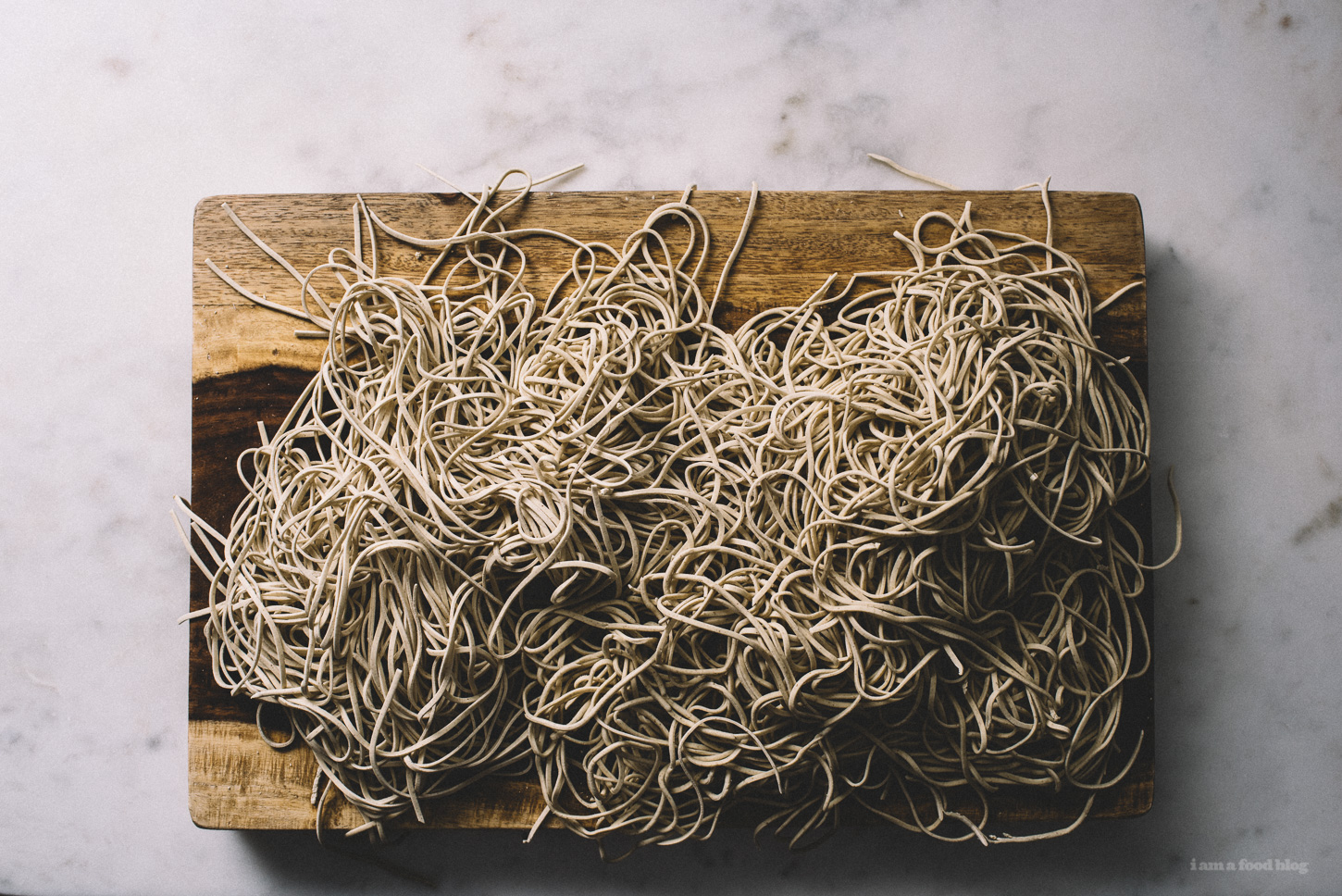
The thing is, if you’re good, that is, if you have a lot of experience, you don’t need a recipe. You really can throw together a dough and have it come out delicious. How do you think all those Italian grandmas do it? For the rest of us more experienced noodle eaters and inexperienced noodle makers, you need a noodle guide. Someone who will figure out the ins and outs of noodle making and show you the way. Luckily for you guys, you have me. And luckily for me, I have Mike, who figured out how to make noodles from scratch on a whim.
Our noodle journey started with pasta, which, like my dad’s egg noodles, are a fairly easy noodle to make due to its relatively high hydration. Typical pasta doughs are a ratio of 3 parts flour to 2 parts egg, which is around 30% hydration. Lots of doughs start out with a high hydration because those doughs tend to come together easily. But the thing is, the higher the hydration, the softer the noodle when you cook them. Noodles, to me, are all about that al dente bite (mochi mochi, in Japanese), so if you can dial down the hydration, you’ll end up with a chewier, more satisfying bite.
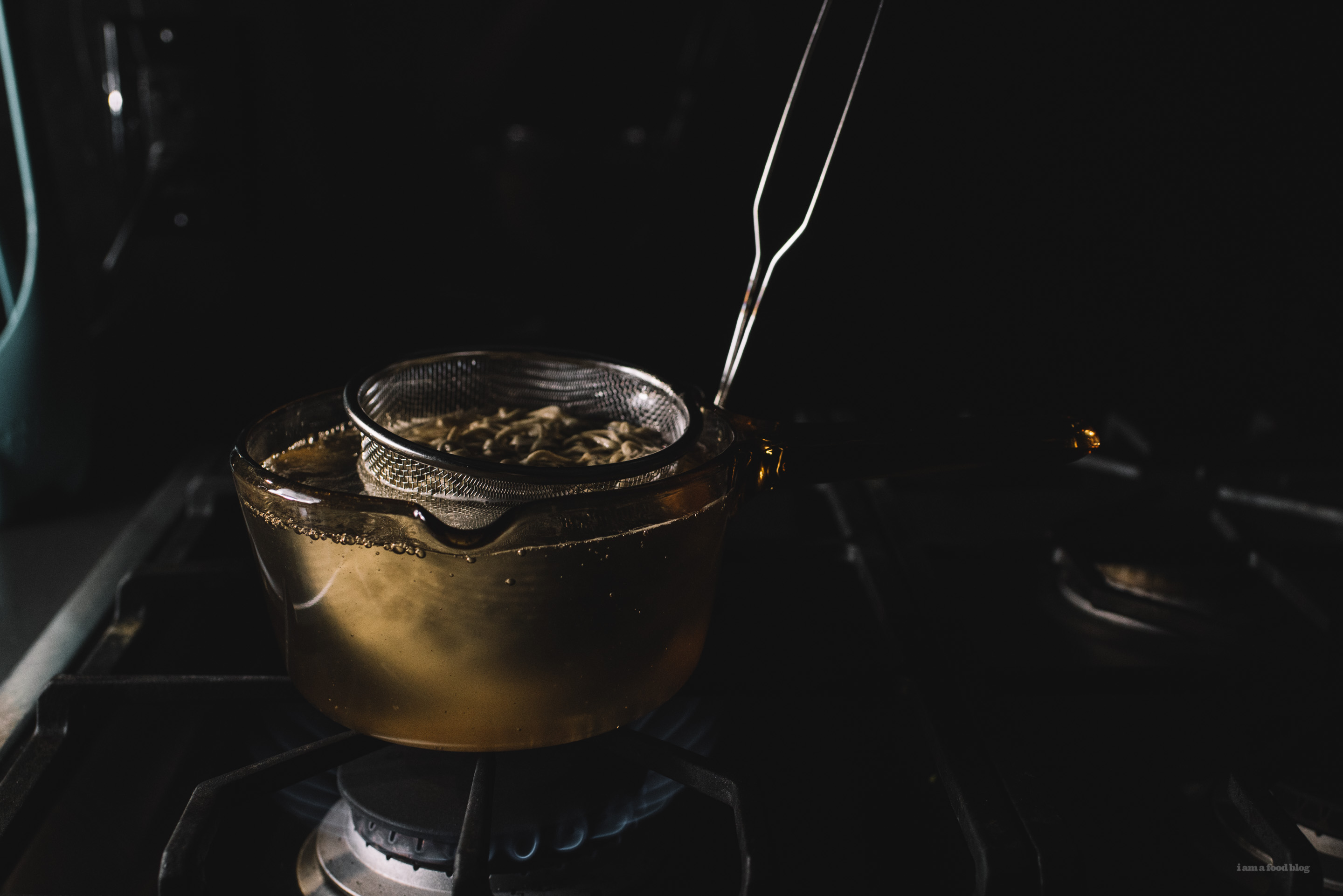
Mike’s first couple of rounds of pasta experimentation were successful, so he decided to move on to one of our favorite noodles of all time, ramen noodles. At first he tried a random recipe from the internet, and while good, it wasn’t quite where he wanted it to be. We agreed that we were looking for something light, yet hearty, chewy without being dry. We wanted something that would hold up to the intense flavors of ramen stock, but also bring it’s own personality to the party. We wanted Ivan Ramen’s toasted rye noodles.
Ivan, if you haven’t heard about him, is a former Tokyo transplant via Long Island, New York. These days, he’s back in NYC doing his noodle thing, but he earned his noodle chops by opening a ramen shop in a suburb of Tokyo. He’s got an interesting, inspiring story. He also has a cookbook that details how to make a thin, soba style ramen noodle, which is perfect for his light and refined shio (salt) ramen.
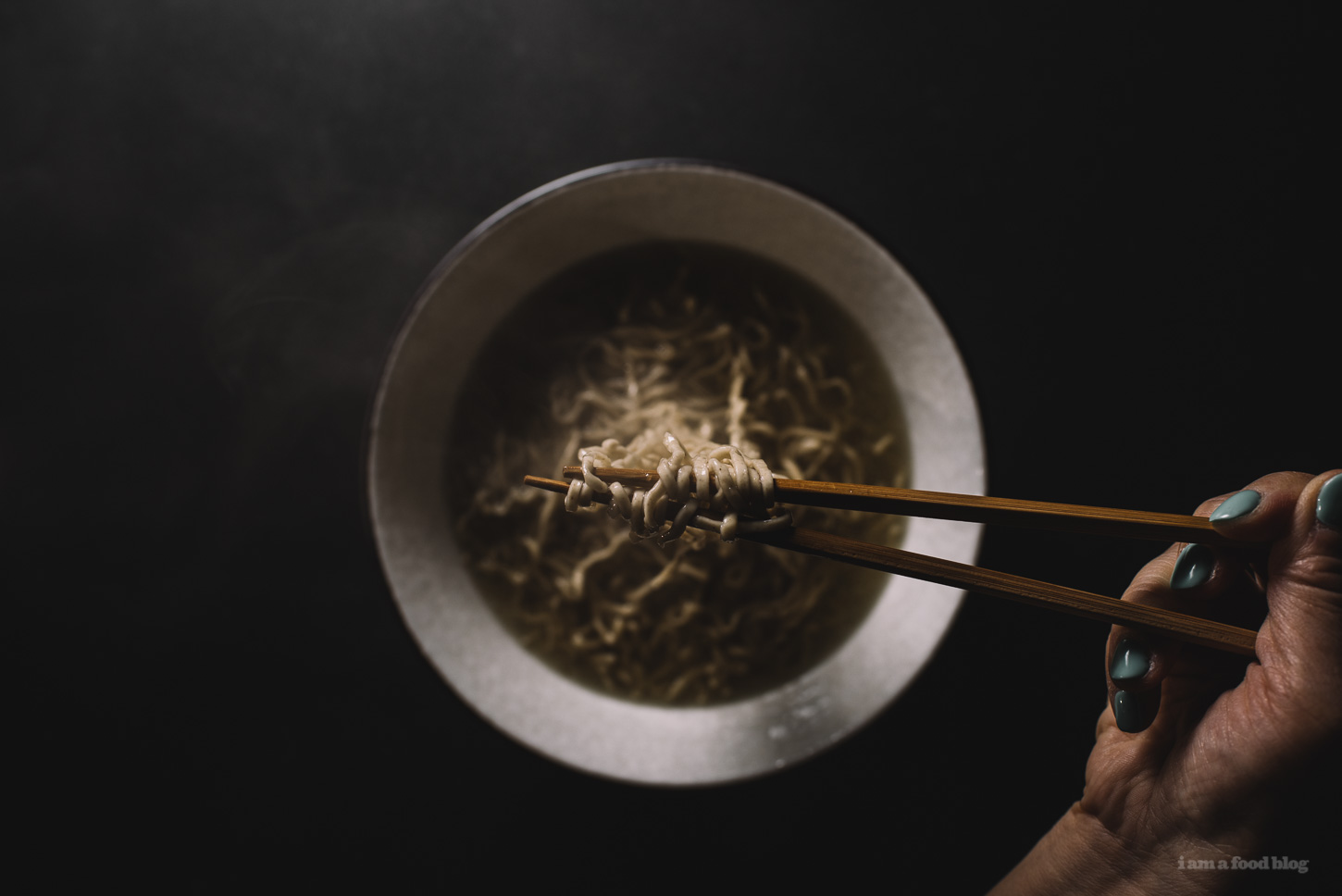
Ivan’s recipe for rye noodles uses a combination of high gluten bread flour, a lower protein cake flour, and rye flour, for flavor. You end up with about a 10-11 percent protein flour –the typical protein percent for ramen, which you could potentially buy, as all purpose flour, but combining the various flours gives you a complex, well textured noodle, with whole grain speckles. Toasting the rye flour gives it depth and an extra bit of aroma, which I find absolutely intoxicating.
Ivan’s recipe, along with a three-flour mix, also has kansui powder, which is responsible for alkaline part of the noodles. Alkaline is added to a bunch of different noodles (Hong Kong style egg noodles, hand pulled noodles, etc) – it gives certain types of noodles their signature springy bounce and chew. You can buy kansui powder, but it’s pretty easy to make as well: simply spread a thin layer of baking soda on a foil-lined cookie sheet and bake for 1 hour at 250˚F.
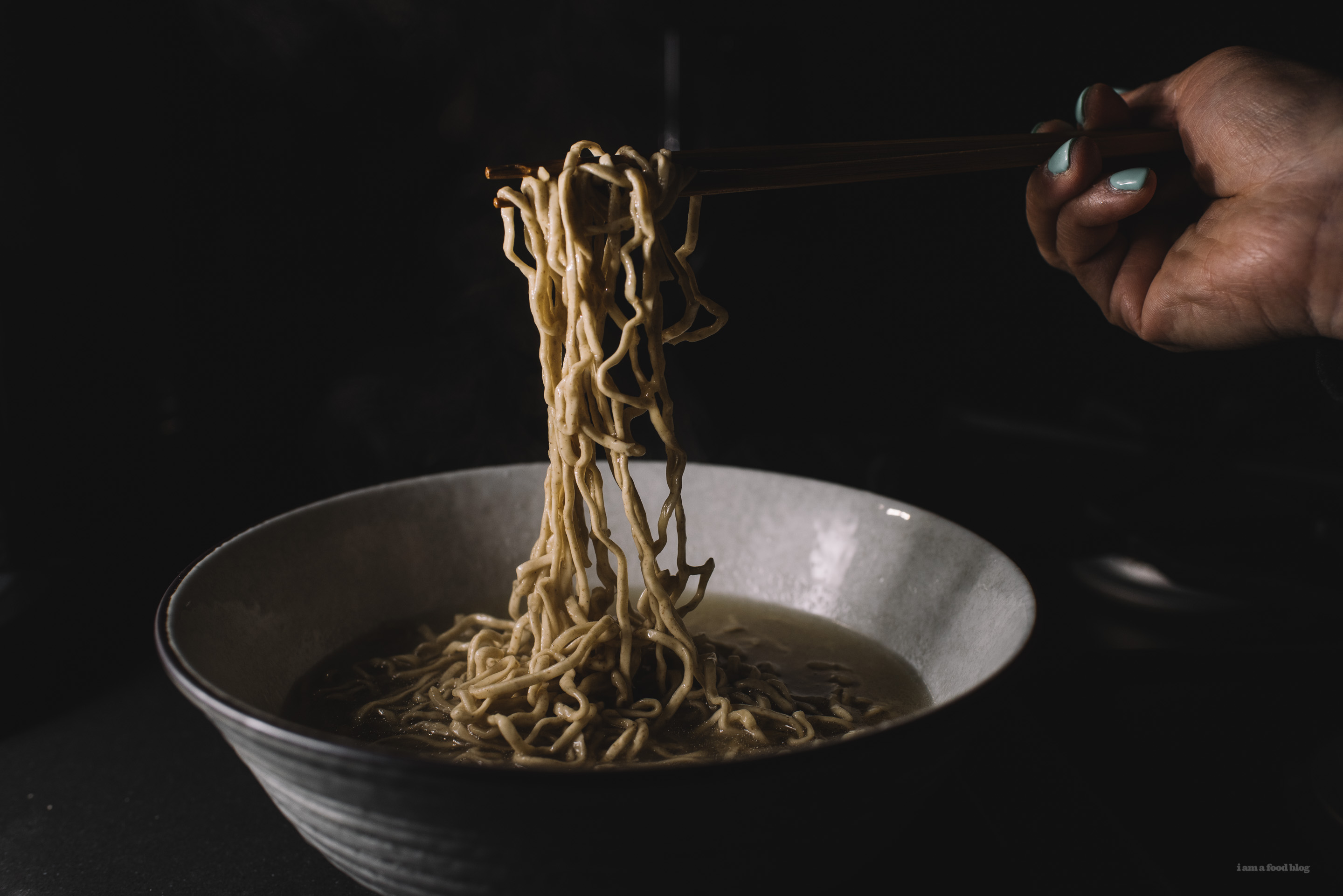
Along with the flour and kansui, there’s water and salt. And that’s it: you’re four ingredients –6 if you count the flours separately– from fresh homemade ramen noodles.
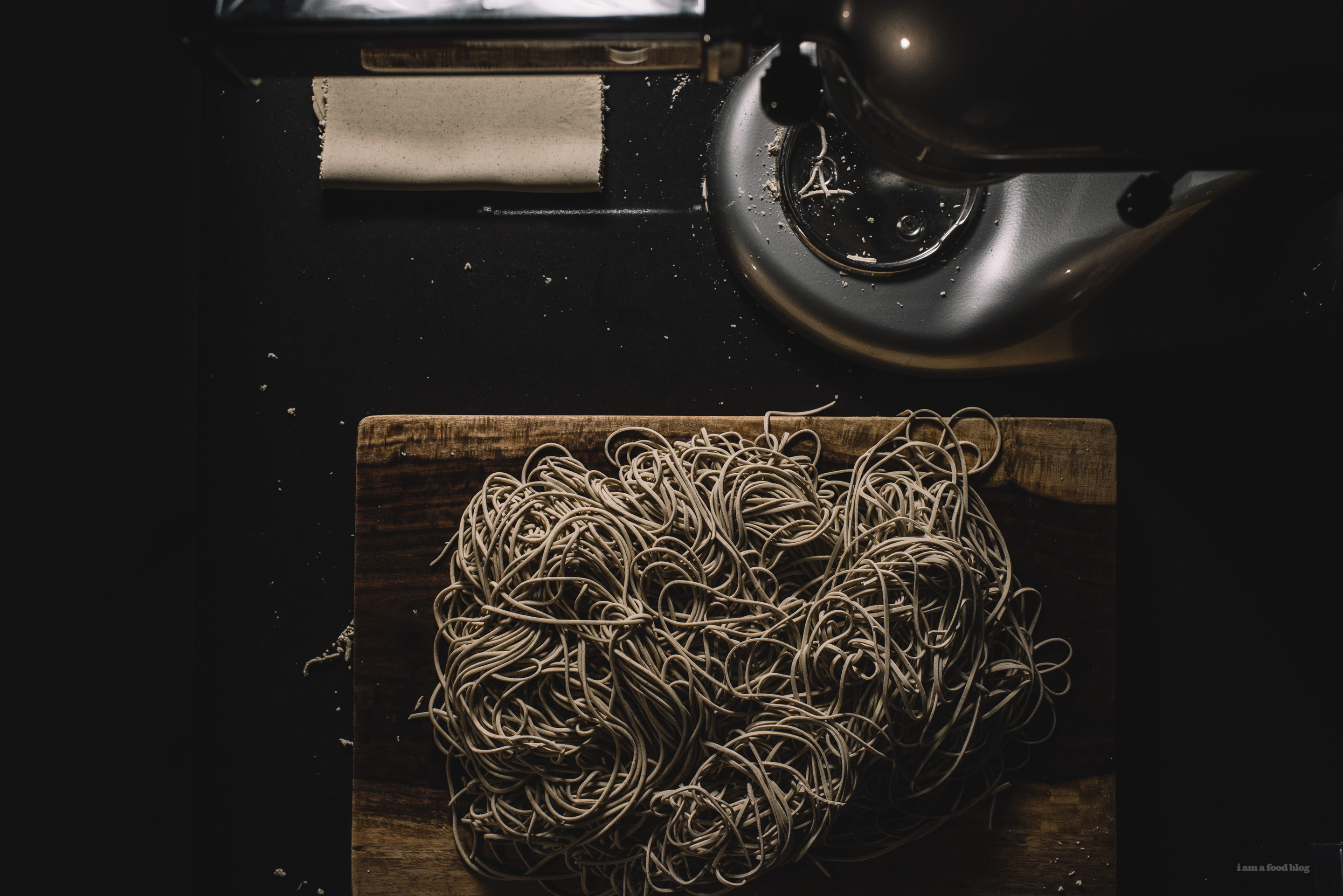
Of course, it isn’t as simple as that. It can be pretty frustrating making this particular ramen recipe if you haven’t worked with low hydration doughs before. The problem with low hydration is that you start of with a very crumbly, dry, barely sticking together dough. After the initial “kneading” stage, you think that it won’t work, but wrap up your shaggy, barely-even-a-ball-of-dough in plastic wrap and let it chill out for at least an hour on your counter top. After an hour, it’ll still be shaggy, but most of the flour will have had a chance to hydrate and you’ll be able to knead it using your pasta machine. The pasta roller is definitely your friend in this case. Use it on its lowest setting to knead, folding and re-rolling and eventually you get a perfectly dry, yet supple noodle.