
I Am... Smash Gyoza
If you love gyoza but don’t love folding up tiny dumpling pockets, smash gyoza are for you! All the juicy, umami flavors of a gyoza, but open-face, extra crispy, and ready to eat.
What are smash gyoza?
Smash gyoza is another way of saying deconstructed gyoza. If you’ve seen the smash Big Mac tacos floating around TikTok, smash gyoza are essentially the same idea: gyoza filling pressed onto dumpling wrappers then cooked open faced. From there, you serve them up like little tacos, folding them up around rice, kimchi, or whatever you like. Essentially they’re gyoza flavors in a new format: smash taco style.How to make smash gyoza
- Prep. Toss the chopped cabbage with a sprinkle of salt and let it sit and soften for 5-10 minutes. When soft, squeeze out any excess water. Finely chop the ginger and garlic and slice the green onions.
- Mix. In a large bowl, mix together 2 tbsp water with 1 tbsp cornstarch, then add ground meat, the prepped cabbage, ginger, garlic, green onions, soy sauce, toasted sesame oil, and a bit of salt. Mix well. I like using food prep gloves to really get in there.
- Cook. Heat up a bit of oil in a large nonstick skillet over medium high heat. Use a spoon or a cookie scoop (cookie scoops are great at evenly portioning out the filling) to add 1-2 tbsp of the gyoza filling to the pan, leaving space in between.
- Top. Add gyoza wrappers directly to the tops of the gyoza filling.
- Smash. Use a spatula, ramekin, or bottom of a heat proof glass to press down on the gyoza wrapper, smashing the filling onto the pan, pushing down so the filling goes to the edges of the gyoza wrapper.
- Steam. Add 1-2 tablespoons of water to the hot pan and cover to steam for 1-2 minutes. Lift the lid off and let the excess water cook off.
- Flip. Flip the smash gyoza over to crisp up the gyoza wrapper. When the gyoza wrappers are slightly golden and a bit crisp, it’s time to eat!
- Enjoy. Serve them up open-faced and enjoy dipped in soy sauce and rice vinegar OR fill them with a spoonful of rice topped off with some kimchi, then fold up like a taco and eat.
Smash gyoza ingredients
- gyoza wrappers - they sell these at the grocery store, usually in the fridge department, near the tofu, but if they don’t have them you can make your own (recipe here). You can also use wonton wrappers or even small flour tortillas.
- ground pork - I love ground pork in gyoza because it’s super flavorful, but you can use any kind of ground meat like chicken or turkey. Typically there aren’t a lot of ground beef gyoza in Japan, but feel free to try it!
- cabbage - finely chopped cabbage is going to make the filling nice and juicy. You’ll want to salt, then squeeze and drain the cabbage slightly so the gyoza filling isn’t soggy.
- ginger and garlic - finely chopped or grated ginger and garlic are going to add so much flavor to our smash gyoza. If you need to, you can substitute in ground ginger and garlic, but in this case, I really recommend fresh.
- green onions - thinly sliced green onions add a bright freshness.
- soy sauce and toasted sesame oil - these are our main flavorings, along with a bit of salt. Toasted sesame oil adds nuttiness and flavor.
- cornstarch - a little bit of cornstarch is going to bind our filling together and make it super smooth and easy to smash.
What are gyoza?
Gyoza are Japanese dumplings: ground pork, cabbage, and seasonings wrapped up in a thin noodle-y like wrapper. Dumplings are one of my all time favorite foods ever and gyoza is one of those perfect iterations. Read more about gyoza here.How do you eat smash gyoza?
You can eat them open-faced, dipping them in your favorite dumping sauce, or you can top them with a bit of rice and some kimchi and fold them up like a taco. Really, there’s no wrong way to eat smash gyoza. As long as they get in your mouth, you’re good to go!Who invented smash gyoza?
The first instance of smash gyoza was on Instagram from @cooking_with_kiara10. They’re a mash up of gyoza and big mac smash tacos. She jumped on the smash taco trend but gyoza-fied it. She doesn’t have any specific recipe, but it’s a basic gyoza filling smashed onto a gyoza wrapper, fried, then steamed. Genius!Gyoza dipping sauce
Gyoza aren’t gyoza without a dipping sauce. The standard mix is soy sauce, rice vinegar, and Japanese chili oil aka rayu. To start, try 1 tbsp rice vinegar mixed with 2 tsp soy sauce and chili oil to taste. That being said, go ahead and play with the proportions and mix it to taste. Another traditional dipping sauce is rice vinegar, soy, and red miso. It's a big Kobe thing and we enjoy it everywhere in Japan.What to serve with smash gyoza
Happy smashing! xoxo Steph PS - If you have a blackstone grill, these guys are AMAZING on it. Smash away!Smash Gyoza
All the juicy, umami flavors of a gyoza, but open-face, extra crispy, and ready to eat.
- 1.5 cup cabbage (finely chopped)
- 1 lb ground pork
- 1 tbsp cornstarch
- 1 tbsp ginger (minced)
- 1 tbsp garlic (minced)
- 1/2 cup green onions (sliced)
- 1 tbsp soy sauce
- 1.5 tsp toasted sesame oil
- 1/2 tsp salt
- 40 gyoza wrappers
Toss the chopped cabbage with a pinch of salt in a large bowl and mix well. Let rest for 10 to 15 minutes, the squeeze out and drain as much of the extra water as possible.
Mix together 2 tbsp water with the cornstarch add to the ground pork. Add the ginger, garlic, green onions, soy sauce, sesame oil, salt, and prepped cabbage. Mix until incorporated.
Heat up a bit of oil in a large, non-stick frying pan (one that has a lid) over medium-high heat. When the oil is hot, use a spoon (or cookie scoop) to add 1-2 tbsp balls of gyoza filling into the pan.
Immediately add gyoza wrappers on top of the filling and smash, using a ramekin, glass, or flipper to press down on the gyoza wrapper to smash the filling flat onto the pan.
Cook until the meat is slightly golden, about 1-2 minutes, then add 1-2 tablespoons of water to the pan, cover and steam for 1-2 minutes.
Lift the lid off the pan and flip the gyoza over to crisp the other side of the dumpling wrapper. When golden and crisp, remove from the pan and enjoy folded with rice and kimchi!

I Am... Banana Coffee
From dalgona coffee, to shaken brown sugar espressos, to iced tres leche lattes and everything in between, there always seems to be a new viral coffee. New on the scene is banana coffee. I am a banana lover, through and through. I dream about bananas and especially banana bread. Bananas just might be the perfect fruit. Except for those pesky fruit flies. And the fact that you need a banana train for perfectly ripe bananas. Hmm, now that I think about it, bananas are surprisingly high maintenance. Not as bad as, avocados, obviously, but they definitely have their quirks. I love them anyway. And, I now store my bananas in a fruit fly proof container.
Introducing banana coffee
The combination of banana and coffee isn’t completely novel as they’ve been combining coffee and banana milk forever in Korea, via those little yellow bottles of Binggrae, but Tiktok has resurfaced banana coffee into the spotlight and I am absolutely here for it because (dad joke incoming) I am bananas for bananas.What is banana coffee?
Banana coffee is exactly what it sounds like: coffee combined with banana. There are several ways to make it, depending on the texture you like and what you have on hand. The way that’s floating around right now is essentially a banana milk with espresso or cold brew. The banana milk is made by blending a ripe banana with milk, something sweet, and a touch of cinnamon. From there, banana and coffee come together beautifully.Why banana coffee?
Does it sounds weird to you? Bananas and coffee? It might sound strange at first, but banana and coffee can make a delicious pair, their flavors and textures complementing each other perfectly. The key is the contrast. Banana brings sweet smooth creaminess and heft and coffee brings earthy, roast-y bitter acidity. The contrast between the slight bitterness of coffee agains the sweetness of bananas can’t be beat. Smooth, satisfying, and endlessly sippable, banana coffee is the relationship equivalent of the black cat golden retriever relationship, both in color and personality. In other words, banana softens coffee’s bitterness and coffee add a interesting complexity to banana. Plus, the blended banana helps thicken and cream-ify, giving you a smoothie, dessert-like experience. I was a little skeptical until I tried the banana milk and now I am a full convert.Banana coffee ingredients
- banana - the more brown, the more spotty, the more sad, the sweeter and more blend-able your banana will be. If it’s super-sweet, you might not even need to add any extra sugar/honey/maple syrup to your banana milk
- milk - it's choose your own adventure milk with banana coffee. If you want something classic, go with full fat milk, otherwise, go wild. Oat, almond, soy, coconut, rice, cashew, the world is your milk.
- sweetener - sugar, brown sugar, honey, maple syrup, alternative sweeteners, go with what your usual is. Honestly I didn't even bother, the banana was enough.
- coffee - use coffee you like, whatever coffee that might be. The only thing is the coffee should be cold. Cold brew, leftover coffee, espresso (add cold water to make it an americano), instant, it’s all fair game. We actually love instant, fun fact: 70% of coffee snobs prefer instant in a double blind taste test. It's true!
- ice - some may say it’s not an essential ingredient, but I think it is. For this drink, I like medium size ice cubes. Nugget ice is perfect for dirty soda, not so much coffee as it melts down too quick. I have an ice cube tray (shown below) that I specifically use for the ice in my iced coffee, so that’s what I go with. Somehow putting ice in a homemade coffee gives it cafe vibes without going out to an actual cafe.
How to make banana coffee
- Brew. The coffee needs to be cold, so go ahead and start with brewing your favorite blend or mixing up your instant coffee, or using your nespresso/keurig. You’ll need 1 cup of cold coffee.
- Blend. Place your super ripe banana, along with sugar/honey/maple syrup to taste, in a blender with milk. For the sweetener, start off with 1-2 teaspoons of sweetener and go from there. If your banana is super sweet, you might not need anything extra at all. Blend until very smooth and silky. For extra bonus points, strain the banana milk through a sieve so it’s lump free.
- Ice. Add ice to a tall glass.
- Layer. Add the coffee to the glass and layer on the banana milk. Or reverse that as I did. It doesn't matter except for #aesthetics.
- Enjoy. Stir well and enjoy
Tips and tricks
A sad banana makes a happy coffee
For the best results, use an extra ripe banana with plenty of brown spots. The riper the banana, the sweeter and more flavorful your coffee will be. Go ahead and pick out those sad bananas, they’re extra soft which makes them perfect for blending. Sad-nanas are not just for banana bread, they’re for coffee too.Sweeten as needed
Bananas are sweet but coffee is bitter so if you want a bit more sweetness in your banana coffee, adjust to taste. You can use your favorite sweetener, just put it in the blender with your banana and milk.Ice or no ice?
I feel like banana coffee is a cold drink so I would never have it hot and I like ice in my coffee so I enjoy banana coffee with lots of ice, but ice is a preference, so you can ice or not ice, it’s your choice.Lumpy = no
If you don’t like lumps in your coffee may I suggest straining? Straining your banana milk through a fine mesh strainer will give you a silky smooth banana milk. It takes an extra bit of effort, but it’s worth it, in my opinion.Variations
Looking at the hashtags for banana coffee will get you a plethora of banana coffee recipes out there. I’ve been making the two below on repeat.Fluffy Banana Coffee
This is a combination of banana coffee and dalgona coffee. Essentially it’s a silky smooth banana milk topped with fluffy dalgona. It’s fun to make and delicious to drink.- 1 ripe banana
- 1 cup milk of choice
- 1 tbsp instant coffee
- 1 tbsp sugar, maple syrup, or honey
Korean Banana Cream Latte
Korean banana cream lattes are different from banana coffee in that they use Binggrae Banana Milk. You can find Binggrae at Asian grocery stores and online. The intense sweet banana-ness of Binggrae is the base of the banana cream that floats prettily on top of iced coffee.- 3 tbsp heavy cream
- 2 tbsp Binggrae banana milk
- 1 tbsp condensed milk
- double shot of espresso
- 3/4 cup milk of choice
If your banana train has too many bananas
You can make: Alright, that’s all I got on banana coffee. I’m actually gonna go out and get some bananas right now to make myself one. I’m gonna grab some extra bananas for banana bread too because bananas. I hope you have a banana-ful day, xoxo stephClassic Banana Coffee
Banana
- 1 ripe banana
- 1 cup milk (of choice)
- sugar (or maple syrup, or honey, to taste/optional)
- 2 cups coffee (cold, extra strong)
Add the banana and milk, plus sugar to taste to a blender and blend well until completely smooth.
Add ice to two tall glass and evenly divide the banana milk.
Top with coffee
Stir and enjoy.
Estimated nutrition is based on no sugar, nonfat milk.

I Am... This easy Paella recipe is a perfect weekend project
Paella has bits of everything I love: rice, seafood, and most importantly socarrat: crispy crunchy toasted rice bits. Have you ever been obsessed with a dish even though you’ve never eaten it? For me, that dish was paella. It was one of those food bucket list items – I don’t remember how or why I became so obsessed with having paella from its birthplace of Valencia, but I’m pretty sure it has something to do with the fact that paella is so pretty and such an iconic dish. It’s so iconic that people around the world think of it as the quintessential Spanish dish, even though it’s actually more Valencian. I mean, Valencia is ultimately in Spain, so it’s all good to me.
What is paella?
Paella, pronounced pay-EH-yah! is a rice dish made in a shallow, wide pan over an open fire. Paella means “frying pan” in Valencian. Traditionally, paella includes short grain rice, beans, rabbit, chicken, and saffron, but nowadays there are a huge number of variations, from seafood to vegetarian. I made a mixta paella here, which is essentially a mixed paella that has meat, seafood, and vegetables.How to make paella
- Soak the saffron. This will release both color and aroma. Pop some saffron into a small bowl with hot water and set aside.
- Sear the proteins. Heat up some olive oil in your paella pan over medium high heat and give your proteins a quick sear: the chicken goes in skin side down and the chorizo gets browned. Shrimp gets a quick toss in before being removed so it doesn’t over cook.
- Sweat the aromatics. Add the onions, garlic, tomatoes, and paprika and cook, stirring, until soft and fragrant.
- Add the liquids. Carefully add chicken stock and the saffron water and bring everything to a boil. Flip the chicken skin side up so it’s pretty.
- Add the rice. Time to sprinkle in the rice! Try to add it in a thin, even layer and use a spoon to spread it out if you need to. Let everything come to a simmer and cook, uncovered until the rice absorbs almost all the liquid.
- Add the seafood. Nestle in the clams and add the shrimp back on top.
- Cook on low until the clams open up and the rice is al denote.
- Socarrat time! Turn the heat up to high for 1-2 minutes to create a crispy toasty crunchy rice crust.
- Rest and enjoy. Cover the paella with some foil and let rest for 5 minutes before enjoying.
Paella Ingredients
Rice
Because paella is truly all about the rice, the rice is the most important ingredient. Bomba rice, from Spain, is the best choice. It absorbs 3 times as much liquid than regular rice giving it 3 times as much flavor when all the liquid is absorbed. Plus cooked right, it stays firm and al dente. You can usually find bomba rice at Whole Foods or online.Smoked Spanish Paprika
Smoked paprika comes in sweet and bittersweet, go for sweet smoked Spanish paprika. It adds smokiness, aroma, and color.Protein
There’s a lot of controversy about what kind of protein goes into paella. If you’re not super concerned about authenticity you can customize your paella and put anything you want it. If you’re going with chorizo try to get a Spanish chorizo, which is dried and cured. But if you only have Mexican chorizo available, I think that’s okay too. Purists say that chorizo will overwhelm the other flavors, but we’ve had multiple paella in Valencia with (and without) chorizo, so it’s a personal choice. Other proteins you can use include chicken, pork, seafood, or really, anything you can dream of.Vegetables
Most paella has vegetables in it, especially the paella we had while we were in Valencia. Usually it’s some sort of green bean, a variety that isn’t so common here in North America. You can sub in other green beans, add peppers, asparagus, artichokes, peas, olives, beans, chickpeas, really, it’s like the proteins, go wild!Stock
A nicely seasoned stock as this is what’s going to add flavor to the insides of your bomba rice. That being said, if you’re salt adverse, I would do low sodium stock and then season afterwards. If you have the time, make a homemade seafood/shellfish or chicken stock, which makes it even easier to control the seasoning and flavor.Saffron
Saffron is what gives paella its gorgeous golden hue. The orange-red threads are earthy, floral, and add a distinct flavor. Saffron is one of the most expensive spices in the world. You only need about 1/2 teaspoon but it definitely adds to the overall flavor, so don’t skip out on it. Look for saffron threads that are deep red-orange and evenly colored. Saffron is sold in most large grocery stores and specialty food stores and of course, online.Paella pan
If you want the all important toasty rice bits, or socarrat, you’re going to need a paella pan. The width of a paella pan helps with rice distribution, ensuring that the rice cooks in a thin layer. A pan that feeds two is generally about 10-12 inches and a pan that serves eight is about 18 inches. The most popular pan sizes are 14 and 16 inches, which feed 4-6. Which size pan you get depends on how many people you plan to feed. The wider the pan, the more people it feeds. They even have pans that are 4 feet wide! Years ago, around Christmas, Mike and I were in London and we saw two giant paella pans at Covent Garden. The saffron deliciousness wafting through the chilly air was so tempting so we decided to join the huge queue for a taste. I’m sure Hola Paella (now closed forever) wasn't the most authentic paella in London, but it attracted a lot of attention and was a perfect snack to warm us up on a cold day.What if I don’t have a paella pan?
If you’re wondering, can I use a cast iron skillet to make paella, the answer is yes! As long as you’re using the right rice, you can definitely use a cast iron skillet. Cast iron skillets are somewhat wide and conduct heat well, making them great for making paella. Use the biggest and widest cast iron pan you have so you can spread your rice out.Paella in a frying pan
If you have a craving for paella and you don’t have a paella pan or a cast iron pan you can make it in a frying pan. Spanish people might look down on you, but hey, you do you! I’ve definitely made paella in a frying pan in a pinch and it tastes good. You can use a non-stick or regular frying pan but if you’re using non-stick, make sure you don’t go too high on the heat. It really shouldn’t be a problem, especially with paella since you don’t use a huge amount of high heat anyway - keep it to medium high. If you’re looking for socarrat in a regular frying pan, my tip is keep it on low heat for a long time, until the moisture cooks out and you get crispy bottoms. If you are going to try this in a frying pan, I recommend halving it because the recipe as per below will not fit in your standard 12 inch frying pan.What rice should I use?
Paella should be made with Bomba or Calasparra rice, medium grain rices grown in Spain. Spanish rice is chubby and round, ideal for absorbing large amounts of liquid while still staying somewhat firm. You want your rice kernels stay separate and not creamy or mushy. The rice really is the best part of a paella. I can eat loads and loads of that smoky, saffron flavoured rice and I have. I made a giant pan for Mike, myself and a good friend thinking there would definitely be leftovers (I used a pan that serves 6-8), but the three of us polished it off in one sitting. We totally fell into simultaneous food comas afterwards, but it was worth it. The best part was that there was more than enough socarrat to go around.What is socarrat?
Socarrat is the essential layer of crispy crunchy toasted rice at the bottom of the pan when you cook your paella just right. Most people consider it the best parts. It’s caramelized and toasty and nutty and has all the flavors of paella concentrated.Paella FAQ
What are the different kinds of paella?
- Valencian: The classic Valencia version with rabbit, chicken, lima beans, long beans, snails, and rosemary.
- Seafood/paella de marisco: A seafood version with no meat. It tends to be a bit more liquidy because seafood releases a lot of delicious juices. It usually has prawns, mussels, calamari, and clams.
- Mixed/mixta paella: A mix between Valencian and marisco with meat and seafood. It’s the most popular of all.
- Paella negra: Immediately recognizable with it’s inky black rice. It’s made with squid ink and is a Spanish favorite.
- Vegetarian/paella vegetariana: Loads of vegetables like artichokes, lima beans, and red and greens peppers. Sometimes you’ll find chickpeas and potatoes too.
Did you ever go to Valencia?
Yes! Many years ago now, shortly after the first edition of this post, Mike and I went to Valencia and the first thing we ate was paella. We literally got off the train and went to a paella restaurant. On the way there, there were a bunch of Valencian orange trees that had some pretty tempting looking oranges but apparently the orange trees that line the streets of Valencia are not the same sweet ones that they use for juice. Anyway, the paella in Spain was as good as I imagined. So good that all of our meals in Valencia were either paella or Spanish churros dipped in chocolate. We actually ate 3 different paellas that day. The paella was all things good: juicy seasoned meats, tender-crisp beans, and the best part, saffron scented rice with crispy toasty rice bits. It was a dream come true.Should you presoak the rice?
There’s no reason to soak the rice. Soaking the rice will make it more likely to be overcooked and mushy.Do you stir while cooking?
Nope, no stirring required. Paella is not risotto and stirring will give your rice a creamy texture instead of the crispy socarrat you’re looking for.Do you cover the pan when cooking?
Unlike other rice dishes, you don't need to cover the pan. The rice can only reach its signature al dente texture if the moisture can escape. This also makes the best the crispy socarrat.What is paella sauce?
In Valencia, no paella is complete without a side of paella sauce or garlic aioli. The creamy, garlicky sauce is reminiscent of mayo and goes perfectly with the smoky, flavorful rice. To make garlic aioli, place 1 cup neutral oil, 1 egg yolk, 1 tbsp dijon, 2 tsp lemon juice, and 1 clove garlic into an immersion blender cup. Use an immersion blender and blend until combined and thick. Season with salt to taste.How to reheat
The best way to reheat paella is in a pan on the stove top. Take the leftovers out of the fridge and let it come to room temp for about 30 minutes before you reheat. Heat a bit of oil in a frying pan over medium heat, then spread out the paella. Let it crisp, stirring occasionally until it is heated through. You can also heat it up in the microwave, stirring and heating as needed, about 1-2 minute on high.What else can I use a paella pan for?
You can use it for cooking anything that will do well with a wide, flat cooking surface. It’s perfect for searing meats, using as a roasting pan, or even stir-fry. I hope you guys give this recipe a try. smoky saffron rice and crispy bits forever, xoxo stephPaella Recipe
Paella even has its own emoji!
- medium-sized paella pan
- 30 threads saffron (lightly crushed, about 1/2 tsp)
- 1/4 cup neutral oil (high heat such as grapeseed preferred)
- 2 links Spanish chorizo (sliced)
- 4 bone in skin on chicken thighs
- 10-12 large shrimp (peeled and deveined)
- 1 small onion (minced, about 1 cup)
- 3 cloves garlic (crushed)
- 3 medium tomatoes (diced or grated, about 2 cups, see notes)
- 1 tbsp smoked paprika
- 6 cups chicken broth (no sodium preferred)
- 2.5 cups bomba rice
- 1 red or orange pepper (sliced into 1" strips)
- 12 clams
Stir the saffron into 1⁄4 cup hot water in a small bowl and let bloom for 15 minutes.
In a 16″–18″ paella pan, heat the oil over medium-high heat. Add the chorizo and the chicken, skin side down. Add the the shrimp and cook, flipping occasionally, until browned, about 5 minutes, then transfer the shrimp to a plate, leaving the meats to sear in the pan.
Add the onions, garlic, tomatoes, and paprika and cook, stirring often, until the onions soften, about 6 minutes. Add the saffron and 4 cups of chicken stock. Flip the chicken so it’s skin side up and bring everything to a boil over high heat.
Sprinkle in the rice, distributing evenly, then add the peppers on top. Cook, uncovered, without stirring, until rice has absorbed most of the liquid, about 12-15 minutes. If the pan is larger than the burner, rotate it every two minutes to evenly distribute the heat. Once the stock is low enough, add the remaining 2 cups chicken stock.
Reduce heat to low, and top with the cooked shrimp. Nestle in the clams, hinge side down. Continue to cook, without covering or stirring, until the clams opened and the rice absorbs the liquid and is al dente, 5–10 minutes more. Turn heat to high for 1-2 minutes to create the socarrat. Remove pan from heat, cover with aluminum foil, and let sit for 5 minutes before enjoying.
Paella is totally customizable so feel free to make this dish vegetarian, all seafood, or all meats.
You also can grate the tomatoes on the largest holes of a box grater. Be careful and discard the skin afterwards.

I Am... 9 Keto Starbucks Drinks for Fall
If you’re anything like me, you’re totally susceptible to all those pumpkin spice latte ads you’ve been seeing. But what about keto?! Here are some keto Starbucks options for all my keep peeps out there.
Read More →
I Am... Buldak Carbonara
Creamy, spicy, addictive ramen, in less than five minutes - buldak carbonara is the perfect mix of carbs, spicy, and sauce goodness. If you’re a fan of ramen, you’ve probably heard of Samyang Instant Ramen. They’re the Korean company that makes instant ramen classics like Buldak Hot Chicken, Buldak Hot Chicken with Cheese, and, of course, Buldak Hot Chicken Carbonara. I love instant ramen. I love it a lot. But I definitely don’t love it as much as that little girl who cried tears of joy when she received a 5 pack of spicy buldak carbonara for her birthday. She was so incredibly happy and grateful and it just warmed my heart. It also made me wonder, how the heck is her spice tolerance so high? Because even though buldak carbonara isn’t as spicy as the regular hot chicken buldak, it is still pretty darn spicy! If you’re not instant ramen obsessed, you might be wondering what the heck is buldak carbonara. It’s gone pretty viral on TikTok because it’s creamy, glossy, and delicious-looking. It also happens to be pretty darn spicy and people like watching people when they eat spicy things - just look at how amazingly popular Hot Ones is! Side note, that Hot Ones episode with Sydney Sweeney 🥵.
What is buldak carbonara?
Buldak carbonara is a flavor of instant ramen from Samyang. It’s part of a ramen line that features super hot-n-spicy ramens. The buldak carbonara flavor comes in a pink pouch with a cute drawing of a hot chicken on it. I think the pink denotes the fact that it’s less spicy than the fire red 2x spicy buldak. Essentially, it’s a hot and spicy chicken ramen but with a carbonara-inspired sauce that is creamy thanks to the extra little packet of cheese.How to make homemade buldak carbonara
If you don’t have access to Samyang buldak carbonara and are craving it hard, you can make your own at home! I’ve heard that the carbonara flavor is sold out a lot, but thankfully there’s a homemade hack!- Gather. Start by gathering your ingredients. It’s not as simple as opening a pack of buldak carbonara, but you gotta do what you’ve got to do. You’ll need some ramen noodles, gochujang, soy sauce, sugar, chicken boullion powder, garlic powder, black pepper, 1 egg yolk, milk powder, and freshly grated parmesan.
- Mix. Add gochujang, soy sauce, sugar, chicken boullion powder, garlic powder, pepper, milk powder, parmesan, and one egg yolk to a bowl. Whisk until everything comes together, then set aside.
- Cook. Bring a pot of water up to a boil and cook your noodles of choice according to the package ingredients. Save 1/2 cup of the hot noodle water then drain your noodles.
- Stir. Add 1/4 cup of the hot noodle water to the bowl with your sauce mix. Whisk it all up until it’s smooth.
- Toss. Add the sauce into the pot that has the noodles and mix and toss until the sauce is glossy and coats and clings to the noodles, adding hot noodle water, bit by bit if needed to loosen the sauce. When the noodles are nice and saucy, remove from the heat.
- Enjoy. Scoop your noodles out into a bowl or eat them straight from the pot, no side eye here! Time to get your spicy on!
Buldak carbonara ingredients
For homemade buldak carbonara, you need all the regular ingredients in buldak sauce, plus:- milk powder - milk powder is amazing. If you haven’t tried it, it’s one of those not-so-hard to get ingredients that is a solid pantry staple. You can find it in the baking aisle sold in bags. Milk powder is milk that has been dehydrated and powdered for shelf life and ease. Add water to it and it becomes milk! It’s what’s going to give our buldak carbonara that creamy feel and is what is in Samyang’s powder packet.
- cheese - we’re going to go with freshly grated parmesan cheese because as much as I love cheese powder, I have no idea where to find it. Just make sure you grate your parmesan super finely.
- egg yolk - instant buldak carbonara doesn’t have eggs in it but since we’re doing this homemade style, egg yolk is going to make your carbonara so much better by adding thickness, richness, and flavor.
How to make instant buldak carbonara
When you open up the package of noodles, you’ll see it comes with a noodle cake and two sauce packets, one that’s liquid, and one that’s the cream powder.- Boil. Start off by adding 2.5 cups of water to a saucepan and bringing it to a boil over high heat.
- Cook. When the water is bubbling rapidly, add the noodles and set a timer for 5 minutes. If you like your noodles al dente and chewy, go for 4 minutes. Use a pair of chopsticks or a fork to gently break up the noodles after 2 minutes.
- Save. Use a measuring cup to carefully scoop out 1/2 cup of the hot noodle water. If you don’t want to measure out 1/2 cup of hot noodle water, you can simply drain the noodles, making sure to leave enough hot water in the pot to stir into a smooth sauce.
- Drain. Drain the noodles then add the 1/2 cup of hot water back into the pot.
- Mix. Add both of the seasoning packets and mix, mix, mix.
- Enjoy immediately!
What does buldak carbonara taste like?
Creamy, cheesy, spicy, and delicious! Buldak carbonara tastes super similar to the original spicy buldak fire noodles. That is, hot and spicy. There’s a cheesy, smooth and creamy element to it, thanks to the cheese packet. That helps tone down the spice compared to regular buldak noodles. It’s a cheesy, creamy, spicy noodle. Unlike carbonara, Samyang buldak carbonara doesn’t include pork or egg.Is buldak carbonara spicy?
Yes! Don’t be fooled. Buldak carbonara doesn’t look as fiery hot as regular buldak, but it still packs a punch and is spicy. On the spice level, Samyang rates buldak carbonara a level 3 spicy. For reference, the original buldak is a 4 and the 2x spicy buldak is 5. Technically, Samyang doesn’t think buldak carbonara is incredibly spicy, but it really depends on your spice tolerance.Can you make buldak carbonara less spicy?
Yes, you can, but it won’t be as flavorful. A lot of the flavor in the instant pack of buldak carbonara is in the spice packet. That being said, try this, which will make it less spicy!- In a shallow bowl, add 1 egg yolk, 1-2 tbsp kewpie mayo, 1/2 the package of liquid buldak sauce, the cheese powder, and 2 tbsp cream. Whisk everything together until smooth.
- Cook the noodles according to the package directions, then scoop your noodles directly from the pot into the bowl with your sauce. Toss, mixing well until the noodles are saucy.
- Top with as much shredded cheese as you like and enjoy!
How do you make buldak carbonara less spicy?
If you’re looking for a less spicy version of buldak carbonara and don’t want to sacrifice flavor, look for Samyang’s cream carbonara buldak. The package looks almost the same but is a slightly lighter pink. The chicken on the package is also floating in the air in a hot air balloon instead of sitting in a pot.Cream Carbonara vs Buldak Carbonara
Compared to buldak carbonara, the cream carbonara is a 2 on the Samyang spicy scale. It’s less spicy but still has a nice kick to it. The buldak sauce it comes with is looser and not as fiery red. It’s a slightly milder, more creamy and cheesy buldak ramen. I prefer it over the regular carbo!What to add to instant ramen
Like all ramen, you can top your buldak carbonara with anything and everything! Some popular add-ins/toppings are:- tteokbokki - add some chewy tteokbokki rice cakes (pictured below) to the water while the noodles are boiling for extra carbs on carbs. After all, this is carbo ramen!
- egg - you can add eggs in so many different ways, whisking an egg yolk into the sauce mix, topping with a fried egg, topping with a boiled egg, or even just adding egg to the noodles after they’re mixed for a poached egg approach.
- cheese - yep, there’s already cheese in buldak carbonara, but does anyone ever say no to more cheese? Sprinkle on shredded cheese and cover your noodles with a lid to make sure the cheese melts down into creamy, stretchy cheese pulls. Or, you can stir in some cream cheese for an extra creamy sauce.
- seaweed - crushed up seaweed snack, strips of seaweed, or even using seaweed snack to scoop up your noodles is a pro move.
- protein - anything goes! You can lean into the carbonara of it all and do some bacon or pork belly. Maybe use a can of tuna or add whatever leftover protein you happen to have in your fridge. Steak slices would be super luxe too.
- sesame seeds - toasted sesame seeds add aroma and a bit of crunch.
- green onions -thinly slice green onions add a bit of freshness and greenery.
- kewpie mayo - kewpie mayo can help ease the spice and add creaminess.
Homemade Buldak Carbonara
Buldak carbonara is the perfect mix of carbs, spicy, and sauce goodness
- 1/4 cup finely grated parmesan
- 2 tsbp milk powder (or milk)
- 1 tsbp gochujang (or to taste)
- 2 tsp soy sauce
- 1 tsp chicken bouillon
- 1 tsbp rice vinegar
- 1 tsp garlic powder
- 1 tsp sugar
- 1/2 tsp toasted sesame oil
- 1-2 egg yolks (use double the egg yolks for extra richness)
- 1 portion noodles (of choice, see notes)
In a bowl, whisk together the parmesan cheese, milk powder, gochujang, soy sauce, chicken bouillon, rice vinegar, garlic powder, sugar, toasted sesame oil, and egg yolk (or 2 for extra richness). Mix until well combined.
Bring a pot of water up to a boil and cook your noodles according to the package instructions. Save 1/2 cup of the noodle cooking water and drain the noodles, leaving them in the pan.
Stir 1/4 cup of the hot noodle water into the sauce then add the sauce to the noodles in the pot, tossing to coat. Add more of the hot reserved noodle water as needed, while mixing, over low heat, until the sauce is smooth and creamy and clings to the noodles. Remove from the heat and enjoy!
Estimated nutrition does not include noodles of choice (we recommend samyang or nongshim shin noodles).

I Am... Make the best homemade gyoza with this recipe
Is there anything more perfect than gyoza? A tender, flavorful, juicy meatball wrapped in a noodle-y coat is the best bite in the whole world. I love gyoza. They are one of my go to comfort foods and every time we land in Tokyo, our first meal inevitably is at Gyoza no Fukuho, a chain known for their yaki gyoza (fried gyoza). The gyoza are crisp but not overly oily, extremely flavorful and garlicky. They make me feel like everything is right with the world. Gyoza is one of those foods that can be both high and low end. You can find Michelin starred chef takes on gyoza and you can also find it at convenience stores in little plastic trays. They appeal to everyone: crispy bottoms, tender tops, and juicy insides. Mike and I love gyoza so much that one year we went on a dedicated gyoza hunt in Tokyo. I miss my Tokyo gyoza eating days (even though that was just last November).
What are gyoza?
Gyoza are Japanese dumplings. They’re based off of Chinese potstickers or jiaozi, adapted and fully incorporated into Japanese cuisine. Gyoza are ground meat filling wrapped up in a piece of thinly rolled out dough. They can be deep-fried, boiled, steamed, and pan-fried. Gyoza are super popular and versatile, you can eat them for breakfast, lunch, dinner, a late night snack, you name it, and gyoza will be there for you. They are the perfect bite. Gyoza are usually served with soy sauce, vinegar, and Japanese chili oil or rayu. You can find gyoza at most Japanese restaurants, especially izakaya or ramen shops. In Japan they have restaurants dedicated to only serving gyoza. They come frozen in bags at the grocery stores and there are gourmet shops that ship directly to your house so you can make restaurant specialty gyoza right in the comfort of your own home. Unfortunately they don’t ship world wide so the next best thing is making them at home from scratch. Spend some time making a batch or six, freeze the extras. The next time you’re hungry you can eat your bounty of resourcefulness.How to make gyoza
- Mix. First off make the filling by mixing everything into a homogeneous paste. The classic filling is pork, cabbage, nira (Chinese chives) or scallions, ginger, garlic, soy sauce, sake, and toasted sesame oil.
- Wrap. Add a tablespoon of filling to the middle of a round gyoza wrapper, lightly moisten the edges and pleat and press together the edges.
- Fry. Heat up a bit of oil in a non stick frying pan, brown the bottoms, add a bit of water and cover the pan to steam. When all of the water evaporates, lift off the lid, let the bottoms crisp up a bit and you’re done.
- Eat. Enjoy hot and crispy with soy sauce, rice vinegar, and chili oil for dipping!
Wrappers
You can go all out and make gyoza wrappers from scratch but most people buy store bought gyoza wrappers for ease and convenience. You can find them, either frozen or in the fridge, at most Japanese or Asian grocery stores. They’re thinner than Chinese potsticker wrappers, but those are the only ones you can find, they make a good substitute. The brand we like is called Myojo.How to make the filling
The key to a good gyoza is a juicy, well seasoned filling. You need a mix of ground meat and vegetables so the insides are tender and juicy.- Prep: Green cabbage is the vegetable of choice for gyoza. Cabbage adds extra moisture, flavor, and texture that compliments the pork. Chop the cabbage very finely, salt it, then squeeze it to remove excess moisture. The other vegetable you’ll usually find is nira, aka Chinese chives. They look like green onions but flat. You can find them at the Asian grocery store but if you can’t get your hands on them, scallions will do.
- Mix: After the cabbage is ready, mix up the meat. Stir together a bit of cornstarch with water then mix it into the ground pork. Cornstarch and water will make the insides super tender. It’s the secret to extra juicy, tender dumplings! When you stir in the water-cornstarch mix everything will come together into a homogenous paste, which is exactly what you want. When the pork is nice and smooth, mix in the squeezed out cabbage and green onions.
- Season: Ginger, garlic, sake, soy sauce, toasted sesame oil, and salt are your friends. Stir them all in and your filling is ready to go.
How to fold gyoza
There are infinite ways of folding gyoza. My tip to you is: don’t worry about it! If your first batch of dumplings is just folded over and pressed together it’s totally fine! The goal is to make homemade gyoza, not to stress out about different dumpling folds.If you want the classic pleats, here’s how
1. Take a wrapper in your non-dominate hand and place it on your fingers. Dip your other hand’s fingers in a bit of water and moisten the outer edges of the dumpling wrapper. 2. Place a tablespoon of filling in the middle of the wrapper. 3. Pinch together one corner of the dumpling wrapper and press. 4. Take one side of the wrapper and pleat it towards the corner that you just sealed. 5. Continue to pleat until you reach the other corner of the dumpling. 6. When you reach the end, press together the pleats to make sure the seals are air tight. 7. And that's it! Now to make a bunch more. Don't worry, it's fun and fast once you have the hang of it.How to cook gyoza
Crispy bottom dumplings are the best, am I right? The textural contrast between super crispy golden bottoms and tender steamed tops is the best. To get crispy bottoms:- Pan fry them in a bit of oil over medium heat for 2-3 minutes,
- Add a bit of water and cover to steam to 4-5 minutes.
- Lift off the lid and cook until the bottoms turn golden and crisp, and the insides are tender and cooked through.
Dumpling skirts
If you’ve seen fancy gyoza with a skirt all over your instagram, this is how you make it. Skirts are a lacy, crispy pancake-like layer that connects all the dumplings together when you’re cooking. A slurry of water and flour is poured into the pan as the dumplings cook up and crisps. When the water evaporates from the pan, a thin crispy skirt forms.How to make a dumpling skirt
- Heat up a bit of oil in a non-stick pan over medium to medium high heat.
- Add your gyoza, leaving a bit of space between them.
- Crisp up the bottoms, 2-3 minutes.
- Whisk 2 teaspoons of flour with 1/3 cup of water and add to the pan. Cover the pan with a lid and steam for 3-4 minutes.
- Remove the lid and continue to cook until the flour slurry starts to evaporate and crisps up golden brown.
- Flip over on to a plate and admire your extra crispy dumpling skirt.
How to freeze
If you’re smart, you’ll make a triple batch and freeze the extras to secret away for a rainy day. To freeze them, space out uncooked, formed dumplings in a single layer on a baking sheet and freeze until solid. Transfer to freezer bags. Cook from frozen.How to serve
Gyoza sets can’t be beat: gyoza with soup, rice, and salad.How to boil gyoza
Sui gyoza (水餃子) or boiled gyoza are super popular in Japan. Every gyoza shop with offer both yaki (grilled) and sui (boiled). Most people will get a combo so they can enjoy both preparations. If you haven’t had boiled gyoza before, you should definitely give it a try, they’re amazing! They’re silky, tender, and juicy little pockets of flavor. To boil gyoza:- Bring a pot of water up to a boil.
- Add the gyoza to the pot and simmer, stirring once or twice to make sure the gyoza don’t stick to the bottom of the pot.
- When the gyoza float to the top, let simmer for 1-2 minute, or until cooked through (you can cut one open to check).
- Use a slotted spoon to pull the gyoza out of the pot and place in a bowl.
- Serve with soy sauce, vinegar, and chili oil.
- Enjoy hot!
How to make gyoza wrappers
If you don’t have access to wrappers all you need is flour, water, and a little elbow grease to make your own.Homemade Japanese Gyoza Wrappers Recipe
200 grams all purpose flour, about 1 1/4 cups 100 ml boiling hot water, about 6.5 tbsp 1 tbsp neutral oil- Place the flour in a large mixing bowl and make a well in the centre.
- Pour the boiling hot water into the well and mix the flour and water together into a shaggy dough.
- Mix in the oil and turn out onto a work surface and knead until it comes together into a dough.
- Wrap with plastic wrap and let rest for 30 minutes.
- After the 30 minute rest, knead the dough again so that it is smooth and elastic.
Once your dough is ready
- Cut the dough into two portions, keeping one covered with plastic wrap so it doesn’t dry out. Roll out one portion into a rough rectangle and lightly dust with flour.
- Roll through a pasta machine on the widest setting, adjusting and decreasing the setting so your gyoza wrapper becomes thinner and thinner. I like to roll it down to setting 4. Alternatively, use a rolling pin to roll it out as thin as you can.
- Use a four inch cookie cutter to cut out round gyoza wrappers, lightly dusting and covering the wrappers with plastic wrap so they don’t dry out.
Gyoza dipping sauce
Gyoza just isn’t the same without dipping sauce. Yes, you could dip your dumplings in just soy sauce, but if you’ve gone through the trouble of making gyoza from scratch, I’m sure you want to make a classic Japanese dipping sauce to go with. Typically, at a gyoza-ya you’ll find three condiments on the table: soy sauce, rice vinegar, and rayu (Japanese chili oil). For a classic mix, stir together 2 tsp soy sauce and 1 tbsp rice vinegar. If you like a touch of heat, add 1 tsp rayu. Taste, and adjust accordingly, adding more soy if you need more umami, more vinegar if you need more acidity, and more rayu if you need more spice. Interestingly, dipping sauces are regional – the classic soy and vinegar mix is definitely more Tokyo-leaning. In other parts of Japan, such as Kobe, they serve their gyoza with red miso, sometime spicy and sometimes not. If you want to try a Kobe-style dipping sauce, try mixing together 2 tsp red miso with 1 tbsp rice vinegar and 2 tsp soy. If you want it spicy, add rayu to taste.Where to buy gyoza
You can buy gyoza just about anywhere these days, from Costco to Trader Joe’s. Even better if you have an Asian grocery store in town. Gyoza are always sold frozen so just take a look in the freezer department and try a bag! There are so many brands out there to discover and love.Gyoza vs potstickers
Potsickers, or jiaozi or Chinese dumplings are essentially the same dish with some essential differences. Japanese gyoza tend to be a tiny bit smaller than potstickers and have thinner skins. They’re also seasoned differently, most notably heavier on the garlic.You can also make a huge Japanese feast
Gyoza five-ever! -StephJapanese Gyoza Recipe
How to make gyoza from scratch like an expert
- food processor
- 1.5 cups cabbage (finely chopped)
- 1 lb ground pork
- 1 tbsp cornstarch
- 1 tbsp ginger (minced)
- 1 tbsp garlic (minced)
- 1/2 cup nira chives (sliced, also known as chinese chives, sub green onions)
- 1 tbsp soy sauce (Japanese preferred)
- 1 tbsp sake
- 1.5 tsp toasted sesame oil
- 1/2 tsp salt
- 40 gyoza wrappers
Toss the cabbage with a pinch of salt in a large bowl and mix well. Let rest for 10 to 15 minutes, the squeeze out and drain as much of the extra water as possible. Mix together 2 tbsp water with the cornstarch and stir into the pork until it forms a paste. Mix in the ginger, garlic, nira/green onions, soy sauce, sake, sesame oil, salt, and squeezed out cabbage until incorporated. For best results, optionally pulse in a food processor until smooth (as shown).
Place 1 tablespoon of filling in the middle of the wrapper. Lightly moisten the edges with water then fold over into a half moon shape and pinch the edges to seal. Keep wrappers and gyoza covered with plastic wrap so they don’t dry out while you make them.
You can also pleat/fold the dumplings: start by folding the dumpling skin in half and pinching. From the middle, fold over/ pleat one side of the dumpling skin and push against the back to secure. Repeat until you reach the edge, then pleat the other side. See post for more details.
In a nonstick pan, over medium heat, heat up a touch of oil. When hot, lay the gyoza in the pan, in one layer. Cook, until slightly browned, then add 2-4 tablespoons of water and cover and cook for 3-4 minutes. When the water has cooked off, lift off the lid and continue cooking until the bottoms are brown and crisp. Enjoy hot, with soy sauce, rice vinegar, and Japanese chili oil.
Estimated nutrition based on a yield of 40 gyoza (10 per person).

I Am... Australia’s Famous Chicken Salt
If you love seasoned fries, you’re going to love chicken salt. For the uninitiated, you’re probably wondering what the heck is chicken salt. Is it chicken? Is it salt? The answer is yes. And it’s amazing on everything. Especially chicken wings.
What is chicken salt?
Australia has a secret umami bomb you may never have heard of. Basically, it's a seasoning blend full of punchy, mouth-watering, umami rich flavors. It's the default seasoning blend sprinkled on fast food fries down under. It’s beloved and revered and sprinkled on just about anything to add a fairy dusting of flavor.The best chicken wings I've ever had
Aussies use it for fries but I've found that it's even better on air fryer chicken wings. Just make the wings the way you like (I use a wet/dry cornstarch mix in the air fryer) and then toss with chicken salt for the easiest, tastiest wings you've ever had.Chicken salt hack
I add a little sugar (1 tbsp for the entire recipe) and it tastes just like the Vietnamese chicken salt we talk about in this post.How to make chicken salt
It’s as simple as taking all the ingredients below and mixing them together evenly. Afterward, store in an air tight container.Chicken salt ingredients
- chicken bouillon powder: this is what is going to give us our chicken flavor. Take a look at the chicken powder ingredients, making sure that chicken is an ingredient. It’s what’s going to give your chicken powder that huge umami flavor you’re looking for. More on chicken bouillon powder below.
- garlic powder: garlic powder is straight up garlic that has been dehydrated and ground up into a fine powder. Make sure you get garlic powder, not garlic salt. You want to get a garlic powder that has only dehydrated garlic. Garlic powder is a perfect way to add pure garlic flavor without peeling fresh cloves.
- onion powder: same for the onion powder. Onion powder should be only dehydrated onion ground into a fine powder for pure onion flavor.
- sweet paprika: a touch of sweet paprika adds a hint of smokiness, a pop or red, and a bit of a sweet fruity flavor.
- salt: you need salt for this the best part of making your own is that you can customize the amount of salt. You can even leave it out entirely, or use a sodium-free substitute.
What is chicken salt made of?
Gourmet versions start with roasted, braised, dried, salted chicken, which is then dehydrated and blended with salt and a variety of spices. The usual seasoning suspects are salt, garlic powder, onion powder, and white pepper. Commercial versions on the other hand is made with chicken bouillon (more on that below). Basically, it's chicken flavored spices.Why is it called chicken salt?
Surprisingly (for me) chicken salt is called thus because it actually contains chicken. Although some commercial ones may not, the original recipe definitely has chicken bouillon in it.Who invented chicken salt?
Chicken salt comes to us via Australia from Peter Brinkworth, a chicken shop owner in the 1970s. Originally, this spice blend was for his roast chicken, but when the shop sold in the late 70s, the new owners (the Mitani’s) reformulated it and sold it commercially as a seasoning. The rest is history. Chicken salt is now the most common seasoning on fries in Australia. Ironically, the version that Mitani now sells is completely chicken free, instead comprising of sea salt, rice flour, onion powder, garlic powder, and paprika.Short cut chicken salt
If you want all the flavors of chicken salt and don’t want to roast a chicken, dehydrate and powder it, this shortcut is for you. The secret ingredient is chicken bouillon powder.What is chicken bouillon?
Bouillon is French for “broth” so chicken bouillon is essentially chicken broth. It’s colloquially used as a term for condensed broth/stock that’s available as cubes, granules, powder, paste, or liquid. Chicken bouillon is an amazing short cut to adding chicken flavor to just about everything. It’s used a ton in Chinese cooking. When shopping for chicken powder, look for one that contains chicken. It’s up to you whether or not you want to look for an MSG free powder – there’s lots of discourse on MSG (most of it incorrectly stating that’s it’s horrible and unnatural). Personally, we have no issue with it. My favorite for pure chicken flavor with no other spices is Lee Kum Kee chicken bouillon powder. It’s made with chicken meat, skin, and fat. Lee Kum Kee also makes a MSG-free chicken bouillon, but I haven’t tried it and can't vouch for it.Vegan chicken salt
If you’re vegan or vegetarian you can still enjoy chicken salt – just use a vegan chicken flavored powder like Orrington Farm’s.Why make it at home?
You’re probably wondering why I’m urging you to make this, even if you are Australian.- It tastes amazing. It’s like ranch seasoning or everything bagel spice but much, much more savory and flavorful.
- Even if you do live in Australia, a lot of the commercial ones contains a heck-ton of preservatives.
- You can control the salt content and flavors. The less salt you use, the more chicken flavor you get. You are in control of the sodium content.
- If you’re vegetarian or vegan you can make a chicken-free version.
- It makes a fun, quirky, custom gift for all the chicken lovers in your life!
What can you use chicken salt on?
Basically, everywhere you want a bit of extra umami. Try it on:- fries for an authentic Australian takeaway classic
- popcorn
- roasted vegetables
- on the rim of a bloody mary or caesar
- sprinkled on rice or even added to the rice while cooking
- mashed potatoes
- cheesy potato balls
- roast chicken
- baked potatoes
More amazing seasoning powders
Chicken Salt
Australia has a secret umami bomb.
- 3 tbsp chicken bouillon (powder)
- 2 tbsp garlic powder
- 1 tsp onion powder
- 1 tsp white pepper (see notes)
- 1 tsp paprika
- 1 tsp salt (or to taste)
Add all of the ingredients to a bowl.
Stir everything together until evenly mixed.
Use immediately or store in an air tight container in a dark space for up to 6 months.
If you don't have white pepper you can sub black pepper, but it won't taste the same.

I Am... Mini meatball pasta
This mini meatball pasta is a slightly grown-up super tasty version of those extra saucy lil bit sweet pastas you grew up eating out of a can. To me, there’s something so nostalgic about spoonable pasta. A super saucy bowl of pasta, a spoon, and everything, no matter what’s going on in the real world, is alright. I’m not sure why, but I think it’s the spoonability of it: the perfect bite, scooped up onto your favorite spoon (you do have a favorite spoon, right?) just feels right.
The ultimate comfort food
If you’re looking for a one pot meal that’s hearty and satisfying, this mini meatball pasta is for you. Tiny, tender, juicy meatballs, a slightly sweet tomato sauce, and pasta cooked right in the sauce so it grabs all the flavor, come together into what I think is one of my top home-cooked comfort meals. I know it’s still summer, but I’m ready for sweater weather. With August winding down and fall on its way, I’m getting a head start on all of the cozy casseroles, one pot pastas, and soupy noodle bowls.But why mini meatball pasta?
I confess, I love everything mini and everything giant. Regular-sized meatballs? No, give me either one giant meatball or dozens of dime-sized balls, nothing in between. Mini meatballs are cute, spoonable, and are the best at making a perfect bite of pasta to protein. Sure, it takes some time to roll them, but I find it kind of meditative. I’m just weird like that.It's meditative
I know it seems tedious, but making mini meatballs is meditative and to someone like me, who’s always in their head, overthinking everything, really calming. So, if you’re having a super stressful week (or life) I hope you set aside the time to really slow down, stop doom-scrolling, and make yourself a really good meal of mini meatballs and pasta. I used to think it was so ridiculous, all that talk about doing things with intention and really being in the moment, but now that I’m older, but let’s be real, not any wiser, I realize that life really is all about being present in those small moments.The best way to make mini meatballs
I have made a lot of mini meatballs in my life and my all time favorite way to shape them is by using a very round teaspoon and a tiny coffee spoon. Specifically, something like this teaspoon and this exact nespresso spoon. This isn’t spon-con, it’s just what I’ve found works in my many years of mini meatball making. You scoop a level amount of meatball filling into the teaspoon measure and then use the espresso spoon to scoop and shape the meatball mixture into a nice, tight ball. If you’ve ever made a quenelle, it’s kind of like that. If you’re wondering what the heck a quenelle is, it’s essentially a football-shaped oval dumpling shape with three sides. It’s big in high-end dining and French cooking. Quenelles are made with two spoons, so I borrowed that technique to make shaping mini meatballs without rolling them with my hands. It works great and shaping perfect little balls is incredibly satisfying.The secret to tender meatballs
If you hate dry, overcooked meatballs, mini meatballs are the answer. The bonus of mini meatballs, aside from the fact that they’re mini, is that they cook quickly and are incredibly tender. Because they’re not giant, they don’t take long to cook, so they don’t get dry or crumbly. Plus, if you’re a seasoned meatball maker, you know that the secret to super tender meatballs is a panade:What is a panade?
Panade, is a fancy French way of saying “mashed bread.” Dry bread and milk are mixed together to create a mush that helps meatballs stay moist and tender. The bread (or breadcrumbs) soaks up milk and holds it inside the meatball, stopping it from cooking into a dense ball. In this mini meatball recipe, the panade is made with panko, aka Japanese breadcrumbs, and milk.Mini meatball pasta ingredients
The list looks long, but all the ingredients for mini meatball pasta are super basic, aside from one to two that I think really take the sauce over the top which I've listed in the next, optional, section.Panko
Breadcrumbs + milk are the power couple of juicy, tender meatballs. Really, you can use any kind of breadcrumb you like, but if you need a suggestion, panko is the way to go. Panko is Japanese bread (crustless, of course) that is baked in such a way that it has long gluten strands, which then easily ground into large, airy, jagged shapes instead of the super fine breadcrumbs you sometimes see. The largeness of panko flakes means they hold more moisture which means more moist meatballs.Garlic and onion powder
Yes, powder. I love the fresh stuff, everyone does, but granulated garlic and granulated onion powder are the reason why these meatballs taste, well, soft and squishy. No tiny pieces of onion or garlic, just all the flavor of onion and garlic. If you haven’t been using granulated garlic and onion powder, you’re in for a treat. Essentially they're dehydrated garlic and onion pulverized into a powder. They add all the flavor with none of the prep or texture. I wanted these mini meatballs to have a homogeneous, smooth feeling and garlic and onion powder is what achieves that. Be sure not to get the salt version of either, you want pure garlic and onion. That said, if you have the fresh stuff, it'll be good too too. I know it's a lot to buy two kinds of garlic for one recipe.Milk
Any kind of milk will work here, the purpose of it is to add moisture to the panko. If you have buttermilk, that’s a lovely choice because it adds a bit of tang and a hint of hmm, something interesting is going on here, but I don’t know what so I’ll just keep eating because it tastes so good. Otherwise, any percentage of milk will do. Also, if you wanted to be over the top and do cream, you could do that too.Egg
One large egg is going to act as the binder in our meatballs. The egg helps the meatball mix stay tender instead of crumbly as well as keeping the meatballs shaped like balls.Ground meat
I sound like a broken record, but you can use whatever ground meat you like. Our grocery store sells a mix of ground beef and pork in a 1 lb package that I love to get because Mike and I call it “bork.” I’ve also used all pork, all beef, ground chicken and ground turkey. Bork is our favorite because of the balance of flavor and moisture. Beef gives it that hearty beefy structure and pork gives it a rich juiciness. Of course, it’s unnecessary to buy two 1 lb packages just so you can use half of each, so use your discretion.Olive oil
Olive oil is your friend. I used to be scared of (all) oil because I was convinced it was un-needed extra calories but the truth is, we need fat to live. Olive oil, especially extra virgin olive oil, is the least processed of all of the fats that people generally use to cook. If you tend to think olive oil is too fancy or expensive, give this cute squeeze bottle version a try. I guarantee the joy you get out of squeezing it into the pan will make you feel like you’re in your very own commercial kitchen.Fresh garlic
I know we used granulated powdered garlic in the meatballs, but in the sauce we need the fresh stuff. This recipe calls for four cloves, but if you’re one of those people who goes all in on garlic, I won’t stop you. The only advice I have is: get a garlic crusher. It will make your life so much more streamlined. Yes, it’s a one purpose kitchen tool, but if you like garlic, you’ll use it all the time. This is similar to the one that we have and we use it all the time.Carrot
This is a little crazy, but I like to brunoise my carrots for sauce, which is just a way of saying, I’m a little bit cray cray. A brunoise is the smallest, precise dice in cooking, clocking in at just 2 millimeters by 2 millimeters. Why do I have so much time on my hands? I don’t, to be honest, I just love the way tiny carrot dice practically melts into sauce after it’s been caramelized. If you’re not crazy, just do a regular dice. Or, heck, grate the carrots. Grated carrots are actually amazing in sauce, especially if you give it a rough chop before adding.Tomato paste
Tomato paste used to only come in cans which was super annoying, but now it comes in tubes, like anchovy paste and tubes of tomato paste are amazing. Just like anchovy paste, tomato paste gives you a rich, concentrated boost of umami. And again, you have to cook slash caramelize it for it to reach its maximum potential.Jarred tomato sauce
You can use your favorite jarred tomato sauce. To be honest, Mike and I don’t have a favorite and I tend to get whatever’s on sale. You could also just go ahead and use crushed tomatoes, but I like the head start you get when you use jarred because it’s seasoned and the tomatoes have already been cooked down. Of course, when you use jarred, you’re not entirely in control of the flavor, so if you are a control freak, just get crushed tomatoes.Chicken stock
Because we’re cooking the pasta in the sauce, we need a bit more moisture and looseness. Enter: chicken stock. Full of flavor and extra protein (I like to think anyway). Low-sodium chicken stock will thin out the tomato sauce just enough so you have enough liquid to cook your pasta.Parmesan cheese
I don’t think I need to say anything about parm except make sure it’s real parm and use as much of it as you want, you don’t have to follow the recipe. Cheese is life and cheese is flavor, and that brings us to:Optional Ingredients
These ingredients are optional because I know not everyone wants to buy all new stuff for just one recipe, but they're here because they are major flavor bombs. I saw this meme on the internet the other day that was like "Stuff Asian Chefs use for flavor: [all this stuff]" vs "Stuff white chefs use for flavor: butter" - it's not true but it got me thinking, everyone should be encouraged to add more flavor into their cooking:Anchovy paste
I don’t know about you, but we have several tubes of anchovy paste the in fridge because whenever we’re at the grocery store and intending to make pasta we ask each other: do we have anchovy paste at home? Neither of us ever know so we have 3 half used tubes right now. Anchovy paste is one of those secret ingredients that all Italian restaurants use in their pasta sauces. Just like fish sauce or Worcestershire, anchovy paste adds a HUGE hit of umami. You can skip it if you don’t like flavor, but I may judge you. Make sure you cook slash render the fat out of the anchovy paste to really activate the flavors.Sweet soy sauce
Being Asian, Mike and I love using soy sauce to season. In this case, sweet soy sauce adds just the right amount of sweetness to offset any sort of tomato acidity in this sauce. The sweet soy sauce adds hint of dark caramelization that you don’t get if you just use sugar. But, if you don’t have sweet soy sauce, you can skip it. I won’t judge you on this one, but sweet soy sauce is truly amazing, so I will feel sorry for you.Small pasta
Small pasta is my favorite pasta shape. It's spoonable, diminutive, cute and just all around the superior pasta. Mike is a long pasta person but for me, small pasta is great because you can easily cook it sauce, spoon it up, and it fits in the pot better. What’s not to love? If you’re in Italy or have access to a grocery store that is well stocked, you know that there is an entire world of small pasta out there. Anything that comes in regular size comes in small. They’re called pastina and they’re usually used for soups. I admit, pastina is a bit too tiny, so really what we’re looking for is short pasta, but the mini version. Think: anellini (little rings aka spaghetti-os!), conchigliette (little shells), ditali/ditalini (little tubes), farfalline (little bow ties), storitini (little macaroni), mezze penne (half penne), or any of the mezze pastas, which mean half-cut. Heck, even macaroni is nice and spoonable. In this case, I actually used a non-mini pasta (gasp) because it's always mini: orecchiette. Choose your fighter :)How to make mini meatball pasta
I made this the other day and Mike asked me if I realized how long it took me. I have time blindness, but even I know that it took me a while. It’s not the fastest recipe but it is maybe the most meditative. Here’s how to make mini meatball pasta.1. Make the meatball mix
Make the panade: Mix together panko, garlic powder, onion powder, salt and pepper in a large bowl. Add the milk and egg and stir everything together, until it’s saturated and homogenous. Then, add the ground meat and gently, using a cutting and scooping motion (like how you would fold flour into cake batter) combine the ground meat with the seasoned panade. Make sure everything is smooth and combined.2. Shape the meatballs
Use two tiny spoons or a teaspoon and tiny spoon to scoop out and shape the meatballs. Be sure to press the meat mixture against the spoons to really shape the mix into balls so they hold together. Place the finished mini meatball on a lightly oiled plate or baking sheet and repeat times a million, then set aside.3. Cook the meatballs
I pan-fried these guys, but if you’re particular about them staying completely round, you can bake them (more on this below).4. Caramelize the garlic and carrot
Now that the meatballs are happy, it’s time to caramelize the garlic and carrot. There should still be quite a bit of oil in your pan, but if not, add a bit more extra virgin olive oil and the crushed garlic. Cook over low heat, stirring, until the garlic is soft and tender and incredibly aromatic. Add the carrots and cook, stirring, low and slow, until soft. If needed, add extra extra virgin olive oil: you want enough to cover the carrots.5. Add seasonings
If you’re not using anchovy paste, you can skip this step but you are skipping out on flavor. Add anchovy paste to the garlic and carrot and cook, rendering out those lovely umami oils while stirring. The anchovy paste will look like it’s breaking apart and that’s exactly what we want. Sweet soy sauce: Same as above. Then, add tomato paste and cook until everything looks very brown. Don’t worry, it’s not burnt, it’s just flavor. Oh, but if it is burnt, don’t use it. All of this should be done over low heat.6. Simmer
Stir in chicken stock and the tomato sauce and bring to a simmer over high heat. When bubbly, add in your short pasta. Stir and let the sauce come up to a simmer, then turn the heat down so that the sauce is still bubbling but not spraying tomato paste all over the counter. If your pasta is sticking out above the sauce, add 1/4 cup chicken stock at a time, making sure to adjust the temperature as needed to maintain a simmer. Stir and cook the pasta according to the package directions. Taste and when it’s to your liking, it’s time to finish the dish.7. Add parmesan and the meatballs
Stir in the cooked meatballs and parmesan cheese, scoop into a bowl and settle in with a spoon, your favorite beverage, and a sense of satisfaction as well as leftovers for days.Baked mini meatballs
Baked mini meatballs will hold their shape better, but cooking them in the pan gives you a harder sear. I do both and I like both so I can’t say I recommend one over the other but for these photos I did the pan-sear so that this ended up being a one-pot deal. To pan fry: Heat up a generous amount of oil in a non-stick pan over medium-high heat and add the meatballs, not crowding the pan and cook until they form a golden crust, shaking and flipping as needed. If you want to bake them: heat the oven to 475°F and bake for 8-9 minutes, or until golden and cooked through. When the meatballs are cooked through, set them aside and start on the sauce.Substitutions
- If you don't have panko, you can sub breadcrumbs
- Fresh garlic and onion can sub for their powders
- Olive oil is great but regular oil works too, especially if your budget is tight
- Any stock will work in place of chicken stock, or even water
Mini Meatball Pasta
A slightly grown-up super tasty version of those extra saucy lil bit sweet pastas you grew up eating out of a can.
Meatballs
- 1/2 cup panko (or breadcrumbs of choice)
- 1 tsp garlic powder
- 1 tsp onion powder
- 1/2 tsp salt
- 1/2 tsp freshly ground pepper
- 1/2 cup milk
- 1 large egg
- 1 lb ground beef (or pork, or both (bork))
Pasta Sauce
- 2 tbsp olive oil
- 4 cloves garlic (crushed)
- 1 small carrot (brunoised)
- 1/2 tbsp anchovy paste (optional)
- 2 tbsp tomato paste
- 1 tbsp sweet soy sauce (optional)
- 24 oz tomato sauce (~1 jar)
- 2 cups chicken stock
- 1 lb pasta (mini pasta preferred)
- 1 cup finely grated parmesan
- In a large bowl, combine panko, garlic powder, onion powder, salt, and pepper. Stir in the milk and whisk in the egg. Add the ground meat and mix until just combined, without over working.
- Use teaspoons or hands to shape tiny, quarter-sized meatballs, wetting your hands if needed so the meat doesn’t stick. Place finished meatballs on a tray or plate. Continue until all the meatball mixture is rolled.
- In a large skillet, heat up the olive oil over medium-high heat. When hot, add mini meatballs and cook, searing, until golden and brown. Shake the pan as needed. When the meatballs have a golden crust and are cooked through, remove from the pan and set aside. Be careful not to let any roll off the countertop.
- There should still be quite a bit of oil in the pan. Turn the heat down to low and add the crushed garlic, stirring to deglaze the pan. When soft and fragrant, but not brown, add the carrots and cook, low and slow until very soft.
- Stir in the tomato paste, sweet soy sauce, and anchovy paste, if using. Caramelize, stirring, for about 2-3 minutes.
- Add the chicken stock and tomato sauce to the pan and bring to a simmer over high heat. Add the pasta to the sauce and let it come to a boil, then turn the heat down and simmer. Cook, stirring occasionally until the pasta is cooked according to the package directions. If needed, add chicken stock, 1/4 cup at a time, to the pan if the sauce starts to get too dry or thick.
- When the pasta is cooked, stir in the meatballs and parmesan. Taste and season, and enjoy!

I Am... Best Air Fryer Korean Fried Chicken
You’re 30 minutes away from the easiest air fryer (or oven baked) Korean fried chicken. Believe it or not, the air fryer is the best tool to make amazing homemade Korean fried chicken. If you’ve never tried it, its an extra crunchy double fried chicken tossed in a sweet and spicy sauce, all done up in an air fryer. It's like the best hot wings ever.
What is Korean fried chicken?
Korean fried chicken is double (and at some places, tripled) fried extra crispy wings and drummettes that are then coated in a sticky, sweet, and spicy sauce. Today we are making the most common sauce, which is basically sweet and spicy. It’s like buffalo wings amped up with the power of gochujang.Air fryer Korean fried chicken
We've always loved the idea of making Korean fried chicken at home, but even with as much as we cook, deep frying is never fun, so we've never done it. Steph suggested using the air fryer, which I thought was a genius idea, and I developed this double air fry technique that produced a pretty darn crispy chicken that I think rivals the best of the best deep fried versions while being way healthier.How to make Korean fried chicken
The secret of Korean fried chicken is the double frying. Double frying in the air fryer works just as well as it does with deep frying, but way easier. The secret is to coat your chicken after the first fry using a spray/mist of oil. It's not totally necessary, but it really helps. To make Korean fried chicken in an air fryer:- Coat the chicken. I coated the chicken first with oil to help with heat transfer, then salt and pepper, then corn or potato starch, which is what Asian-style chicken is classically made with for a lighter, crispier outer shell.
- Air fry the chicken. 400ºF for 15 minutes. There’s no need to preheat the air fryer.
- Make the sauce. While the chicken is air frying, make the sauce by combining all the sauce ingredients, then heating it up to a very slight boil (or even just microwaving it for a minute).
- Flip the chicken. When 15 minutes is up, flip the chicken and continue air frying for another 5 minutes. Remove and let cool for 5 minutes.
- Double fry and sauce. After the chicken has cooled, spray it with oil again, then air fry it for the final time at 400ºF for 5 minutes. Remove and toss in sauce, then enjoy immediately.
How to make a lot of wings
Sometimes you need to make multiple pounds of wings. Air fryers tend to have small baskets that fit one pound just about perfectly. You could easily do small batches until you achieve your desired wing quantity, but there are a couple of other options. You can:- make multiple levels of wings with air fryer racks (be sure to buy the right size for your baskets), which we love. It takes a little more time and it's best if you swap the rack positions halfway for even browning, but it's amazing for doubling or tripling your air fryer wing output.
- use a baking sheet with a rack and an oven on convection mode to simulate a giant air fryer.
- use a baking sheet with a rack and a conventional oven, this will take longer (up to 30-50 minutes depending on how crispy you want your wings) but it's still a lot less labor than standing by the air fryer swapping out baskets of wings.
Korean fried chicken sauce
The magical sauce that goes on Korean fried chicken is a mixture of honey, brown sugar, gochujang, and ketchup. Really: ketchup is a very important ingredient if you want to keep things authentic. It's important to note that this is just one possible sauce – there are other sauces for Korean fried chicken out there, but this one (in America, at least) is the iconic one.What is gochujang?
Gochujang is very slightly spicy fermented Korean paste that goes great in everything. We also use it for our sweet and spicy gochujang honey roast chicken and potatoes, our 10 minute spicy beef weeknight stir fry udon, and our kimchi stew with mochi egg recipe.. Traditionally it comes in tubs, but these days you can find it in much more convenient squeeze bottles in the Asian aisle of literally any grocery store.What if I don't have spray oil?
Spray oil is really good, cheap, and irreplaceable in the kitchen – especially if you have an air fryer. It's not worse for you than any other kind of oil, as long as you know when to use it and its limitations. We like a nice high smoke point propellant free oil, but you can use any oil you want (except olive because of its low smoke point) and you can even make your own.Deep/pan fry Korean fried chicken
If you don’t have an air fryer (they're pretty cheap these days though) you can easily do it the classic way: fry the chicken until golden brown, then remove and let cool a bit before dropping it back in for a few more minutes. Then toss in sauce.Oven baked korean fried chicken
If you don't have an air fryer, you can use an oven to bake these wings. Just follow the recipe as is, but preheat the oven to 425ºF and bake the wings on the middle rack for 30 minutes, then turn them and continue for another 10-20 minutes (50 minutes total). Toss them in the sauce once they are cool enough to handle.Will this sauce work with any kind of fried chicken?
Yes! If you are feeling lazy, you can just make the sauce and toss it in grocery store or chain fried chicken. It won’t be as good or quite the same, but still pretty awesome.How does it compare to delivery?
Korean fried chicken is available as a delivery, so why do all this work you ask? Because it's not really that much work, it's cheaper, and believe me, this chicken is going to knock the socks off the delivery stuff. -MikeAir Fryer Korean Fried Chicken
The greatest fried chicken in the world, hot and fresh at home via the power of air frying
- air fryer
- 1 lb chicken wings
- 1 tbsp oil
- 3 tbsp corn starch
For the sauce
- 1 tbsp ketchup
- 1 tbsp gochujang (see note)
- 1 tbsp honey
- 1 tbsp brown sugar
- 0.5 tbsp soy sauce
- 0.5 tbsp toasted sesame oil
- 0.5 tbsp ginger (grated)
- 2 cloves garlic (crushed)
Coat the chicken with the oil, then season with salt and pepper. Toss with corn starch.
Spray the air fryer basket with oil or use a paper towel to wipe a thin coat of oil onto it. Arrange the chicken in a single layer and air fry the chicken at 400ºF for 15 minutes.
While the chicken is air frying, combine the sauce ingredients in a small saucepan and heat over medium heat until it comes to a brief boil. Remove from heat and set aside.
When the 15 minutes is up, flip the chicken and air fry another 5 minutes, then transfer the chicken onto a plate or rack to cool for 5 minutes.
After the chicken has cooled, spray the chicken with a very light coating of oil (optional), place the chicken back in the air fryer and fry another 5 minutes at 400ºF.
Toss in the sauce, making sure to get every nook and cranny. Enjoy immediately with wedges of lime and slices of green onion.
Gochujang is available at all supermarkets in the Asian aisle or online via Amazon.

I Am... Banh Xeo Recipe
One of my forever favorite foods is banh xeo. Sizzling hot, crispy, and full of flavor and texture, a bite of properly made banh xeo is what I dream about. The contrast between the hot and crispy rice pancake, the chewiness of the pork and shrimp, and the cold crisp herbs and lettuce all dipped into a mixed dipping sauce is absolute heaven. If you haven’t had banh xeo (or correctly, bánh xèo), I beg you, you need to try it. Get yourself to an authentic Vietnamese restaurant - or better yet, make them right at home. Banh xeo is the perfect party food for the holidays or any get-together from two to twenty two people.
So tested
I have it on good authority (Mike) that even a mid-home made version is way better than a restaurant, but yours won't be mid. This recipe has been tested over and over until it's perfect. It was difficult eating so much banh xeo (just kidding) but we did it. It was so good.What is banh xeo?
Banh xeo is a Vietnamese street food favorite. Some people call banh xeo Vietnamese crepes and while they kind of resemble them in how they’re made, they’re not like crepes at all. The name, banh xeo translates to sizzling cake, and it evokes the sounds of rice batter hitting a red hot pan. They’re hot and savory, crispy when made right, and super addictive. If you haven’t had it, think of a very thin, savory crispy pancake that’s made with rice flour, water, and turmeric powder. The thin pancakes fold over fillings like pork shrimp, herbs, and vegetables. They’re served with greens, more herbs, and sweet and sour garlic fish sauce, aka nước chấm. The resulting dish is a symphony of flavors, textures, and temperatures. It's incredibly popular in Vietnam as a street food and in specialty restaurants. When people think of Vietnamese food, most people think of banh mi and pho, but banh xeo is becoming more and more popular and well known in North America.What does banh xeo taste like?
With its delicate, crispy golden crust contrasted with hearty fillings: savory pork, sweet shrimp, coconutty coconut milk. It's super crispy thanks to oil and a hot pan, and fresh thanks to leafy greens and herbs. It's like a Vietnamese food party in your mouth.Banh xeo ingredients
Rice flour
Rice flour is what gives banh xeo its signature crispy texture and flavor. Like the name implies, rice flour is rice that’s been finely milled into flour. Look specifically for rice flour and make sure you don’t buy glutinous rice flour, which is the kind you use to make mochi. The most common rice flour, Erawan brand, is probably what you’ll see in Asian grocery stores. It’s imported from Thailand and it comes in a clear bag with red writing on it. The bag that has green writing is glutinous rice flour, that’s NOT the one you want for this recipe.All-purpose flour
A bit of all-purpose flour helps bind the batter and adds extra crispiness instead of using only rice flour. It also has the benefit of browning better than rice flour, so you get a more golden pancake.Cornstarch
The cornstarch distributes itself throughout the batter and helps block gluten from forming which makes the banh xeo both tender and crisper than using rice flour and cornstarch alone. Also, because cornstarch doesn’t absorb much oil, it leads to a lighter, crisper, less oil-bogged banh xeo.Turmeric
Turmeric is what gives banh xeo its signature golden yellow color. Some people think there are eggs in banh xeo because they’re yellow, but all of the color is thanks to turmeric! It also gives the batter a tiny bit of an earthy turmeric flavor.Coconut milk
Coconut milk makes the batter a little thick and adds that delicious coconut essence. Look for a 14-ounce-ish can of coconut milk. Our favorite brand is Aroy-D which can be easily found in Asian grocery stores. We’ve also used Thai Kitchen and it’ll do if it’s all you have.Green onions
Sliced green onions in the batter give a little bit of green. To be honest, you can skip it if you like, but I like the little green specks for #aesthetic reasons.Onion
Thinly sliced onions add a layer of crunch and sweetness. The onions join the party at the same time as the pork belly and shrimp so that you can see the onions on the outside. They caramelize up and get really delicious.Pork belly
The classic banh xeo meat! Look for thickly cut pork belly, about 1/4 inch in thickness, or what looks like extra-extra thick-cut bacon. Side note, did you know that side pork is the same cut as pork belly? So if you see side pork, it’s the same. Cut your pork belly strips into little rectangles, about 2 inches in length.Shrimp
You’ll want to use shell-off, peeled, and deveined shrimp. We like tail-on shrimp because, well, if you’ve ever had crispy shrimp tails, you know that they’re delicious. If that’s not your thing, tail-off works too. The only suggestion I have about the shrimp is don’t go too big. You want to be able to fold over nicely when presenting, and a super large shrimp will make the banh xeo lopsided. I think medium is good size.How to make banh xeo
- Prep the fillings - cut the pork belly into strips, peel and devein the shrimp, and slice the onions.
- Set up the vegetables and sauce - get the vegetables washed and ready for eating. Put the vegetables and herbs on a plate or platter and get the fish sauce ready with small bowls for dipping.
- Mix up the batter - add the rice flour, flour, and cornstarch to a bowl or large liquid measuring cup. Whisk in the coconut milk, water, turmeric, and salt. If you have the time, you can make this batter ahead of time so that the flours get saturated. Right before making the banh xeo, give the batter a good mix and stir in the sliced green onions.
- Cook - heat up a bit of oil over medium-low (or low if you have a gas stove) in a non-stick pan, then add some sliced onions, a couple of pieces of pork belly and shrimp. Let cook for 1-2 minutes or until slightly browned on one side, then flip the pork belly and shrimp. Give the batter a quick stir and add a small amount of batter to the pan, swirling to coat the bottom of the pan. If needed, add a bit more batter into any spaces that need it. Continue to cook, uncovered, over low heat, until the edges of the banh xeo are deeply caramelized and crispy. Take a peek under the banh xeo and if it’s golden brown and crispy looking, carefully fold it over and place it on a wire rack.
- Cook more - Keep warm in the oven while you continue to make the rest of the banh xeo.
- Enjoy - You can enjoy the banh xeo as they come straight out of the pan, or you can make a bunch and then eat them all at once. To serve everything at once, keep the banh xeo warm and crispy in a low oven. Make sure to place the banh xeo on a wire rack so they don’t get soggy. When ready to eat, serve them with the lettuce, herbs, and fish sauce. Enjoy!
How do you eat banh xeo?
The first thing to know is that it’s a handheld food. Most people eat it wrapped up in lettuce with fresh herbs dipped in Vietnamese dipping sauce aka nước chấm. Use a pair of chopsticks to off a small piece of banh xeo, grab a piece of lettuce and wrap it around the outside. Then, while you hold it like a lettuce wrap, add some herbs, dip it fish sauce and pop it in your mouth. The heat and savoriness of the banh xeo with the cool freshness of vegetables and herbs is a magic contrast that tastes amazing. Sometimes you’ll find that people eat banh xeo wrapped in rice paper as well, kind of like a salad/spring roll banh xeo combination. You can also just eat it on its own, dipped in fish sauce.What's in banh xeo?
Banh xeo batter has rice flour, cornstarch, coconut milk, and turmeric. The fillings are typically pork belly and shrimp with fresh bean sprouts tucked in after cooking. Sometimes you’ll find cooked mung beans added as well.Why is banh xeo yellow?
It’s the turmeric. The turmeric makes the batter yellow which makes it look slightly eggy even though there aren’t any eggs in the batter. It also adds a hint of flavor: a little hint of earthy pepperiness.Banh xeo fillings
The most well-known banh xeo has pork belly and peeled, tail-on shrimp, folded over cooked mung beans and fresh bean sprouts. While those are the authentic fillings, feel free to change them up and customize as desired. We’re not big fans of mung bean or fresh bean sprouts in our house, so we tend to skip out on them. While we leave those (what some people call essential) ingredients out, we don’t really deviate from the ideal combination of pork belly and shrimp. The fattiness of the pork belly with the sweetness of shrimp combine into a happy little surf and turf pancake. Vietnamese food loves to combine two proteins, especially pork and seafood. Banh xeo is an iconic example.Herbs and vegetables
After your banh xeo is ready, it’s time to eat and one of the best parts of eating banh xeo is the contrast of freshness next to the hot savoriness. Some vegetables you can serve alongside for wrapping are: fresh bean sprouts, red or green leaf lettuce, fresh mint, cilantro, green onions, Thai basil, shiso, thinly sliced white onions, cucumbers, carrots, daikonTips and tricks
Low and slow
The key is low and slow. Most recipes on the internet suggest a very hot pan where you’ll hear that signature sizzling sound, but I’ve found that low and slow does the trick. And, you don’t need as much oil as you think you do either. Cooking low and slow means you can use non-stick cookware, which releases super easily. Letting the banh xeo have the time to crisp up over low heat ensures that everything gets well-browned and crispy without burning. Keep the heat on the lowest setting and once the banh xeo starts getting brown around the edges, you’ll hear that signature sizzling that everyone talks about.Make the batter in advance
Making the batter in advance and letting it sit in the fridge helps the flours become more hydrated and become more viscous. This makes the batter thinner with a more uniform structure. A thinner pancake means a crispier one.Leave it uncovered
Most recipes say you should cover banh xeo but you don’t need to - in fact, it’ll make your banh xeo soggy because of condensation. Instead, you'll get better results if you cook low and slow. Letting it crisp, uncovered, over low heat means that the banh xeo cooks through while staying extra crispy.Not too much oil
Contrary to what everyone on the internet says, you don’t need a huge amount of oil to make crispy banh xeo. You need a touch, but the fat from the pork belly is going to render and give you more than enough fat to make things crispy.Swirl and distribute
You don’t need to use too much batter - you want to just cover the bottom of the pan. Don’t worry about the batter getting underneath the onions, pork belly, and shrimp - they should be visible on the outside anyway. Start off with just a bit of batter, swirl the pan to distribute, then add extra batter to any spaces that need it.Dipping sauces
The ubiquitous mixed fish sauce, aka nước chấm is the sauce for dipping. It’s sweet, sour, spicy, full of flavor, and incredibly addictive. Most families have their own secret recipe for fish sauce since the ratios of sugar, garlic, chili, lime, fish sauce, and water are all down to preference. Here’s a post on Mike’s famous nước chấm. He’s the dedicated fish sauce maker in our home because his fish sauce is truly the best!Do I need special equipment?
Nope! All you need is a pan and not even a specialty one at that. Our favorite pans to use are small, non-stick pans. When we make banh xeo at home, I like to have several pans going at once since each pancake takes a while to make crispy. Smaller pans are easier to control compared to big ones, but of course, it’s up to you!If you loved this
Banh xeo can fill you up on their own, especially if you’re having a lot of them, but if you want to throw a whole Vietnamese party, please invite me and try these recipes:- crispy spring rolls
- Mike's famous lemongrass beef (shown above)
- Vietnamese chicken salad
- finish off with some Vietnamese donuts
- and Vietnamese coffee!
Banh Xeo Recipe
Sizzling hot, crispy, and full of flavor and texture, a bite of properly made banh xeo is what I dream about.
- 1 3/4 cups rice flour (255 grams)
- 1/2 cup all purpose flour (60 grams)
- 1/4 cup cornstarch
- 1.5 tsp ground turmeric
- 1 tsp salt
- 3 cups water
- 14 oz coconut milk (1 can)
- 1 green onion (thinly sliced)
- 1/2 onion (thinly sliced)
- 1 lb pork belly slices (cut into 2-inch lengths)
- 1 lb shrimp (peeled and deveined)
- 1 head green leaf lettuce
- Vietnamese herbs (optional)
- nước chấm (to serve, see notes)
- In a bowl or large liquid measuring cup, whisk together the rice flour, flour, cornstarch, turmeric, and salt. Stir in the can of coconut milk, and 3 cups of water, mixing well. If you have the time, let the batter sit, covered, in the fridge for 1 hour or up to overnight.
- When ready to cook, whisk the batter and stir in the sliced green onions.
- Heat a small non-stick pan over medium heat. Add a touch of oil and when hot, add some sliced onions, a couple of slices of pork belly and 2-3 shrimp. Cook, unmoving, until the shrimp is pink and the pork belly is seared on one side. Flip all the pieces of pork belly and shrimp.
- Stir the bánh xèo batter and spoon or ladle in a small amount of batter into the pan. Swirl to coat. You want just enough batter to thinly coat the bottom of the pan. If needed, spoon in extra batter into any bare spots.
Cook, on medium-low to low heat until the bánh xèo batter starts to crisp up and brown along the edges. It will start to release and curl up a bit.
Take a peek underneath and if it’s brown and crispy, carefully fold in half and remove from the pan. Eat immediately or keep warm in the oven on a wire rack so the bánh xèo doesn’t get soggy.
- Repeat making bánh xèo as needed and enjoy the bánh xèo hot with lettuce, fresh herbs, and Vietnamese dipping fish sauce.
Makes about 12 crepes, which serves about 6 for dinner.
Estimated nutrition doesn't include dipping sauce, lettuce, or herbs.

I Am... Vietnamese Fish Sauce Recipe (nuoc cham/nước chấm/dipping sauce)
Is there anything that’s more of an umami bomb than fish sauce? A few drops of this magic stuff into a dish can take it from from great to spectacular. It's an amazing secret ingredient to have in your arsenal. This is the ultimate guide to fish sauce for anyone who is curious or interested in adding it to your culinary toolkit. In this post, you'll learn what it is, what brands to buy, how to use it, and most importantly, how to make prepared fish sauce for dipping or dressing at the table. My family's fish sauce roots run deep. We're from a countryside village by the ocean. Several times a year, boats would come to the docks with the various in-season seafood for the villagers to make fish sauce with. Every household would have their own barrels of fish sauce. The rich family in the village made their money selling industrial quantities of the stuff, made in large open air concrete pools. My mom was famous in the village for her prepared fish sauce which she sold with bowls of noodles and fresh grilled cobs of corn.
Nuoc mam vs nuoc cham
Sometimes on restaurant menus you’ll see a reference to nước chấm. Nuoc cham in Vietnamese just means dipping sauce, but what it really means is ready-to-eat/table/prepared, aka fish sauce made into a ready to eat sauce (ie, for dipping) with garlic, lime, and chilies. Very few people would use the raw unadulterated sauce out of the bottle for anything other than cooking. In my family and in our part of Vietnam, we don’t say nuoc cham. We just say nuoc mam and you’re expected to know which kind is meant based on context. At best, it would be called nước mắm chấm, which means dipping fish sauce. If you are cooking, you use it right out of the bottle, but at the table, it’s always prepared. Prepared fish sauce is the stuff of dreams, and almost always a jealously guarded family secret. Every Vietnamese family claims their recipe is the best, or that their family makes it the best. Vietnamese kids who have grown up in America and can't cook as well as their moms joke about always having 2 jars in their fridge. When one goes empty, it’s time to call mom up for another jar.Prepared fish sauce recipe
When Vietnamese people say their mom’s fish sauce is the best, they mean the prepared stuff. Heck, when Vietnamese people say they dream of fish sauce, they also mean the prepared stuff. Not many Vietnamese people would share this recipe (or could, since most don’t measure or write recipes). This is a version I learned long ago from my mom and tweaked through the years by me, and best of all, written down.How to make prepared fish sauce
- Crush sugar, garlic, and Thai chilies in a mortar and pestle.
- Transfer to a jar, then add lime, fish sauce, and water.
- Let mellow in the fridge for at least 30 minutes before enjoying.
An even better (and cheaper) version
It's 2026 and limes are ridiculously priced and not that great. I've started making and serving our ginger fish sauce which is traditionally eaten with poultry, but all the time. And it's been a hit. I'll update the recipe below but basically, it's sub lime for ginger and add a little more sugar and garlic to offset the punch of ginger. Otherwise every step is the same. I've loved it with everything you'd traditionally eat with nuoc cham, such as spring rolls, salad rolls, rice plates, etc.What is fish sauce
Fish sauce, sometimes referred to as nước mắm, is a sauce made from fermenting seafood in salt that's associated with Southeast Asia, especially Vietnam and Thailand. Generally it’s made from anchovies, but it’s also made from tiny shrimp, tuna belly, and more. You can make fish sauce from any seafood. You can even make fish sauce at home by packing 3 parts fresh anchovies to 1 part salt in a large jar and leaving it for a year or so.What brand of fish sauce to buy
Of course, no one is going to make their own at home. There are a lot of brands of fish sauce out there, and more all the time, so it can get confusing as to which one to choose. The best way to choose is the same as olive oil. There’s something similar to first press for fish sauce that has a superior flavor over the cheaper stuff. To find it, look for the words mắm nhĩ on the label. This includes the popular and well known Red Boat brand, but it also includes some other great choices such as Viet Huong, Phu Quoc, and our current bottle of the moment, Megachef.What is mam nhi
Most Vietnamese people know that mam nhi is to fish sauce what extra virgin is to olive oil but not everyone knows why. The etymology of the phrase was a hard one to track down. There’s not even agreement on the correct spelling. Esoterically, it’s either mắm nhĩ or mắm nhỉ. These are pretty small differences, even in Vietnamese, but it’s still not agreed upon. On Vietnamese wikipedia it merely says that mam nhi means “proper sauce” but the explanation is a little stretched and unlikely. My dad's theory is that nhĩ is old school slang for drip or drop. Way back in the day, before mass manufacturing, every family would have wooden barrels like a wine barrel with a spout in which they made the sauce. When they needed some, they would open the spout and let some sauce drip out, and that’s what was called mam nhi. Per my dad’s theory, if they were planning on selling it, they would pour some of those first drippings back into the barrel and later press it to stretch the yield, which formed the inferior “ordinary” fish sauce. Mam nhi was the good stuff, saved for the family.Avoid this unless you know
Over the years I’ve learned that many people don’t know what brands and styles to avoid. The kind we use in most cooking is clear. Avoid any that are opaque unless you know what you are getting into, including - and especially - any that say mắm nêm or mắm ruốc on the label. These will be more pungent than the clear stuff. Used correctly as in BBH, they're delicious, but be warned, they can be dangerous for the uninitiated sense of smell. You should also avoid any supermarket brands, such as Thai Kitchen, Asian Family, Dynasty, etc because they're overly pungent, over salted, and lacking in flavor. When in doubt or in a food desert, buy Red Boat. It’s the safest, most widely available option, and it’s what we buy when we’re far from Asian supermarkets.Can you make this without a mortar and pestle?
When my mom needs to make enough for large parties (we’re talking gallons) she would use a food processor or blender. She considered it substandard but no one seemed to complain. I’ve made it both ways, there’s a very clear - but not huge - difference. The best tool for the job if you don't have a mortar and pestle in my opinion is a garlic press.Can you use lemons?
You can use any acid you want, even vinegar, but limes are best. Everything else doesn't taste quite right.Can you use other peppers or just leave them out?
Thai chilis are traditional because that's what's in that part of the world, but sometimes it's just a little hard to come by. My favorite substitute is habaneros, which are easier to seed if you don't prefer the spice, and give the fish sauce a nice fruit forward flavor as well. If you don't like spice, you can avoid them altogether, in which case Vietnamese people often add julienned carrots for a little flavor, sweetness, and color.Variations
This simple basic fish sauce is not the only game in town. We modify it to suit the dish. You can add ginger for poultry. You can make a more watered down one to flavor vermicelli bun bowls. Add carrots for color. My mom even makes a meaty version that’s essentially gravy that Steph adores for dipping spring rolls, like a peanut free peanut sauce. Basically, feel free to play around with it to get it right for both your taste and your dish.Vietnamese vs Thai fish sauce
In my family, there’s no real difference between the Vietnamese and Thai versions, they are interchangeable to us and we use whatever we have on hand.Fish sauce substitutes
It may be tempting to substitute if you come across a recipe that requires fish sauce, but you shouldn’t. In the same way you probably wouldn’t substitute mustard in a recipe, unless you’re vegan, you probably don’t need to substitute. It’s cheap and there’s lots of recipes you can use it with, in addition to just using it to boost the umami profile of literally anything from steak to ragu bolognese.Recipes that use fish sauce
If you end up with a lot of fish sauce and you don’t know what to do with it, here are some of my favorite recipes that use it:- Crockpot Beef Stew
- Instant Pot Bo Kho Recipe
- Spicy Noodles: Vietnamese Garlic Lemongrass Edition
- The Best Pho Recipe
- Coconut Chicken Curry
- Khao Soi: 15 Min Thai Coconut Curry Chicken Noodle Soup
- Bun Bo Hue: The Noodle Soup You Never Knew You Loved
- The Mushroom-iest Green Bean Casserole
- Better than Take Out Peanut Free Pad Thai Recipe
- Extra Easy Pok Pok Style Fish Sauce Chicken Wings
Recipes that use prepared fish sauce
- Vietnamese Spring Roll Recipe
- A Very Authentic Countryside Bún Bò Xả Ớt - Vietnamese Lemongrass Beef Recipe
- Lemongrass Beef Salad Rolls
- Vietnamese Steak Summer Rolls Party!
- Chashu Summer Rolls Recipe
- Smoked Salmon and Avocado Summer Rolls
- Avocado Chicken Broccoli Rabe Summer Rolls
- Hainanese Chicken Summer Roll Recipe
Fish Sauce Recipe
A secret family recipe
- mortar and pestle
- 2 tbsp sugar (or less if you prefer it less sweet)
- 2-4 Thai bird’s eye chili (sliced, more or less depending on your spice tolerance)
- 2 cloves garlic (crushed)
- 2 tbsp fish sauce (mam nhi preferred, such as red boat)
- 1.5-2 tbsp lime juice (depending on taste)
- 2/3 cup water (see notes)
In a mortar in pestle, crush sugar, garlic, and half the Thai chilies.
Transfer to a jar, then add fish sauce. Add 1/2 lime and water. Taste and add lime as needed. Finish with remaining Thai chilies.
Let mellow in the fridge for about 30 minutes before enjoying. Keeps in the fridge for up to a month.
The amount of water depends on your intended use. For dipping salad rolls, go with 1/2 cup to 2/3 cup water. For vermicelli bowls, go with 2-3 cup to 1 cup water.
For Ginger Fish sauce, use 1 tbsp grated/diced/crushed ginger (about 3/4” of ginger), 3 tbsp sugar, 4 cloves of garlic, 2 tbsp fish sauce, 1-2 thai chilis (optional as the ginger is quite spicy itself), and 1 cup water. Then just follow the steps above.

I Am... Easy Authentic Pho (Stovetop or Instant Pot)
Pho is maybe the world's most beloved soup. My earliest memories of going out to eat were to pho restaurants. As a Vietnamese person, pho is something I've been making for over 20 years and eaten for my whole life. There are other pho recipes on the internet, but a lot of them don't taste quite right to me, so this one is mine, and I hope you enjoy it too. If you want to fill up on some deep pho love and geekery, read on, or if you would like to just make the best, most authentic pho you've ever made at home, feel free to jump to the recipe using these handy links:
- What is pho?
- Pho soup
- Pho noodles
- Meats
- Toppings & garnishes
- Bowls
- How to make pho
- How to pronounce pho
- Pho variations
- Just skip to the recipe
What is pho?
Pho (properly made) is a deeply spiced and aromatic soup of a clear broth and rice noodles, topped with different cuts and textures of meats and fresh herbs. It doesn't need to be meat, and in fact many Vietnamese have vegan pho, but it's by default beef noodle soup, which is what this recipe is for.Pho soup
A great pho soup is a well made beef broth with charred aromatics, sweetened with sugar, and seasoned with fish sauce. The signature taste of beef pho though comes from the charred aromatics and spices: if you leave those out, you don't have pho, you have generic beef noodle soup.Bones vs Meat
Traditionally pho soup was made with bones, but I prefer a cheap cut of meat. Where we live, bones cost more or less the same as cheap beef because of the popularity of bone broth and marrow. Lately we’ve gravitated towards a cut from the ribs called finger meat (shown below) which I feel has the perfect ratio of connective tissue, fat, and meat to make an incredible pho soup. Using a cut of meat with some connective tissue and fat goes a long way, but any cheap cut of meat, soup bones, or a mix of both will do. I’m a sucker for whatever is on sale. You won't be throwing away the meat once the pho is made either, so there's no wastage if you go the meat route.Charred Spices & Aromatics
Charred aromatics are the most important part of a great pho soup. It's the first thing I learned from my parents when we made pho at home, especially charring the onion. My dad says it's not even pho if you don't do that. The easiest way to char your aromatics is by putting them on a sheet tray and blow torching them all at once. While everyone needs a good blow torch because they're cheap and insanely useful in the kitchen, you can also char over a gas range, on an outdoor grill, in the oven/broiler, or in a cast iron pan. If you're charring over a gas range or even with a blowtorch, just char the larger items: ginger, onions/shallots, cinnamon stick, and star anise. You'll see daikon in the recipe list as well. That's my mom's secret ingredient (it's a lot of people's secret ingredient). You don't need to/can't toast that.Fat content
Every good noodle soup needs fat for the broth to stick to the noodle and pho is no exception. If you prefer to control the fat content of your pho (and can wait a few hours before eating) this is a trick I learned from Ivan Ramen's cookbook:- Leave the pho in the fridge until the fat solidifies (typically 4-6 hours)
- Scoop only the fat out into a small saucepan.
- Melt it over low heat.
- Strain into a small container.
Seasoning
Pho is about balance, but not necessarily subtlety. Personally speaking, I like my pho to be extra. I'll season my pho soup until it's just on the verge of too sweet, then I add enough fish sauce to counter balance the sweetness and create a massive umami bomb. The blandness of the noodles and the brightness of the customary squeeze of lime at the table will temper all the craziness and bring the universe back into balance. The sugar I prefer for pho is rock sugar, which you should be able to get in the Asian aisle of just about any supermarket, and definitely at every Asian supermarket. Some people traditionally use palm sugar. I wouldn't say it's totally worth the extra effort to get special sugar, but if you're in the area already, rock sugar is delicious and very pretty. Regular white sugar is just fine though. On Richness: some commenters complain that this pho doesn't have the richness they're looking for. That richness comes from MSG, which is an essential and authentic, though not traditional ingredient in many bowls of pho around the world. If you think this needs richness, reach for that little red panda shaped bottle. I add about 1 tbsp but in 1 tsp increments.Fish sauce
Not all fish sauces are equal, and you really do get what you pay for, especially when you never pay more than $10 or so. If you aren't shopping at an Asian grocery store, Red Boat is usually your best bet. If you’re at the Asian supermarket though, and see something called mắm nhĩ, go for that: it’s basically the equivalent of first press or extra virgin for fish sauce, and is always a good bet. Never buy mắm nêm unless you are prepared to cook outdoors. Do you even need fish sauce? No. It's traditional, but it's also traditional to use salt or a mix of both depending on how "clean" you want your pho to taste. My mom leaves out the fish sauce in favor of salt these days. I would never consider this. She says I'll change my mind in 30 years.Pho noodles
If you can, get fresh pho noodles, but if you can’t, the dried stuff works too. Sometimes the noodles will be called rice stick or Thai rice stick noodles. Medium thickness is best. Briefly blanch the noodles about halfway to your desired softness, then drain and rinse in cold water so they don't stick too much. Allow them to dry out in a colander for 5-10 minutes while you prepare the other items. Drying out the rice noodles seems counterintuitive since you just cooked them, but it's the secret to flavorful noodles as they suck in the pho broth to rehydrate later.Meats
Pho is beloved not just for its broth but the meaty toppings. Sirloin, well done brisket, flank, tripe, meatballs, the list goes on and on. Anyone who has been eating pho for awhile will tell you that dặc biệt (house special), which is every meat the restaurant has, is the way to go, but at home, you may not want to go that nuts. For me though, a good pho should have 2-3 different meats. If you make this with finger meat, flank, or brisket, you should have some nice well done meat, and to that I’d recommend some meatballs, sirloin that’s been thinly sliced and allowed to cook in the broth (buy sirloin roast to get the nice round pieces), and, for the truly adventurous, tripe/omasum.Sirloin
Sirloin is the star of pho. It's the default inclusion, it's always there. You want it as thinly sliced as possible and cooked only in the soup. Traditionally much of it will be left out of the soup both so you can see how fresh and high quality the meat is, and so that the meat doesn't overcook before it hits your table. It only needs about 30 seconds to cook in the piping hot broth.Meatballs
Vietnamese meatballs are bouncier and denser than what you'd typically think of meatballs as. Their traditional greyish color can be offputting at first, but their deliciousness will quickly retrain your mind to associate them with feelings of fullness and delirious satiety. Because of how dense these are, I like to halve them.Brisket and Flank
Well done brisket or flank's soft fall-apart-in-your-mouth texture is deeply satisfying, but so are the pho-full flavors they pick up in cooking in the pho broth for hours. Properly speaking, they should cook in the pho broth after it's been made and seasoned, but if you are short on time, just cook them at the same time the pho broth is made. They won't have as much flavor, but the texture will still be there. And, will you really notice the flavor as you dip it in your personalized mix of sriracha and hoisin anyway?Tendon
Tendon is chewy, a little crunchy, and so satisfying in a bowl of otherwise very soft things. It can be extremely hard to find unless you go to a butcher or a Vietnamese supermarket. Not even an Asian supermarket typically carries these, but if you see it, you should get it. Tendon should be chopped into bite sized pieces and added along with the bones as it takes hours to properly soften.Tripe
Tripe/Omasum is another slightly crunchy textureful meat that doesn't look as good as it deserves to. It's always been my favorite part of pho. You want it thinly sliced and briefly blanched, 1-2 minutes. I blanch it in the noodle water to keep it white, but again, we can one pot this in the instant pot, it's not that finicky.Toppings & Garnishes
Vietnamese food's claim to fame are the fresh flavors and herbs and pho is no different:- Sliced raw onions and chopped cilantro are basically mandatory in my pho. I realize both are separately polarizing to two different groups of people. They're pretty important to me though.
- Thai basil is a must, but if you can't get any, sweet basil is a sad-but-passable substitute.
- Limes add brightness and offset the salty-sweet-umami-bomb in your mouth.
- Vietnamese food is spicy, but pho isn't, some say that's because it originated in the less-spicy north. Regardless, Jalapeños or Thai chilies are always supplied to fix that issue for the people who love spice.
- Bean sprouts add an earthiness and sometimes crunch to your soup. Many people like to blanch their sprouts and judge a pho place based on whether they took the time to blanch the sprouts first. Other pho restaurants ask you if you want them blanched or not. For me, I don't like them at all and skip them.
- Sriracha and hoisin sauce has been a fixture at pho restaurants since forever, even in Vietnam. Always feel welcome to add them to your soup and especially to make a dip out of them for your meats. They are 100% authentic, despite what Bon Appétit said about that (I still can't believe they didn't delete the tweet).
Bowls
Over the years, I've come to realize that unless you grew up eating noodle soups, you probably don't have the right bowl for pho at home. Serving pho in mixing bowls is pretty sad after you've slaved away for hours on a beautiful pho broth. You need large bowls that can comfortably fit 2 cups of soup as well as noodles and meats, my rule is about 9" wide and 3.5" high. You should also warm your bowls before serving. We just fill them up with hot tap water for 3-4 minutes.How to make pho
Do you really need hours to make pho? Traditionally this is the way it was done at large restaurants, but Vietnamese people embraced the pressure cooker basically the moment it became available, so there is zero shame to making a one hour Instant Pot pho. Bonus, it traps the smells, aka flavor, inside the soup instead of in your house. If you don't own an Instant Pot though, making it the traditional stovetop way or even the crockpot way is easy.How to make pho in an Instant Pot
- Char your spices and aromatics. Ideally with a blowtorch so you can char all the spices at once, but if you have a grill, broiler, or cast iron pan, just char the onion/shallots, ginger, and cinnamon.
- Load everything up in the instant pot along with 4 quarts of water. If you want to do this the easy one pot super fast way, just throw it all in. If you have a little more time, leave out the sugar and topping meats to braise slowly later.
- Cook. Cook the broth on high pressure for 35 minutes. Do a quick release once done. If you intend to eat right away, prepare the rice noodles, meats, and garnishes while the broth is cooking.
- Season. Add sugar (if you didn't add it in the prior steps) and fish sauce (or salt) until the broth is just about overseasoned. It'll balance out once you add the noodles.
- Build. Add rice noodles and sirloin in your bowl, then fill the bowl up with about 2 cups (or more) of pho soup. Top with onion and cilantro, then at the table, let everyone add thai basil, bean sprouts, chilies, hoisin, and sriracha to their liking.
- Enjoy!
Stovetop
- Char your spices and aromatics. Ideally with a blowtorch so you can char all the spices at once, but if you have a grill, broiler, or cast iron pan, just char the onion/shallots, ginger, and cinnamon.
- Boil the bones and meats for 5 minutes to remove most of the scum, then drain. Ideally, wash the pot again too.
- Fill up the pot with the parboiled bones or finger meat, tendons if using, aromatics, and spices along with enough water to cover. Bring to a very gentle simmer and hold it there for 4-6 hours. If you have flank or brisket, add it in 2 hours before the broth is finished cooking.
- Prepare. Just before you intend to eat, prepare the rice noodles, meats, and garnishes while the broth is cooking.
- Season. Add sugar and fish sauce (or salt) until the broth is just about overseasoned. It'll balance out once you add the noodles.
- Build. Add rice noodles and sirloin in your bowl, then fill the bowl up with about 2 cups (or more) of pho soup. Top with onion and cilantro, then at the table, let everyone add thai basil, bean sprouts, chilies, hoisin, and sriracha to their liking.
- Enjoy!
How to pronounce pho
By now everyone knows to pronounce pho as fuh. But you can be a little closer to the tonal Vietnamese if you pronouce it as if you are asking a question. I think it's closest if you always pronounce the single word as it sounds at the end of this sentence: "Really?! You want to eat pho?!"Other phos to make
- Authentic Instant Pot Chicken Pho Recipe
- The Best Instant Pot Vegan Pho Recipe
- Turkey Pho Recipe
- Pho-strami: A Pho-Forward Take on Pastrami
Authentic Pho Recipe
A pho recipe developed over decades from our Vietnamese family to yours.
- instant pot
Pho spices and aromatics
- 5 star anise pods
- 1 cinnamon stick
- 1 tsp whole cloves
- 1 tsp coriander seeds
- 1 tsp peppercorns (white preferred, black if not)
- 1 tsp fennel (optional)
- 5 cardamom pods (optional)
- 1/2 medium onion (peeled)
- 2 inches ginger (halved lengthwise)
- 1 shallot (peeled and halved)
For the pho soup
- 2 lbs beef for soup (see notes)
- 3 inch daikon (1" slices, optional)
- 4 qt water
- 2 oz rock sugar (~1/4 cup white sugar, or to taste)
- 1/4 cup fish sauce (or to taste)
- 24 oz dried pho noodles (or fresh, see notes)
- 8 Vietnamese meatballs (or more, cut in halves)
- 1 lb sirloin roast (thinly sliced)
- 1 lb brisket (or flank steak)
- 1/2 lb tendon (optional)
- 1/2 lb omasum (optional)
To serve the pho
- 1/2 cup fresh cilantro (roughly chopped)
- 1/2 medium onion (sliced)
- 3 cups bean sprouts (blanched if desired)
- 1 lime (cut into wedges)
- 1 bunch Thai basil
- 1 jalapeño (sliced)
- sriracha
- hoisin sauce
Arrange the larger aromatics on a heat proof baking sheet and blow torch until fragrant. Alternately, toast all aromatics in a cast iron pan on the stove or in the oven broiler for a few minutes until fragrant.
To make the pho soup
Transfer charred aromatics along with sugar and all meats except the sirloin to Instant Pot/Pressure cooker. Fill to the max fill line with water, about 4 quarts. Set pressure to high and cook time to 35 minutes and cook. Quick release the pressure when cooking time is completed. See notes for stovetop instructions.
Once cool enough to taste, add fish sauce 1 tablespoon at a time until it’s just about overseasoned. Add extra sugar if needed. If you go too far, just add water. You may optionally strain the pho at this point to get as clear of a broth as possible.
To serve
Warm your bowls with hot tap water, then drain. Bring a pot of water to a boil and briefly blanch the noodles, then rinse with cold water and drain well. Divide noodles evenly into each of the warmed bowls. Thinly slice the sirloin (if needed) and top each bowl. Thickly chop all the other meats and divide evenly.
Cover with about 2 cups of hot broth per bowl and sprinkle chopped cilantro and sliced onions over top. Serve with a plate of bean sprouts, limes, Thai basil, and chilies. Have small dipping plates of sriracha and hoisin sauces for each person.
We used finger meat in this recipe but the choice of beef or bones is up to you. See the section on meats for more details.
If you don’t have a pressure cooker, bring the beef to a boil along with enough water to cover for 5 mins, then drain and wash the pot. Add clean cold water and gently simmer the beef, tendons if using, aromatics, and daikon for 4-6 hours. You can do this part in a crockpot as well. Try to maintain the same level of water during the cooking process, checking back every 30 minutes or so. 2 hours before the soup is finished, add the brisket. 20 minutes before serving, add meatballs and tripe.
While the nutrition information is as accurate as possible, it is only representative if you consume all of the broth. It includes 1/2 of meat per bowl, which may be a lot more than you have if you didn't go for the optional meats, and includes 1 tbsp of fat per bowl. If you go with 1 tsp of fat, it is 806 calories, and if you go with no fat, it is 773 calories per bowl.

Latest Comment
“Bananas and coffee seem like such a strange combination at first but it really is delicious! Agreed that when the banana...”Jerrica L on Banana CoffeePopular
 2015 Holiday Giveaway
 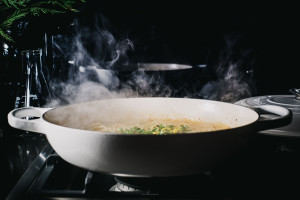 One-Pot Lemon Scallop Pea Spaghetti
  Beer Battered Onion Rings, Jalapeno Aioli
  2014 Holiday Gift Guide and a Giveaway
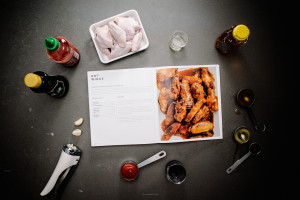 Easy Gourmet Hot Wings and a Giveaway!
  The Ultimate Veggie Sandwich
  Vegan(!) Creamy Corn Soup Recipe
  Sunday Brunch: Grilled Cheese Eggs Benny
