September 10, 2026
•
•
Posted in: gyoza, japanese food, smash, tiktok
If you love gyoza but don’t love folding up tiny dumpling pockets, smash gyoza are for you!
All the juicy, umami flavors of a gyoza, but open-face, extra crispy, and ready to eat.
What are smash gyoza?
Smash gyoza is another way of saying deconstructed gyoza. If you’ve seen
the smash Big Mac tacos floating around TikTok, smash gyoza are essentially the same idea: gyoza filling pressed onto dumpling wrappers then cooked open faced. From there, you serve them up like little tacos, folding them up around rice, kimchi, or whatever you like. Essentially they’re gyoza flavors in a new format: smash taco style.
How to make smash gyoza
- Prep. Toss the chopped cabbage with a sprinkle of salt and let it sit and soften for 5-10 minutes. When soft, squeeze out any excess water. Finely chop the ginger and garlic and slice the green onions.
- Mix. In a large bowl, mix together 2 tbsp water with 1 tbsp cornstarch, then add ground meat, the prepped cabbage, ginger, garlic, green onions, soy sauce, toasted sesame oil, and a bit of salt. Mix well. I like using food prep gloves to really get in there.
- Cook. Heat up a bit of oil in a large nonstick skillet over medium high heat. Use a spoon or a cookie scoop (cookie scoops are great at evenly portioning out the filling) to add 1-2 tbsp of the gyoza filling to the pan, leaving space in between.
- Top. Add gyoza wrappers directly to the tops of the gyoza filling.
- Smash. Use a spatula, ramekin, or bottom of a heat proof glass to press down on the gyoza wrapper, smashing the filling onto the pan, pushing down so the filling goes to the edges of the gyoza wrapper.
- Steam. Add 1-2 tablespoons of water to the hot pan and cover to steam for 1-2 minutes. Lift the lid off and let the excess water cook off.
- Flip. Flip the smash gyoza over to crisp up the gyoza wrapper. When the gyoza wrappers are slightly golden and a bit crisp, it’s time to eat!
- Enjoy. Serve them up open-faced and enjoy dipped in soy sauce and rice vinegar OR fill them with a spoonful of rice topped off with some kimchi, then fold up like a taco and eat.
Smash gyoza ingredients
- gyoza wrappers - they sell these at the grocery store, usually in the fridge department, near the tofu, but if they don’t have them you can make your own (recipe here). You can also use wonton wrappers or even small flour tortillas.
- ground pork - I love ground pork in gyoza because it’s super flavorful, but you can use any kind of ground meat like chicken or turkey. Typically there aren’t a lot of ground beef gyoza in Japan, but feel free to try it!
- cabbage - finely chopped cabbage is going to make the filling nice and juicy. You’ll want to salt, then squeeze and drain the cabbage slightly so the gyoza filling isn’t soggy.
- ginger and garlic - finely chopped or grated ginger and garlic are going to add so much flavor to our smash gyoza. If you need to, you can substitute in ground ginger and garlic, but in this case, I really recommend fresh.
- green onions - thinly sliced green onions add a bright freshness.
- soy sauce and toasted sesame oil - these are our main flavorings, along with a bit of salt. Toasted sesame oil adds nuttiness and flavor.
- cornstarch - a little bit of cornstarch is going to bind our filling together and make it super smooth and easy to smash.
What are gyoza?
Gyoza are Japanese dumplings: ground pork, cabbage, and seasonings wrapped up in a thin noodle-y like wrapper. Dumplings are one of my all time favorite foods ever and gyoza is one of those perfect iterations.
Read more about gyoza here.
How do you eat smash gyoza?
You can eat them open-faced, dipping them in your favorite dumping sauce, or you can top them with a bit of rice and some kimchi and fold them up like a taco. Really, there’s no wrong way to eat smash gyoza. As long as they get in your mouth, you’re good to go!
Who invented smash gyoza?
The first instance of smash gyoza was on Instagram from
@cooking_with_kiara10. They’re a mash up of gyoza and big mac smash tacos. She jumped on the smash taco trend but gyoza-fied it. She doesn’t have any specific recipe, but it’s a basic gyoza filling smashed onto a gyoza wrapper, fried, then steamed. Genius!
Gyoza dipping sauce
Gyoza aren’t gyoza without a dipping sauce. The standard mix is soy sauce, rice vinegar, and
Japanese chili oil aka rayu. To start, try 1 tbsp rice vinegar mixed with 2 tsp soy sauce and chili oil to taste. That being said, go ahead and play with the proportions and mix it to taste.
Another traditional dipping sauce is rice vinegar, soy, and red miso. It's a
big Kobe thing and we enjoy it everywhere in Japan.
What to serve with smash gyoza
Happy smashing!
xoxo Steph
PS - If you have a blackstone grill, these guys are AMAZING on it. Smash away!
Smash Gyoza
All the juicy, umami flavors of a gyoza, but open-face, extra crispy, and ready to eat.
- 1.5 cup cabbage (finely chopped)
- 1 lb ground pork
- 1 tbsp cornstarch
- 1 tbsp ginger (minced)
- 1 tbsp garlic (minced)
- 1/2 cup green onions (sliced)
- 1 tbsp soy sauce
- 1.5 tsp toasted sesame oil
- 1/2 tsp salt
- 40 gyoza wrappers
Toss the chopped cabbage with a pinch of salt in a large bowl and mix well. Let rest for 10 to 15 minutes, the squeeze out and drain as much of the extra water as possible.
Mix together 2 tbsp water with the cornstarch add to the ground pork. Add the ginger, garlic, green onions, soy sauce, sesame oil, salt, and prepped cabbage. Mix until incorporated.
Heat up a bit of oil in a large, non-stick frying pan (one that has a lid) over medium-high heat. When the oil is hot, use a spoon (or cookie scoop) to add 1-2 tbsp balls of gyoza filling into the pan.
Immediately add gyoza wrappers on top of the filling and smash, using a ramekin, glass, or flipper to press down on the gyoza wrapper to smash the filling flat onto the pan.
Cook until the meat is slightly golden, about 1-2 minutes, then add 1-2 tablespoons of water to the pan, cover and steam for 1-2 minutes.
Lift the lid off the pan and flip the gyoza over to crisp the other side of the dumpling wrapper. When golden and crisp, remove from the pan and enjoy folded with rice and kimchi!
Read More →
September 6, 2026
•
•
Posted in: banana, coffee, tiktok, viral
From dalgona coffee, to shaken brown sugar espressos, to iced tres leche lattes and everything in between, there always seems to be a new viral coffee. New on the scene is banana coffee.
I am a banana lover, through and through. I dream about bananas and especially banana bread. Bananas just might be the perfect fruit. Except for those pesky fruit flies. And the fact that you need a banana train for perfectly ripe bananas. Hmm, now that I think about it, bananas are surprisingly high maintenance. Not as bad as, avocados, obviously, but they definitely have their quirks. I love them anyway. And, I now store my bananas in a fruit fly proof container.
Introducing banana coffee
The combination of banana and coffee isn’t completely novel as they’ve been combining coffee and banana milk forever in Korea, via those little yellow bottles of Binggrae, but Tiktok has resurfaced banana coffee into the spotlight and I am absolutely here for it because (dad joke incoming) I am bananas for bananas.
What is banana coffee?
Banana coffee is exactly what it sounds like: coffee combined with banana. There are several ways to make it, depending on the texture you like and what you have on hand. The way that’s floating around right now is essentially a banana milk with espresso or cold brew. The banana milk is made by blending a ripe banana with milk, something sweet, and a touch of cinnamon. From there, banana and coffee come together beautifully.
Why banana coffee?
Does it sounds weird to you? Bananas and coffee? It might sound strange at first, but banana and coffee can make a delicious pair, their flavors and textures complementing each other perfectly.
The key is the contrast. Banana brings sweet smooth creaminess and heft and coffee brings earthy, roast-y bitter acidity. The contrast between the slight bitterness of coffee agains the sweetness of bananas can’t be beat. Smooth, satisfying, and endlessly sippable, banana coffee is the relationship equivalent of the black cat golden retriever relationship, both in color and personality. In other words, banana softens coffee’s bitterness and coffee add a interesting complexity to banana. Plus, the blended banana helps thicken and cream-ify, giving you a smoothie, dessert-like experience. I was a little skeptical until I tried the banana milk and now I am a full convert.
Banana coffee ingredients
- banana - the more brown, the more spotty, the more sad, the sweeter and more blend-able your banana will be. If it’s super-sweet, you might not even need to add any extra sugar/honey/maple syrup to your banana milk
- milk - it's choose your own adventure milk with banana coffee. If you want something classic, go with full fat milk, otherwise, go wild. Oat, almond, soy, coconut, rice, cashew, the world is your milk.
- sweetener - sugar, brown sugar, honey, maple syrup, alternative sweeteners, go with what your usual is. Honestly I didn't even bother, the banana was enough.
- coffee - use coffee you like, whatever coffee that might be. The only thing is the coffee should be cold. Cold brew, leftover coffee, espresso (add cold water to make it an americano), instant, it’s all fair game. We actually love instant, fun fact: 70% of coffee snobs prefer instant in a double blind taste test. It's true!
- ice - some may say it’s not an essential ingredient, but I think it is. For this drink, I like medium size ice cubes. Nugget ice is perfect for dirty soda, not so much coffee as it melts down too quick. I have an ice cube tray (shown below) that I specifically use for the ice in my iced coffee, so that’s what I go with. Somehow putting ice in a homemade coffee gives it cafe vibes without going out to an actual cafe.
How to make banana coffee
- Brew. The coffee needs to be cold, so go ahead and start with brewing your favorite blend or mixing up your instant coffee, or using your nespresso/keurig. You’ll need 1 cup of cold coffee.
- Blend. Place your super ripe banana, along with sugar/honey/maple syrup to taste, in a blender with milk. For the sweetener, start off with 1-2 teaspoons of sweetener and go from there. If your banana is super sweet, you might not need anything extra at all. Blend until very smooth and silky. For extra bonus points, strain the banana milk through a sieve so it’s lump free.
- Ice. Add ice to a tall glass.
- Layer. Add the coffee to the glass and layer on the banana milk. Or reverse that as I did. It doesn't matter except for #aesthetics.
- Enjoy. Stir well and enjoy
Tips and tricks
A sad banana makes a happy coffee
For the best results, use an extra ripe banana with plenty of brown spots. The riper the banana, the sweeter and more flavorful your coffee will be. Go ahead and pick out those sad bananas, they’re extra soft which makes them perfect for blending. Sad-nanas are not just for banana bread, they’re for coffee too.
Sweeten as needed
Bananas are sweet but coffee is bitter so if you want a bit more sweetness in your banana coffee, adjust to taste. You can use your favorite sweetener, just put it in the blender with your banana and milk.
Ice or no ice?
I feel like banana coffee is a cold drink so I would never have it hot and I like ice in my coffee so I enjoy banana coffee with lots of ice, but ice is a preference, so you can ice or not ice, it’s your choice.
Lumpy = no
If you don’t like lumps in your coffee may I suggest straining? Straining your banana milk through a
fine mesh strainer will give you a silky smooth banana milk. It takes an extra bit of effort, but it’s worth it, in my opinion.
Variations
Looking at the hashtags for banana coffee will get you a plethora of banana coffee recipes out there. I’ve been making the two below on repeat.
Fluffy Banana Coffee
This is a combination of banana coffee and dalgona coffee. Essentially it’s a silky smooth banana milk topped with fluffy dalgona. It’s fun to make and delicious to drink.
- 1 ripe banana
- 1 cup milk of choice
- 1 tbsp instant coffee
- 1 tbsp sugar, maple syrup, or honey
Blend the banana and milk together until completely smooth. Keep cold in the fridge while you make the dalgona top. In a tall cup, mix together the instant coffee, sugar, and 1 tbsp very hot water. Use a milk frother to whip until light, airy and fluffy. Grab your banana milk and a tall glass. Add ice, the banana milk, and a fluffy coffee top. Stir before enjoying.
Korean Banana Cream Latte
Korean banana cream lattes are different from banana coffee in that they use Binggrae Banana Milk. You can find Binggrae at Asian grocery stores and
online. The intense sweet banana-ness of Binggrae is the base of the banana cream that floats prettily on top of iced coffee.
- 3 tbsp heavy cream
- 2 tbsp Binggrae banana milk
- 1 tbsp condensed milk
- double shot of espresso
- 3/4 cup milk of choice
In a tall glass or liquid measuring cup, mix together heavy cream, Binggrae banana milk, and condensed milk. Use a milk frother to froth into a banana cream cold foam. Add ice to a glass, then pour in milk, top with a double shot of espresso, and finish with the banana cream. Stir before enjoying
If your banana train has too many bananas
You can make:
Alright, that’s all I got on banana coffee. I’m actually gonna go out and get some bananas right now to make myself one. I’m gonna grab some extra bananas for
banana bread too because bananas.
I hope you have a banana-ful day,
xoxo steph
Classic Banana Coffee
Banana
- 1 ripe banana
- 1 cup milk (of choice)
- sugar (or maple syrup, or honey, to taste/optional)
- 2 cups coffee (cold, extra strong)
Add the banana and milk, plus sugar to taste to a blender and blend well until completely smooth.
Add ice to two tall glass and evenly divide the banana milk.
Top with coffee
Stir and enjoy.
Estimated nutrition is based on no sugar, nonfat milk.
Read More →
September 5, 2026
•
•
Posted in: chicken, chorizo, clams, paella, prawns, rice, spanish
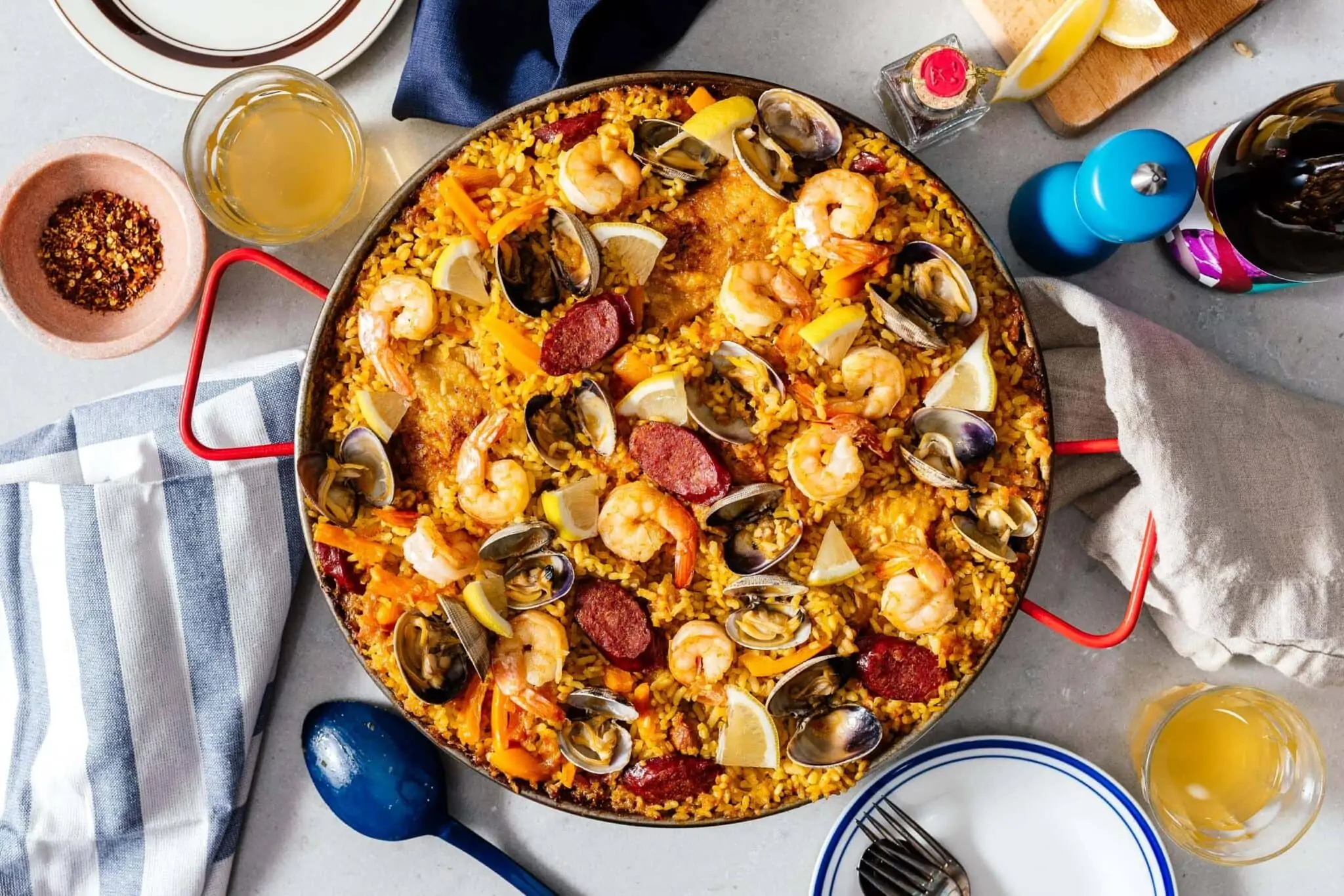
Paella has bits of everything I love: rice, seafood, and most importantly socarrat: crispy crunchy toasted rice bits.
Have you ever been obsessed with a dish even though you’ve never eaten it? For me, that dish was paella. It was one of those food bucket list items – I don’t remember how or why I became so obsessed with having paella from its birthplace of Valencia, but I’m pretty sure it has something to do with the fact that paella is so pretty and such an iconic dish. It’s so iconic that people around the world think of it as the quintessential Spanish dish, even though it’s actually more Valencian. I mean, Valencia is ultimately in Spain, so it’s all good to me.
What is paella?
Paella, pronounced pay-EH-yah! is a rice dish made in a shallow, wide pan over an open fire. Paella means “frying pan” in Valencian. Traditionally, paella includes short grain rice, beans, rabbit, chicken, and saffron, but nowadays there are a huge number of variations, from seafood to vegetarian. I made a mixta paella here, which is essentially a mixed paella that has meat, seafood, and vegetables.
How to make paella
- Soak the saffron. This will release both color and aroma. Pop some saffron into a small bowl with hot water and set aside.
- Sear the proteins. Heat up some olive oil in your paella pan over medium high heat and give your proteins a quick sear: the chicken goes in skin side down and the chorizo gets browned. Shrimp gets a quick toss in before being removed so it doesn’t over cook.
- Sweat the aromatics. Add the onions, garlic, tomatoes, and paprika and cook, stirring, until soft and fragrant.
- Add the liquids. Carefully add chicken stock and the saffron water and bring everything to a boil. Flip the chicken skin side up so it’s pretty.
- Add the rice. Time to sprinkle in the rice! Try to add it in a thin, even layer and use a spoon to spread it out if you need to. Let everything come to a simmer and cook, uncovered until the rice absorbs almost all the liquid.
- Add the seafood. Nestle in the clams and add the shrimp back on top.
- Cook on low until the clams open up and the rice is al denote.
- Socarrat time! Turn the heat up to high for 1-2 minutes to create a crispy toasty crunchy rice crust.
- Rest and enjoy. Cover the paella with some foil and let rest for 5 minutes before enjoying.
Paella Ingredients
Rice
Because paella is truly all about the rice, the rice is the most important ingredient.
Bomba rice, from Spain, is the best choice. It absorbs 3 times as much liquid than regular rice giving it 3 times as much flavor when all the liquid is absorbed. Plus cooked right, it stays firm and al dente. You can usually find bomba rice at Whole Foods or
online.
Smoked Spanish Paprika
Smoked paprika comes in sweet and bittersweet, go for sweet smoked Spanish paprika. It adds smokiness, aroma, and color.
Protein
There’s a lot of controversy about what kind of protein goes into paella. If you’re not super concerned about authenticity you can customize your paella and put anything you want it. If you’re going with chorizo try to get a Spanish chorizo, which is dried and cured. But if you only have Mexican chorizo available, I think that’s okay too.
Purists say that chorizo will overwhelm the other flavors, but we’ve had multiple paella in Valencia with (and without) chorizo, so it’s a personal choice. Other proteins you can use include chicken, pork, seafood, or really, anything you can dream of.
Vegetables
Most paella has vegetables in it, especially the paella we had while we were in Valencia. Usually it’s some sort of green bean, a variety that isn’t so common here in North America. You can sub in other green beans, add peppers, asparagus, artichokes, peas, olives, beans, chickpeas, really, it’s like the proteins, go wild!
Stock
A nicely seasoned stock as this is what’s going to add flavor to the insides of your bomba rice. That being said, if you’re salt adverse, I would do low sodium stock and then season afterwards. If you have the time, make a homemade seafood/shellfish or chicken stock, which makes it even easier to control the seasoning and flavor.
Saffron
Saffron is what gives paella its gorgeous golden hue. The orange-red threads are earthy, floral, and add a distinct flavor. Saffron is one of the most expensive spices in the world. You only need about 1/2 teaspoon but it definitely adds to the overall flavor, so don’t skip out on it.
Look for saffron threads that are deep red-orange and evenly colored. Saffron is sold in most large grocery stores and specialty food stores and of course,
online.
Paella pan
If you want the all important toasty rice bits, or socarrat, you’re going to need a
paella pan. The width of a paella pan helps with rice distribution, ensuring that the rice cooks in a thin layer. A pan that feeds two is generally about 10-12 inches and a pan that serves eight is about 18 inches. The most popular pan sizes are 14 and 16 inches, which feed 4-6. Which size pan you get depends on how many people you plan to feed.
The wider the pan, the more people it feeds. They even have pans that are 4 feet wide! Years ago, around Christmas,
Mike and I were in London and we saw two giant paella pans at Covent Garden. The saffron deliciousness wafting through the chilly air was so tempting so we decided to join the huge queue for a taste. I’m sure Hola Paella (now closed forever) wasn't the most authentic paella in London, but it attracted a lot of attention and was a perfect snack to warm us up on a cold day.
What if I don’t have a paella pan?
If you’re wondering, can I use a cast iron skillet to make paella, the answer is yes! As long as you’re using the right rice, you can definitely use a cast iron skillet. Cast iron skillets are somewhat wide and conduct heat well, making them great for making paella. Use the biggest and widest cast iron pan you have so you can spread your rice out.
Paella in a frying pan
If you have a craving for paella and you don’t have a paella pan or a cast iron pan you can make it in a frying pan. Spanish people might look down on you, but hey, you do you! I’ve definitely made paella in a frying pan in a pinch and it tastes good. You can use a non-stick or regular frying pan but if you’re using non-stick, make sure you don’t go too high on the heat. It really shouldn’t be a problem, especially with paella since you don’t use a huge amount of high heat anyway - keep it to medium high.
If you’re looking for socarrat in a regular frying pan, my tip is keep it on low heat for a long time, until the moisture cooks out and you get crispy bottoms. If you are going to try this in a frying pan, I recommend halving it because the recipe as per below will not fit in your standard 12 inch frying pan.
What rice should I use?
Paella should be made with
Bomba or
Calasparra rice, medium grain rices grown in Spain. Spanish rice is chubby and round, ideal for absorbing large amounts of liquid while still staying somewhat firm. You want your rice kernels stay separate and not creamy or mushy.
The rice really is the best part of a paella. I can eat loads and loads of that smoky, saffron flavoured rice and I have. I made a giant pan for Mike, myself and a good friend thinking there would definitely be leftovers (I used a pan that serves 6-8), but the three of us polished it off in one sitting. We totally fell into simultaneous food comas afterwards, but it was worth it. The best part was that there was more than enough socarrat to go around.
What is socarrat?
Socarrat is the essential layer of crispy crunchy toasted rice at the bottom of the pan when you cook your paella just right. Most people consider it the best parts. It’s caramelized and toasty and nutty and has all the flavors of paella concentrated.
Paella FAQ
What are the different kinds of paella?
- Valencian: The classic Valencia version with rabbit, chicken, lima beans, long beans, snails, and rosemary.
- Seafood/paella de marisco: A seafood version with no meat. It tends to be a bit more liquidy because seafood releases a lot of delicious juices. It usually has prawns, mussels, calamari, and clams.
- Mixed/mixta paella: A mix between Valencian and marisco with meat and seafood. It’s the most popular of all.
- Paella negra: Immediately recognizable with it’s inky black rice. It’s made with squid ink and is a Spanish favorite.
- Vegetarian/paella vegetariana: Loads of vegetables like artichokes, lima beans, and red and greens peppers. Sometimes you’ll find chickpeas and potatoes too.
Did you ever go to Valencia?
Yes! Many years ago now, shortly after the first edition of this post, Mike and I went to Valencia and the first thing we ate was paella. We literally got off the train and went to a paella restaurant. On the way there, there were a bunch of Valencian orange trees that had some pretty tempting looking oranges but apparently the orange trees that line the streets of Valencia are not the same sweet ones that they use for juice. Anyway, the paella in Spain was as good as I imagined. So good that all of our meals in Valencia were either paella or Spanish churros dipped in chocolate. We actually ate 3 different paellas that day.
The paella was all things good: juicy seasoned meats, tender-crisp beans, and the best part, saffron scented rice with crispy toasty rice bits. It was a dream come true.
Should you presoak the rice?
There’s no reason to soak the rice. Soaking the rice will make it more likely to be overcooked and mushy.
Do you stir while cooking?
Nope, no stirring required. Paella is not risotto and stirring will give your rice a creamy texture instead of the crispy socarrat you’re looking for.
Do you cover the pan when cooking?
Unlike other rice dishes, you don't need to cover the pan. The rice can only reach its signature al dente texture if the moisture can escape. This also makes the best the crispy socarrat.
What is paella sauce?
In Valencia, no paella is complete without a side of paella sauce or garlic aioli. The creamy, garlicky sauce is reminiscent of mayo and goes perfectly with the smoky, flavorful rice. To make garlic aioli, place 1 cup neutral oil, 1 egg yolk, 1 tbsp dijon, 2 tsp lemon juice, and 1 clove garlic into an immersion blender cup. Use an immersion blender and blend until combined and thick. Season with salt to taste.
How to reheat
The best way to reheat paella is in a pan on the stove top. Take the leftovers out of the fridge and let it come to room temp for about 30 minutes before you reheat. Heat a bit of oil in a frying pan over medium heat, then spread out the paella. Let it crisp, stirring occasionally until it is heated through. You can also heat it up in the microwave, stirring and heating as needed, about 1-2 minute on high.
What else can I use a paella pan for?
You can use it for cooking anything that will do well with a wide, flat cooking surface. It’s perfect for searing meats, using as a roasting pan, or even
stir-fry.
I hope you guys give this recipe a try.
smoky saffron rice and crispy bits forever,
xoxo steph
Paella Recipe
Paella even has its own emoji!
- 30 threads saffron (lightly crushed, about 1/2 tsp)
- 1/4 cup neutral oil (high heat such as grapeseed preferred)
- 2 links Spanish chorizo (sliced)
- 4 bone in skin on chicken thighs
- 10-12 large shrimp (peeled and deveined)
- 1 small onion (minced, about 1 cup)
- 3 cloves garlic (crushed)
- 3 medium tomatoes (diced or grated, about 2 cups, see notes)
- 1 tbsp smoked paprika
- 6 cups chicken broth (no sodium preferred)
- 2.5 cups bomba rice
- 1 red or orange pepper (sliced into 1" strips)
- 12 clams
Stir the saffron into 1⁄4 cup hot water in a small bowl and let bloom for 15 minutes.
In a 16″–18″ paella pan, heat the oil over medium-high heat. Add the chorizo and the chicken, skin side down. Add the the shrimp and cook, flipping occasionally, until browned, about 5 minutes, then transfer the shrimp to a plate, leaving the meats to sear in the pan.
Add the onions, garlic, tomatoes, and paprika and cook, stirring often, until the onions soften, about 6 minutes. Add the saffron and 4 cups of chicken stock. Flip the chicken so it’s skin side up and bring everything to a boil over high heat.
Sprinkle in the rice, distributing evenly, then add the peppers on top. Cook, uncovered, without stirring, until rice has absorbed most of the liquid, about 12-15 minutes. If the pan is larger than the burner, rotate it every two minutes to evenly distribute the heat. Once the stock is low enough, add the remaining 2 cups chicken stock.
Reduce heat to low, and top with the cooked shrimp. Nestle in the clams, hinge side down. Continue to cook, without covering or stirring, until the clams opened and the rice absorbs the liquid and is al dente, 5–10 minutes more. Turn heat to high for 1-2 minutes to create the socarrat. Remove pan from heat, cover with aluminum foil, and let sit for 5 minutes before enjoying.
Paella is totally customizable so feel free to make this dish vegetarian, all seafood, or all meats.
You also can grate the tomatoes on the largest holes of a box grater. Be careful and discard the skin afterwards.
Read More →